98-year-old judge was not allowed back to court: The US Supreme Court put an end to the high-profile case


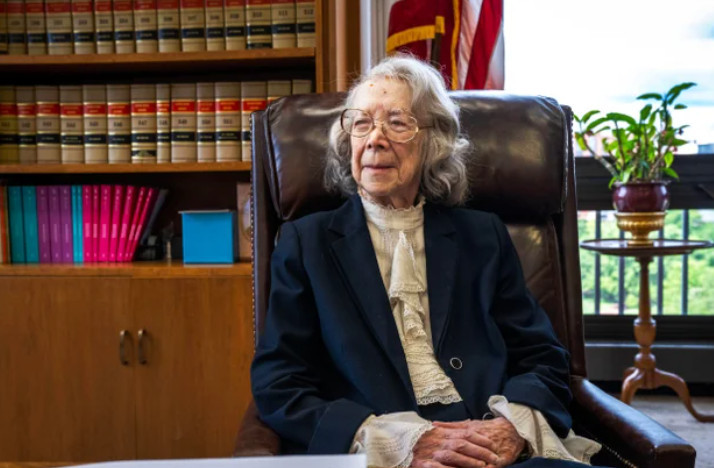










The US Supreme Court denied Judge Pauline Newman in her attempt to return to work at the federal appellate court after she was suspended due to doubts about her ability to perform duties, writes Cbsnews.
Newman, 98 years old, has served on the US Court of Appeals for the Federal Circuit since 1984. The court, established in 1982, hears appeals in cases involving international trade, patents, trademarks, veterans' benefits, and monetary claims against the US government.
Over more than four decades of work, Newman authored over 300 separate opinions, earning her the nickname "The Great Dissenter."
However, three years ago, the Federal Circuit Judicial Council, composed of active judges, suspended her from hearing cases. Chief Judge Kimberly Moore offered her the option to either retire or assume senior status with a reduced workload.
After Newman's refusal, Moore initiated an internal review stating there were grounds to believe the judge's health condition prevented her from performing duties and that delays in her work harmed judicial efficiency. The documents mentioned health issues in 2021 and an incident of fainting in 2022, as well as complaints from colleagues about her workload.
Following this, a special commission of two judges recommended suspending Newman from hearing cases for one year, and this decision was approved in 2023. Subsequently, her suspension was extended in 2024 and 2025.
During the suspension, the judge filed a lawsuit claiming she was effectively removed from office contrary to lifetime appointment guarantees and without due process.
The Court of Appeals for the District of Columbia sided with the fellow judges, ruling that the disability law limits the possibility of such constitutional lawsuits.
Newman's lawyers asked the Supreme Court to hear the case, arguing that constitutional guarantees of judicial independence were being bypassed. They also claimed that her colleagues were effectively trying to remove her because of her frequent separate opinions.
The US Department of Justice urged the Supreme Court to reject the complaint.
Newman's representatives expressed disappointment with the decision, emphasizing that the case is of fundamental importance for judicial independence.
Subscribe to our Telegram channel t.me/sudua and to Google News SUD.UA, as well as to our VIBER and WhatsApp pages, on Facebook and Instagram to stay updated on the most important events.