In the EU, brands are banned from discarding unsold clothing: collection leftovers will no longer go to the trash


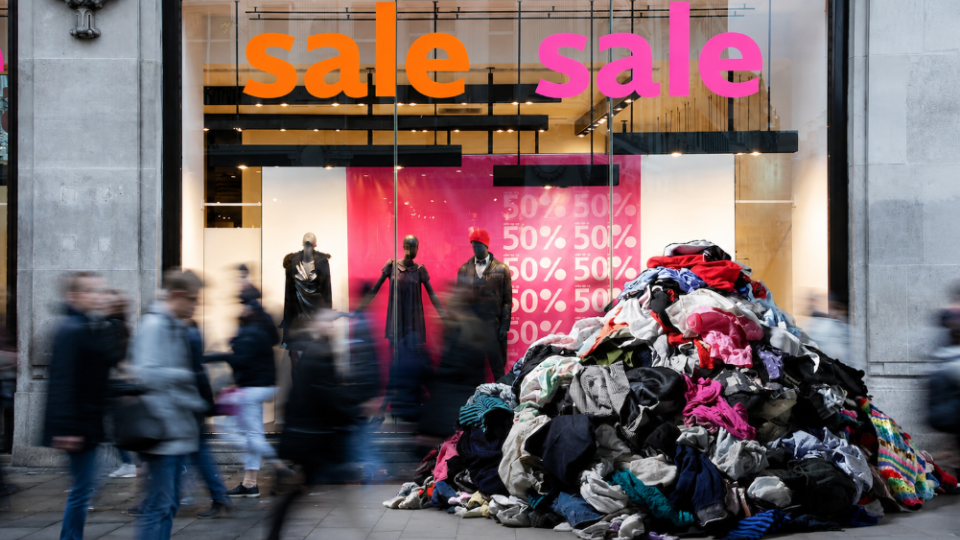










The European Union will introduce new rules aimed at putting an end to the practice of destroying unsold clothing, accessories, and footwear.
Starting from July 19, 2026, large companies will no longer be able to simply dispose of leftover goods. Instead, businesses must seek alternative ways to use them and report on unsold products that still end up as waste.
The European Commission believes this will help reduce waste, lessen environmental harm, and encourage the development of a circular economy.
Why the EU bans the destruction of unsold clothing
The European Commission has adopted necessary acts under the Ecodesign for Sustainable Products Regulation (ESPR) to help companies comply with the new requirements.
It is estimated that annually in Europe, between 4% and 9% of unsold textile products are destroyed before customers even use them.
This results in about 5.6 million tons of CO₂ emissions — nearly as much as Sweden's total net emissions in 2021.
Therefore, the ESPR Regulation includes two key requirements:
- companies must disclose information about unsold consumer goods they dispose of as waste;
- a ban is introduced on the destruction of unsold clothing, accessories, and footwear.
When the new rules will take effect
The ban on destroying unsold clothing, accessories, and footwear will apply:
- to large companies — from July 19, 2026;
- to medium-sized companies — from 2030.
At the same time, the requirements for mandatory disclosure of information about unsold goods are already in effect for large companies, and a standardized reporting format will begin to apply from February 2027. For medium-sized companies, these rules will also come into force in 2030.
In which cases goods can still be destroyed
The new rules provide certain exceptions.
Specifically, destruction of products will be allowed when related to safety requirements or if the goods were damaged. Compliance with these rules will be monitored by national authorities of EU member states.
What companies are encouraged to do instead of disposal
The European Commission recommends businesses manage inventory and product returns more efficiently.
Instead of destroying unsold goods, companies are encouraged to:
- resell the products;
- restore or recycle them;
- donate them to charity;
- reuse the goods.
Why this is important
According to the European Commissioner for Environment, Oceans and Fisheries, Sustainability, and Competitive Circular Economy Jessica Rosval, the textile industry is already moving towards more sustainable production models, but the scale of waste indicates the need for further changes.
The European Commission also reminds that in France alone, unsold goods worth approximately 630 million EUR are destroyed annually, and in Germany, nearly 20 million returned items are disposed of each year due to the active development of online trade.
The new rules are expected to help make products on the EU market more durable, suitable for reuse and recycling, and promote the development of a circular economy.
Subscribe to our Telegram channel t.me/sudua and to Google News SUD.UA, as well as to our VIBER and WhatsApp pages, and follow us on Facebook and Instagram to stay updated on the most important events.