One violation — reprimand, the next — dismissal: a new punishment system is proposed for civil servants













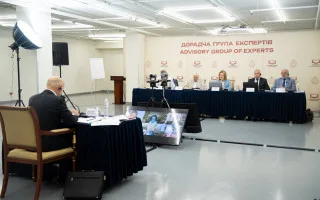
The Verkhovna Rada Committee on Digital Transformation supported the concept of a large-scale update of civil service rules, which aims to make disciplinary procedures clearer and the interaction between state bodies and employees more modern and digitalized.
The draft law proposes not only to revise the mechanisms for holding civil servants accountable but also to regulate a number of practical issues related to service — from electronic correspondence and complaint review to professional training and the work of disciplinary commissions.
The proposed changes are intended to eliminate gaps that have accumulated over the years in civil service legislation and to increase citizens' trust in state institutions.
The committee reviewed draft law No. 15190 "On Amendments to the Law of Ukraine 'On Civil Service' regarding the Regulation of Certain Issues of Civil Service and Improvement of the Disciplinary Procedure."
Committee members concluded that the document could contribute to increasing citizens' trust in government bodies and ensuring more effective disciplinary practice regarding civil servants, but recommended taking into account the expressed comments and proposals.
The draft law was prepared by the National Agency of Ukraine for Civil Service. Its purpose is to update the civil service procedure, eliminate outdated norms, clarify disciplinary procedures, and strengthen responsibility for repeated disciplinary offenses.
What changes to disciplinary responsibility for civil servants does the draft law propose
Among the key innovations of the document is the introduction of a clearer system of disciplinary sanctions. It is proposed to establish four types of disciplinary responsibility: remark, reprimand, warning of incomplete official compliance, and dismissal from civil service position.
At the same time, the draft law provides a mechanism for gradually increasing responsibility in case of repeated commission of a similar disciplinary offense during the term of the previous sanction. In such a case, a more severe disciplinary sanction may be applied to the civil servant — from reprimand to warning of incomplete official compliance or dismissal.
Separately, it is proposed to classify as disciplinary offenses cases when a civil servant is found guilty of committing a corruption offense or an offense related to corruption, if the court did not impose a ban on holding certain positions or engaging in certain activities. For such violations, a warning of incomplete official compliance may be applied, and in case of repetition within a year — dismissal.
How will the disciplinary procedure for civil servants change
The document also details the disciplinary procedure. It is envisaged that disciplinary commissions for civil servants of categories "B" and "C" will be established in each state body, and for heads of civil service and their deputies — in a higher-level state body. The commission should include a representative of the personnel service, a lawyer, and a representative of the trade union or civil servants.
The draft law establishes that the term of disciplinary proceedings will be determined by the decision to open them, and the procedure for conducting such proceedings will be approved by the Cabinet of Ministers.
Before imposing a disciplinary sanction, the civil servant will have the right to provide written explanations regarding the circumstances of the case. At the same time, refusal to provide explanations will not prevent the consideration of the disciplinary proceedings and the adoption of a decision.
It is also proposed to clarify the rules for suspending a civil servant from performing official duties during disciplinary proceedings. The duration of such suspension cannot exceed the term of the disciplinary proceedings themselves.
Email and notifications: how civil servants will be informed about decisions
Significant changes also concern communication between the state body and the employee. The draft law allows official notification of civil servants of documents and information not only by personal delivery or postal sending but also through electronic communications.
For this purpose, civil servants will be required to provide their personnel departments with their email addresses and other contact details. Documents can be sent by email or through other electronic means of communication defined by law.
What will change in the professional training of civil servants
Besides disciplinary issues, the document updates approaches to professional training of civil servants. It is envisaged that training, including abroad, may be financed not only from the state budget but also from other sources not prohibited by law.
Training needs will be determined jointly by the immediate supervisor and the civil servant themselves, taking into account the results of performance evaluation.
It is also proposed to introduce individual professional development programs for civil servants. Their implementation will be taken into account during the evaluation of official performance results.
Why is it proposed to amend the civil service law
The explanatory note states that the draft law is intended to eliminate legal gaps and outdated provisions of civil service legislation identified during its practical application.
Among other things, it is proposed to exclude norms that have lost relevance after public administration reforms and changes in education legislation, as well as to clarify terminology and procedures to ensure a unified approach to civil service.
The authors emphasize that the implementation of the proposed changes will not require additional expenditures from the state or local budgets.
What results are expected from draft law No. 15190
According to the National Agency for Civil Service, the adoption of the draft law should ensure clearer and more understandable rules for civil service, improve disciplinary procedures, and promote adherence to civil service principles.
The agency believes that the changes will contribute to increasing citizens' trust in government bodies, ensure more effective application of disciplinary mechanisms, and eliminate gaps that arose during the practical application of current legislation.
Subscribe to our Telegram channel t.me/sudua and to Google News SUD.UA, as well as to our VIBER and WhatsApp, Facebook page and Instagram account to stay updated on the most important events.