How to Choose a Ripe and Sweet Watermelon: What to Check Before Buying


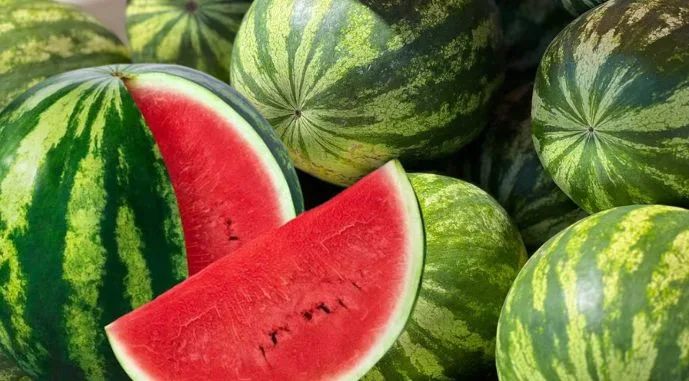










The end of July in Ukraine traditionally marks the beginning of the watermelon season. It is then that stores and markets are filled with ripe fruits, considered the tastiest and juiciest. However, a watermelon that looks good on the outside is not always ripe and sweet. To avoid mistakes when choosing, it is worth paying attention to a few simple signs. They will help you select a quality watermelon and not be disappointed after purchase.
How to properly choose a watermelon
When choosing, first of all, pay attention to the appearance of the fruit. The watermelon should have the correct shape, without cracks, punctures, cuts, dents, or soft spots. The rind should be firm, and the stripes bright and contrasting.
One of the main signs of ripeness is the yellow field spot — the place where the watermelon rested on the ground while ripening. It should be creamy yellow or deep yellow. If the spot is white or greenish, the fruit was likely harvested prematurely.
It is also worth assessing the weight. A ripe watermelon is always heavy for its size because it contains a lot of juice. If possible, compare several fruits of the same size and choose the heavier one.
Another sign is the sound. If you gently tap the watermelon, a ripe fruit produces a ringing, deep sound. A dull or too "empty" sound may indicate that the watermelon is unripe or has started to spoil.
Which watermelons are better not to buy
You should refuse to buy if:
- there are cracks, punctures, cuts, or signs of rot on the rind;
- the fruit has soft or wet spots;
- the watermelon is damaged during transportation;
- the seller offers a pre-cut watermelon stored without refrigeration or food wrap;
- the fruit emits a sour or unpleasant smell.
Such signs may indicate product spoilage or violation of storage conditions.
Where it is safer to buy watermelons
Experts recommend buying watermelons in stores, supermarkets, official markets, or retail points where products are stored under proper conditions. Fruits should be placed on special pallets or shelves, not directly on the ground or asphalt.
It is not advisable to buy watermelons along roadsides or at informal trading spots. At such points, it is often impossible to verify the origin of the products, compliance with sanitary requirements, and storage conditions.
Should you ask to cut the watermelon
If you do not plan to eat the watermelon immediately after purchase, it is better not to ask the seller to cut it. After the rind is damaged, bacteria easily enter inside, and in summer heat, they multiply quickly. At home, the watermelon should be thoroughly washed under running water, and after cutting, stored only in the refrigerator.
Subscribe to our Telegram channel t.me/sudua and to Google News SUD.UA, as well as to our VIBER and WhatsApp, our page on Facebook and on Instagram to stay updated on the most important events.