The Bribery Case in the Supreme Court: How a Three-Year Corruption Investigation Turned into a Tool of Pressure on Judges


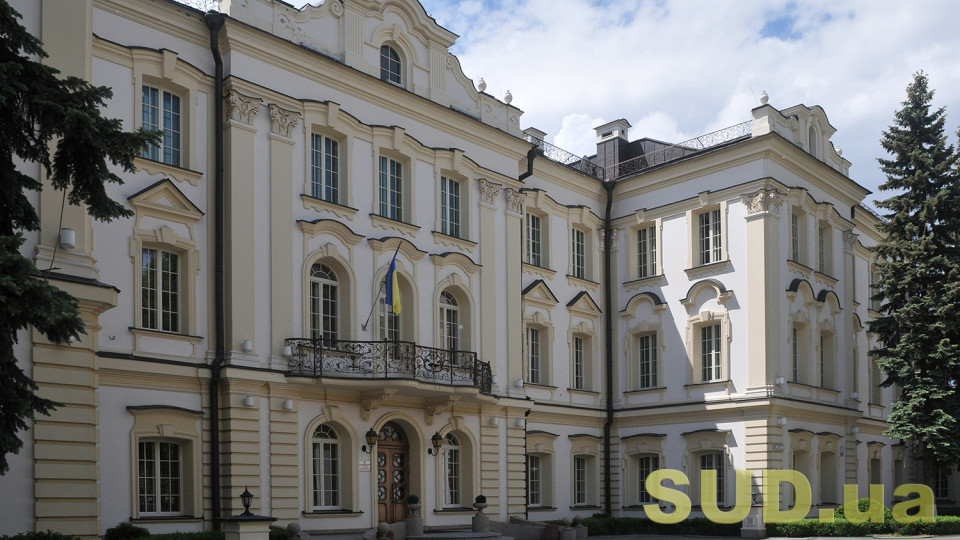










Despite the demonstrative media decisiveness in bringing suspicions against judges, anti-corruption agencies operate within clearly defined boundaries. As the " Judicial and Legal Newspaper" learned from informed sources, law enforcement does not plan to go beyond the already identified suspects, even if the names of persons with higher administrative or political status might have appeared in operational materials or on surveillance recordings.
The case of receiving an unlawful benefit amounting to 2.7 million USD, which in 2023 dealt a blow to the reputation of Ukraine's judiciary, entered an active procedural development phase in May 2026. Although the main evidence was collected during the first wave of searches, official charges against a group of higher instance judges were only recently filed.
One of the most debated aspects of the case within the professional community is the long time gap between the seizure of evidence and the notification of suspicion. The serial numbers of the seized marked bills were known to the investigation as early as May 2023.
Law enforcement agencies explain the delay by the need to conduct expert examinations, analyze the results of covert investigative (search) actions, and form a sufficient evidentiary base. At the same time, such a prolonged wait may call into question the effectiveness of the anti-corruption agencies' work.
The narrowing of the circle of persons subject to criminal prosecution to a few suspects may be the result of complex procedural and tactical decisions. Expanding the list of suspects in the future is considered unlikely. Some operational directions that could potentially involve a wider circle of persons have not been developed further.
Red Lines of Immunity
The investigation decided to focus on an exclusive circle of persons. The top leadership of the judicial branch and the political process curators, who could have been potential beneficiaries, remain outside the perimeter of criminal prosecution, indicating complex compromises.
The fact that a significant part of the probable bribe amount has still not been found, and the list of suspects is not expanding proportionally to the number of searches conducted, is interpreted as a sign that law enforcement has achieved its goal of influencing the judicial body, and further steps regarding other persons are not their priority.
The current tactics of the Specialized Anti-Corruption Prosecutor's Office and the National Anti-Corruption Bureau of Ukraine carry serious procedural risks, as the defense of the suspects increasingly appeals to factors of provocation and witness subjectivity. The factual base is limited only to what was found on the first day of the investigation. The absence of new financial transactions, hidden assets, or other physical evidence makes the case vulnerable to defense arguments.
Thus, concentrating efforts on four suspects is not only an act of justice but also a forced step caused by the lack of other data or evidence available to the investigation.
It is no longer about a swift fight against corruption but about complex compromises and consistent indirect pressure on judges, capable of turning the criminal process into a tool for forming "convenient" and loyal justice. The principle of a fair trial is incompatible with situations where legal norms are applied selectively and depend on political circumstances or the position of international partners.
Doctrine of Prohibition of Provocation
The practice of the European Court of Human Rights consistently holds that the use of operational methods by law enforcement is permissible only under strict adherence to procedural guarantees. Therefore, during the trial, the High Anti-Corruption Court will face the task of clearly distinguishing legitimate crime documentation from signs of possible provocation, which the defense will likely rely on.
At the same time, the prosecution usually emphasizes the passive nature of the investigation, where law enforcement only records ongoing unlawful activity. In such cases, the Specialized Anti-Corruption Prosecutor's Office and the National Anti-Corruption Bureau of Ukraine prove that the initiative for the unlawful benefit came from the suspects or intermediaries themselves, not from operational sources.
Decisive for the Court is whether law enforcement intervention was a determining factor in the development of events. In the case of «Yakhymovych v. Ukraine», the ECHR emphasized that evidence obtained as a result of incitement is incompatible with the requirements of Article 6 of the Convention (right to a fair trial).
The Court examines whether the person had a prior predisposition to commit the crime before the state agents' intervention. If law enforcement did not merely "join" the criminal activity but actively stimulated it, provocation is present.
In the cases of «Ramanauskas v. Lithuania» and «Bannikova v. Russia», it was established that the burden of proving the absence of provocation lies with the prosecution, and national courts are obliged to conduct an active and comprehensive examination of such arguments.
The three-year wait for notification of suspicion despite the collected evidence can be seen as a form of extraprocedural influence, potentially creating a state of constant uncertainty and dependence for judges.
As for the practice of selective notification of suspicion, it confirms that the goal is not justice but control over the key judicial body of the state.
Author: Volodymyr Pravo
Subscribe to our Telegram channel t.me/sudua and to Google News SUD.UA, as well as to our VIBER and WhatsApp pages, and follow us on Facebook and Instagram to stay updated on the most important events.