The Supreme Court sided with an Iranian graduate student in a migration case because the courts did not verify the SBU information


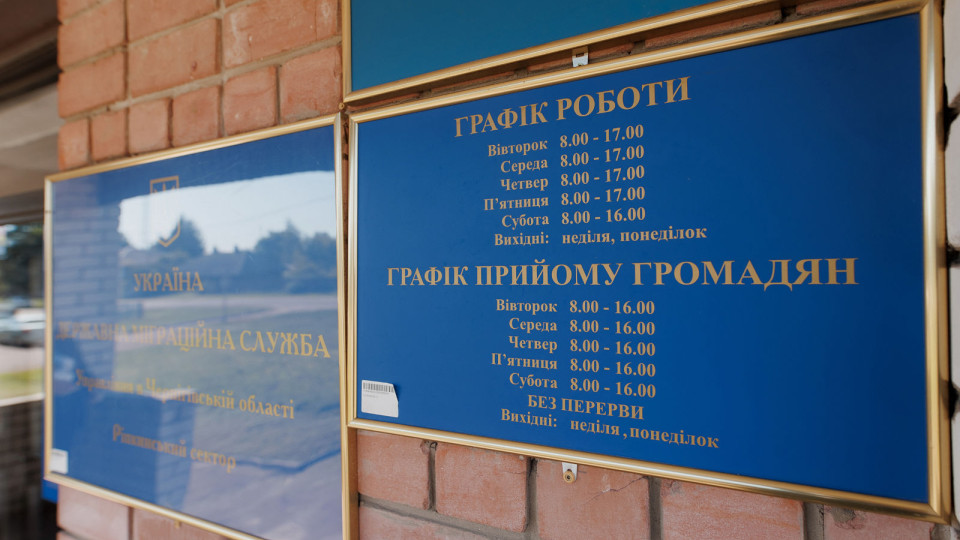










The Supreme Court, composed of a panel of judges of the Cassation Administrative Court, considered case No. 260/3985/24 concerning the refusal to a citizen of Iran in a lawsuit against the State Migration Service regarding the cancellation of a temporary residence permit.
Case circumstances
An Iranian citizen who has been living in Ukraine for a long time applied to the court. The plaintiff challenged the decision of the Zakarpattia Regional Migration Service to cancel his temporary residence permit, issued in September 2023 with validity until 2027. The plaintiff learned about the cancellation in May 2024 through a Viber message. The basis was a general reference to Order No. 322; however, according to the plaintiff, the decision did not specify concrete facts or evidence of his unlawful behavior, criminal proceedings, or court decisions.
The reason for the refusal was that the plaintiff allegedly supports the political leadership of Iran and the country's Supreme Leader, justifies the full-scale Russian invasion of Ukraine, facilitates political and economic support for Russia, and may be involved in processes related to the improvement of the military-industrial complex.
The courts of first and appellate instances supported the position of the migration service, stating that it acted within its powers and based on data from the Security Service of Ukraine (SBU).
The cassation appeal argued that the courts of first and appellate instances incorrectly applied the law, particularly Order No. 322, and did not consider the Supreme Court's conclusions in similar cases. The plaintiff's representative pointed out that the decision to cancel the permit was made without proper evidence, and the courts formally agreed with the SBU submission without verifying its validity.
The plaintiff asserted that he has no criminal record and has not been prosecuted. He has legally resided in Ukraine since 2016, studies in graduate school, and actively participates in protests against Iran's government's support for Russia. In particular, he expressed willingness to fight for Ukraine and helps wounded soldiers undergoing rehabilitation.
It is also noted that the SBU submission is not an independent subject of appeal; however, its content should have been verified by the Migration Service and assessed by the courts according to the requirements of Article 2 of the Code of Administrative Procedure of Ukraine. Furthermore, the plaintiff's representative emphasized that the plaintiff did not commit actions that would threaten national security and has long legally resided in Ukraine, studying and engaging in scientific activities.
Supreme Court decision
The Supreme Court, evaluating the conclusions of the lower courts, noted that the courts limited themselves to stating the existence of the submission from the Department for the Protection of National Statehood of the Security Service of Ukraine dated 22.03.2024 No. 14/3/2-4713 as sufficient grounds for canceling the permit, without verifying whether the disputed decision meets the criteria defined in part two of Article 2 of the Code of Administrative Procedure of Ukraine.
The court emphasized that it was not properly established whether the plaintiff actually committed actions that could threaten national security, public order, health, protection of the rights and legitimate interests of Ukrainian citizens and others, and whether there is proper and admissible evidence of such actions, as required by subparagraph 4 of paragraph 63 of Order No. 322. The Supreme Court also noted that even with the submission of an authorized body, the Migration Service's decision must be justified, made considering all essential circumstances, and comply with the principles of proportionality and proper administrative procedure.
In particular, the Supreme Court also stressed that similar legal conclusions have already been set out in its previous rulings, including cases No. 160/1521/23, No. 344/9604/23, No. 380/7720/23, No. 160/632/23, No. 160/19394/22, and No. 160/3604/23, and there are no grounds to depart from them.
The court concluded that the lower courts violated procedural law requirements regarding the full and comprehensive clarification of the case circumstances, as the factual data presented in the case materials were not examined, and the plaintiff's arguments were not properly evaluated.
Considering that establishing all case circumstances requires evidence examination, which cannot be carried out by the cassation court, the Supreme Court found grounds under part two of Article 353 of the Code of Administrative Procedure of Ukraine to cancel the decisions of the first and appellate courts and send the case back for a new trial to the court of first instance.
Currently, the Iranian graduate student's residence permit remains canceled, but the case is returned for a new trial where the court must fully examine the evidence and circumstances. The decision to cancel the permit under subparagraph 4 of paragraph 63 of Order No. 322 due to a threat to national security must meet all criteria of part 2 of Article 2 of the Code of Administrative Procedure of Ukraine: legality, validity, impartiality, proportionality. The Migration Service, as a subject of executive authority, is obliged to verify the validity of the SBU submission and reflect in its decision specific circumstances indicating the threat, as a mere reference to the special service's submission is insufficient.
Subscribe to our Telegram channel t.me/sudua and to Google News SUD.UA, as well as to our VIBER and WhatsApp, Facebook page and Instagram to stay informed about the most important events.