Combatant Status Can Be Revoked: Who Risks Losing Benefits and State Support


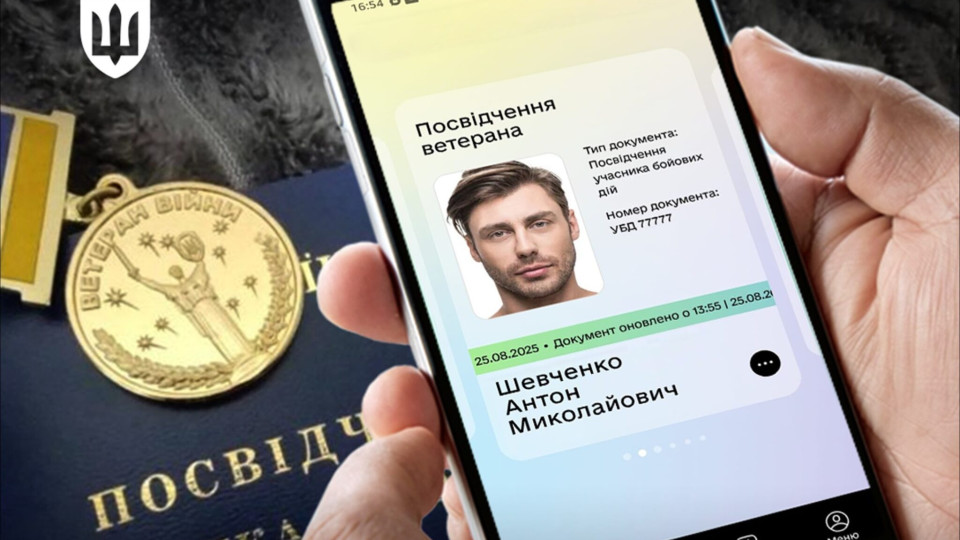










After the start of the full-scale war, the status of a combatant acquired special significance, as it is the basis for receiving benefits, compensations, and other social protection guarantees.
At the same time, in recent years, the issue of reviewing decisions on granting combatant status has increasingly become the subject of administrative disputes, which raised the question of whether a person can lose this status and under what conditions the law allows this.
To answer this question, it is necessary to distinguish between the combatant status itself and the benefits derived from it. If the status is revoked, the right to benefits also ceases.
What Benefits Does Combatant Status Provide
The legal status of war veterans is regulated by the Law of Ukraine "On the Status of War Veterans, Guarantees of Their Social Protection" No. 3551-XII. The categories of persons who can be recognized as combatants are defined in Articles 5 and 6 of this Law.
The main benefits for combatants are enshrined in Article 12 of Law No. 3551-XII. Among them are free receipt of medicines by doctor's prescriptions, a 75% discount on housing and utility payments, labor guarantees, preferential rights to remain employed during layoffs, and other social guarantees.
Since all these rights are directly related to the combatant status, its revocation automatically entails the loss of the corresponding benefits.
Does the Law Provide for Revocation of Combatant Status
Law No. 3551-XII does not contain a separate article that directly defines the grounds for revoking combatant status. At the same time, the procedure for granting and revoking it is regulated by the Cabinet of Ministers of Ukraine Resolution No. 413 dated August 20, 2014.
The procedure approved by Cabinet Resolution No. 413 explicitly provides for the possibility of revoking a person's combatant status.
According to paragraph 26 of the Procedure, the commission or interdepartmental commission revokes such status in three cases:
1) in case of a guilty verdict by a court that has entered into legal force for committing certain intentional serious or especially serious crimes;
2) in case of detection of document forgery regarding direct participation in activities that grant the right to combatant status or provision of false information;
3) upon the personal request of the person to revoke the status.
When Combatant Status Cannot Be Lost
Current legislation does not provide for automatic loss of combatant status due to:
- discharge from military service;
- retirement or pension;
- cessation of participation in combat;
- change of residence;
- expiration of a certain period after completion of service.
The mere fact that a person no longer serves in the military does not affect the previously acquired combatant status. As long as the decision to grant it remains valid, the corresponding social guarantees are preserved.
Judicial Approach
The Supreme Court has repeatedly emphasized that commissions authorized to decide on combatant status issues cannot apply an excessively formalistic approach to the evaluation of evidence.
An interesting approach was expressed by the Supreme Court in case No. 620/11392/24. The court noted that the decisive factor for granting combatant status is confirmation of the person's direct participation in combat or activities ensuring the defense of Ukraine, not the formal presence of a complete set of documents. Documents are only a means of proving such participation, so commissions cannot refuse to grant status solely due to the absence of certain documents without proper examination of all circumstances and available evidence.
The Supreme Court recognized that a certificate of participation in relevant activities may be sufficient evidence if it confirms the actual performance of tasks related to repelling armed aggression.
The European Court of Human Rights (ECHR) has also repeatedly emphasized that social payments and benefits to which a person is legally entitled under national law may constitute property within the meaning of Article 1 of Protocol No. 1 to the Convention.
Therefore, any deprivation of social guarantees must be lawful, foreseeable, and proportionate. If the state interferes with already acquired rights without proper justification or without following procedure, such interference may violate the standards of the Convention.
Problematic Aspects of Law Enforcement
The main problem is that the legality of granting status is often checked many years after it was obtained.
In such cases, difficulties arise with preserving documents, confirming circumstances of combat task performance, and determining who made the error — the applicant or the state authority.
Judicial practice is gradually forming an approach according to which the risk of errors by state authorities should not automatically fall on a person who in good faith obtained the status and did not submit false information.
Thus, combatant status is not unconditionally lifelong, but its revocation is possible only in exceptional cases. In such disputes, principles of legal certainty, good faith, and proper governance, actively applied by both the Supreme Court and the ECHR, are decisive.
Read also — how to restore a combatant certificate if the document was destroyed during combat tasks: explanations for military personnel.