Judicial control over the secrecy of the investigation: why Serhiy Vlasenko proposes to limit information leaks


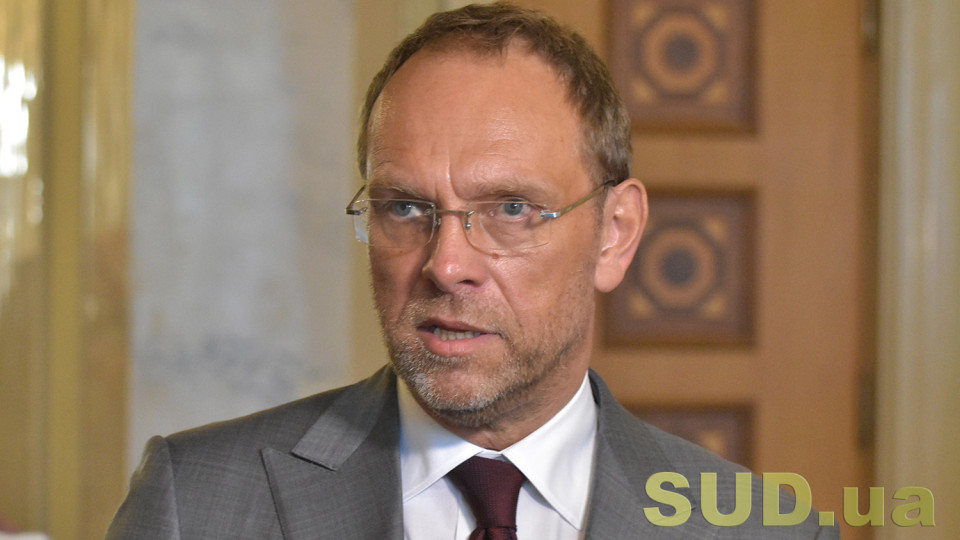










An acute discussion has arisen in the Ukrainian legal field around draft law No. 15289, authored by Member of Parliament Serhiy Vlasenko. The document aims to reform the procedure for disclosing information about pre-trial investigations in proceedings involving political figures.
In a comment for the "Judicial and Legal Newspaper", Serhiy Vlasenko said that the main idea is to establish judicial control over the dissemination of sensitive information, which often becomes a tool of political struggle. In conditions where "leaks" of case materials have become a systemic problem, confirmed even by an NABU audit, the proposed changes aim only to protect the fundamental human right to the presumption of innocence and the preservation of business reputation.
The draft law was developed in compliance with the resolution of the Parliamentary Assembly of the Council of Europe "Violence and hate speech against politicians: a threat to democracy." Paragraph 21.2 of this resolution directly recommends that states introduce legislation limiting the disclosure of information about ongoing investigations concerning politicians at early stages without prior judicial permission.
Serhiy Vlasenko emphasizes that a politician's reputation is one of the key professional assets. Prolonged public coverage of a criminal proceeding against a person can cause significant damage to their political career, even if the court later finds them innocent. The consequences of such reputational losses cannot be fully compensated even after an acquittal.
Three-step mechanism instead of arbitrary decisions
Currently, an investigator with the prosecutor's consent can independently decide what and when to disclose. Draft law No. 15289 proposes to change this in favor of a judicial filter.
Any publication of materials is possible only based on a court ruling.
Law enforcement officers are obliged to act strictly within the limits defined by the court ruling.
Before disseminating information, it is necessary to invite the person concerned to hear their arguments against such disclosure.
European experience
As an example of more restrained communication by law enforcement agencies, the draft law author cites British practice. According to him, during the search of Prince Andrew, the police statement was limited to brief information about the investigative action itself and a note that additional comments would be provided only after the investigation is completed.
In contrast, in Ukraine, law enforcement agencies often accompany high-profile cases with large-scale information campaigns. According to him, such actions can shape public attitudes toward case figures even before a court decision is made, while in the absence of a guilty verdict, public refutations or apologies usually do not occur.
Public interest
Draft law No. 15289 introduces the criterion of prevailing public interest, which the court must assess when issuing a ruling permitting the disclosure of information. The presence of prevailing public interest should be determined by the court taking into account the practice of the European Court of Human Rights.
According to Serhiy Vlasenko, the mere fact of notifying a person of suspicion does not always constitute public interest. He stresses that in some cases, the disclosure of such information may be aimed not at informing the public but at creating an informational resonance around the activities of law enforcement agencies.
Moreover, the draft law is intended to reduce the number of unofficial leaks of pre-trial investigation materials. According to the author of the initiative, this should help protect the rights of participants in criminal proceedings and limit the practice of disseminating information often used in political struggles or to manipulate public opinion.
The draft law provides for a ban on involving Members of Parliament of Ukraine and judges in confidential cooperation during covert investigative (search) actions or other forms of covert interaction. Materials obtained in violation of this prohibition are proposed to be recognized as inadmissible evidence.
Recognition of evidence as inadmissible is possible if it is proven that the disclosure of information occurred from the prosecution side contrary to a court ruling or without it altogether. This will force prosecutors and investigators to think about the legal purity of the process, not about the number of views on social networks.
Draft law No. 15289 does not provide for a ban on the dissemination of information about criminal proceedings, but introduces a mechanism of judicial control over the disclosure of pre-trial investigation data. According to the Member of Parliament, the initiative should bring Ukrainian legal practice closer to the standards of the Council of Europe and ensure a balance between the public's right to information and the individual's right to a fair trial.
The introduction of judicial control will strengthen the protection of individuals' reputations from unfounded informational attacks, prevent the use of law enforcement agencies for informational support of high-profile cases, and increase responsibility for illegal disclosure of investigation secrecy through the mechanism of recognizing certain evidence as inadmissible.
"This is the European way," said the Member of Parliament, emphasizing the need to avoid manipulations about the alleged "closure of proceedings." If the prosecution side considers it necessary to disclose materials, it must prove to the court the prevailing public interest, rather than simply engaging in political PR.
Subscribe to our Telegram channel t.me/sudua and to Google News SUD.UA, as well as to our VIBER and WhatsApp pages on Facebook and Instagram to stay informed about the most important events.