Remote Medical-Commissions and Disability Expertise Abroad: Why the Right to Examination Remains Declarative


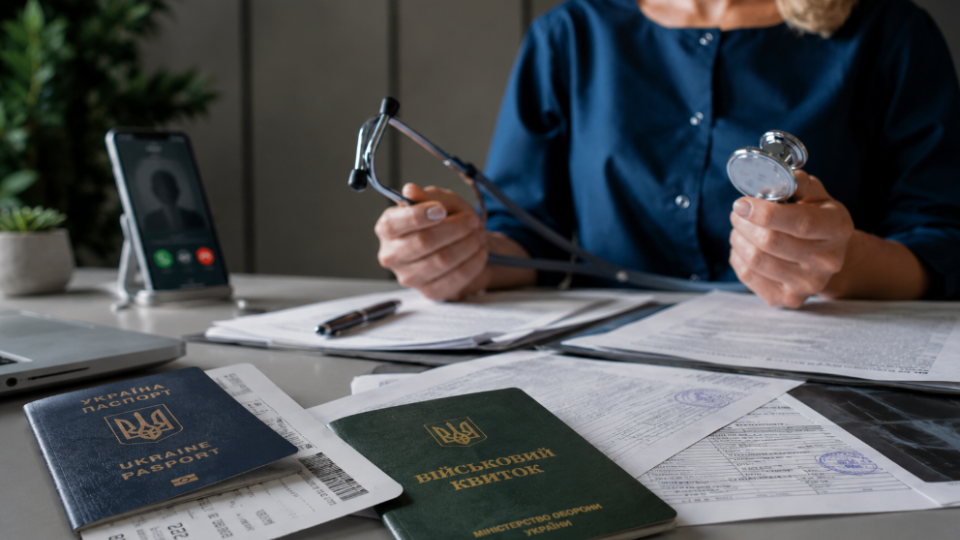










As of 2026, a significant portion of Ukrainian citizens reside abroad, which requires adapting medical-social procedures to the conditions of forced migration. The government has introduced a number of regulatory acts, including Cabinet Resolution No. 1338 regarding disability expertise and No. 1125 concerning the experimental project of remote medical commissions for the military. However, in practice, many obstacles arise at the stages of referral formation, legalization of foreign documents, and the lack of clear algorithms for doctors managing patients remotely.
The problem of forming referrals and declarations with doctors
The remote form of disability expertise evaluation (exclusively based on documents) is the most realistic path for citizens abroad. The very first barrier on the way to examination is the need to obtain a referral. According to Resolution No. 1338, it can be issued by a family or specialized doctor, as well as the head of the medical commission.
Many citizens have been abroad for years and do not have active declarations with Ukrainian doctors. Without a personal examination, doctors in Ukraine often refuse to take professional responsibility for issuing referrals based on foreign documents.
Expert teams require fresh medical information to make a lawful decision, while diagnoses and examinations of patients evacuated since the start of the full-scale war are often outdated for the Ukrainian system.
Doctors lack methodological recommendations for assessing foreign medical documentation, which often leads to patients being asked to appear in person in Ukraine—a task impossible for many due to health conditions or status.
Translations, stamps, and ICD codes
The situation is even more acute for military personnel receiving treatment abroad. Resolution No. 1125 provides for remote expertise, but procedural amendments to the Ministry of Defense Order No. 402 are still under approval.
Due to delays in conducting remote medical commissions, wounded soldiers lose financial support, as payments by law are tied to commission decisions.
Bedridden or unconscious patients physically cannot collect and translate documents themselves, necessitating the creation of a coordinator institution.
Medical documentation in EU countries significantly differs from Ukrainian standards, creating distrust among expert teams and domestic doctors.
Moreover, foreign clinics mostly generate discharge summaries automatically through local digital health systems. Such documents lack the usual Ukrainian stamps, handwritten doctor signatures, or apostilles. Despite the official status of these documents in the issuing country, Ukraine still lacks clear Ministry of Health guidelines on the procedure for confirming their authenticity.
Foreign doctors often do not indicate International Classification of Diseases (ICD-10) codes in their epicrises. For the Ukrainian system, this becomes a formal reason to return the document package for revision.
Consular actions and legal legalization
The Ministry of Foreign Affairs claims that certification of translator signatures should be free for military personnel and persons with disabilities. However, difficulties arise in practice. Many consular actions require personal presence, which is impossible for immobile patients.
There is also confusion between translation certification and legalization of originals, which require different procedures depending on the country of residence.
To overcome the remote expertise crisis, the National Association of Advocates of Ukraine, Ministry of Health, Ministry of Defense, and Ministry of Foreign Affairs propose legislatively recognizing foreign medical documents issued by official institutions as valid evidence without mandatory apostille for EU countries.
They also suggest creating a mechanism for automatic data import from medical systems of countries of residence into the Ukrainian eHealth system and establishing separate expert teams at the Ministry of Health or Ministry of Defense specializing exclusively in working with documents from abroad, staffed with medical translators.
From declarations to real protection
The current system of remote medical commissions and disability expertise abroad is fragmented. Despite progressive Cabinet resolutions, the absence of subordinate acts negates the reform’s advantages.
It is critically important for the state to change the process philosophy, where the state must ensure support and recognition of documents. Creating a network of regional coordinators, simplifying translation requirements, and transitioning to fully electronic data exchange with foreign clinics is the only way to preserve human rights and social justice for those who need it most—wounded defenders and citizens with disabilities located outside Ukraine.
Subscribe to our Telegram channel t.me/sudua, Google News SUD.UA here, as well as our VIBER and WhatsApp pages, and follow us on Facebook and Instagram to stay informed about the most important events.