Error in documents for “eRecovery” may cost a housing certificate: analysis of real precedents


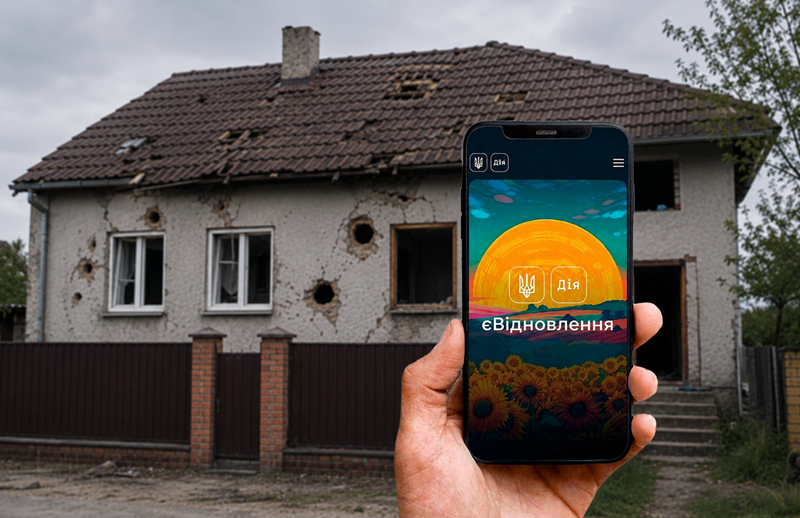










After the start of the full-scale aggression of the Russian Federation, the issue of compensation for damage to destroyed and damaged housing has become particularly important.
One of the tools of state support was the “eRecovery” program, which provides compensation to owners of residential real estate. Despite the digitization of the procedure and simplification of the application submission mechanism through the “Diia” app, practice has shown that a significant number of applications are accompanied by legal problems.
Some disputes arise due to inaccuracies in applicants’ documents, others — due to different interpretations of the legislation by commissions of local self-government bodies. As a result, the issue of exercising the right to compensation increasingly becomes the subject of judicial review.
As previously noted by “Judicial and Legal Newspaper”, the greatest difficulties in obtaining compensation arise regarding housing in temporarily occupied territories, since conducting inspections and confirming the fact of its damage or destruction is often impossible.
This legal uncertainty is often exploited by fraudsters who promise “guaranteed compensations,” expedited payments, or access to non-existent special programs. At the same time, current legislation does not provide for receiving compensation through intermediaries or bypassing the official procedure.
Legislative regulation of the eRecovery program
The legal basis for the program’s operation is the Law of Ukraine “On Compensation for Damage and Destruction of Certain Categories of Real Estate Objects as a Result of Hostilities, Terrorist Acts, Sabotage Caused by the Armed Aggression of the Russian Federation Against Ukraine” No. 2923-IX.
The law defines the circle of persons entitled to compensation, the types of objects for which it is provided, the procedure for decision-making, and the powers of commissions reviewing compensation issues.
The practical mechanism for implementing the program is detailed in resolutions of the Cabinet of Ministers of Ukraine, in particular regarding the procedure for submitting applications, inspecting damaged objects, and issuing housing certificates.
To receive compensation, a person must confirm ownership of the housing, the fact of its damage or destruction, and compliance with other criteria established by law.
Typical mistakes of applicants and problematic aspects of law enforcement
One of the most common problems may be the lack of proper confirmation of ownership rights.
Most difficulties arise regarding real estate rights acquired many years ago and not entered into the State Register of Property Rights to Real Estate. Formally, a person may be the owner of a house or apartment, but the absence of current registration data complicates the application review.
A separate category of disputes is the inconsistency between information about the real estate object and its actual condition. This concerns unfinished construction objects, unauthorized extensions, reconstructions, as well as housing whose technical characteristics do not correspond to data in state registers and technical documentation.
In practice, difficulties also arise due to improper documentation of damages. Although the legislation does not impose on the applicant the obligation to independently conduct technical examinations, the lack of photo documentation, inspection reports, or other evidence often complicates establishing the circumstances of the damage.
At the same time, there is no unified approach in practice to the evaluation of such evidence, and in some cases commissions place an excessive evidentiary burden on applicants, effectively requiring confirmation not directly provided for by law.
A common problem is also the processing of compensation for inherited property. In practice, applicants may apply for compensation before completing the inheritance procedure or without state registration of ownership rights by the heir.
Additional difficulties may arise in cases where inheritance rights are disputed among several persons or when title documents for real estate were lost or not properly executed. Under such circumstances, confirming the right to compensation may require prior resolution of inheritance issues.
Judicial view
It is worth recalling that the Supreme Court in case No. 945/1826/24 emphasized that the burden of proof of the fact of damage and its amount lies with the plaintiff, and to confirm losses, inspection reports, expert conclusions, photo and video recordings, extracts from registers, and ownership documents may be used.
In case No. 520/8464/24, the Supreme Court effectively confirmed the applicant’s right to judicial protection in case of improper consideration of an application for compensation under the “eRecovery” program. The dispute arose due to the inaction of the authorized body during the review of the application for compensation for a damaged real estate object, and the courts obliged the defendant to reconsider the application for compensation for the damaged housing.
At the same time, one of the mistakes may be the attempt to challenge the very existence of the compensation mechanism for damaged or destroyed housing or to demand compensation from the state without proving that the mechanisms provided by law, including the “eRecovery” program, were ineffective or improperly applied. This approach is observed in case No. 757/13711/22-c.
An important example is case No. 320/48639/23, in which the appellate court upheld the refusal of compensation under the “eRecovery” program because the applicant purchased the damaged house after its destruction due to hostilities. The court concluded that the right to compensation is linked to the person who was the owner of the property at the time of its damage.
A notable case is No. 400/3394/24, in which the court overturned the decision to refuse compensation under the “eRecovery” program. The refusal was based on the fact that no one had lived in the house for a long time and it was in a neglected state before the hostilities began. The court emphasized that such circumstances are not grounds for refusal under Law No. 2923-IX, therefore it recognized the commission’s decision as unlawful and obliged it to reconsider the applicant’s application.
Practical advice for applicants
Before submitting an application under the “eRecovery” program, it is worth checking whether ownership rights to the housing are registered in the State Register of Property Rights and whether the registration data correspond to the actual characteristics of the object. If the property was inherited, it is advisable to arrange inheritance rights in advance and register ownership rights with the state.
After housing damage, it is advisable to document the consequences of destruction as fully as possible: take photos and videos, keep inspection reports, notifications from authorities, and other documents that can confirm the nature and extent of the damage.
It is also worth checking the compliance of technical documentation with the actual condition of the property, since discrepancies regarding area, room composition, or reconstructions often complicate obtaining compensation.
In case of refusal, carefully analyze its reasons, as not every negative decision of the commission indicates the absence of the right to compensation. Often the problem can be resolved by submitting additional documents or appealing the decision in the manner prescribed by law.
Thus, the “eRecovery” program is an important mechanism for protecting the property rights of persons affected by armed aggression. At the same time, its application practice shows that a significant part of refusals is related not so much to the absence of the right to compensation as to problems confirming this right and shortcomings in documentary processing.
Also read: housing certificate and housing voucher: what is the difference and what they have in common — explanation.
Subscribe to our Telegram channel t.me/sudua and to Google News SUD.UA, as well as to our VIBER and WhatsApp, Facebook page and Instagram to stay informed about the most important events.