15 years imprisonment for combat orders: the Parliament proposes punishing commanders for unjustified military losses


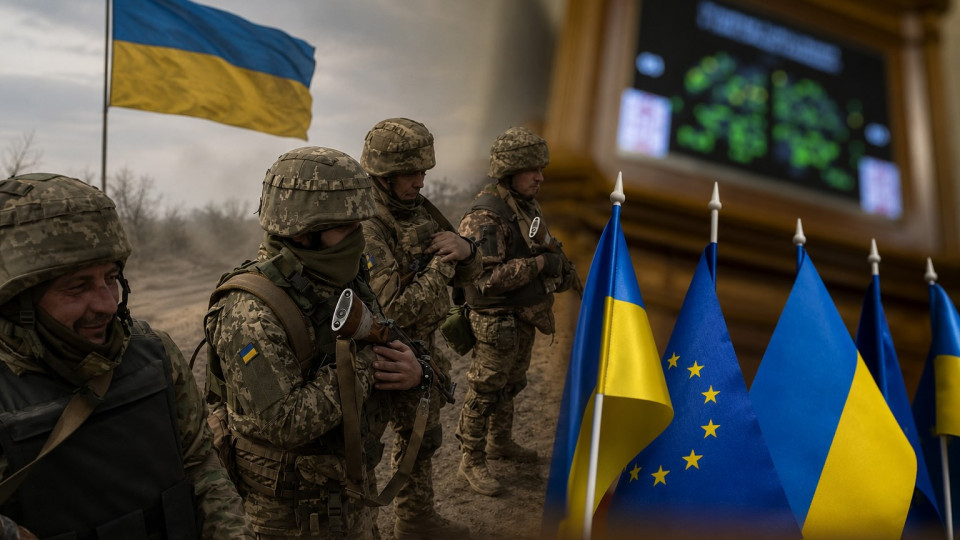










The war in Ukraine forces a revision not only of military tactics but also of criminal legislation. Modern combat practices in Ukraine have revealed a complex legal dilemma: the absence in the Criminal Code of a special provision for assessing orders that lead to critical losses due to obvious tactical imprudence.
The new draft law 15365, submitted to the Verkhovna Rada, proposes to supplement the Criminal Code with Article 426-2, which provides for up to 15 years imprisonment for "tactically imprudent" orders. As stated in the accompanying documents to the draft, it is a novelty aimed at balancing the protection of soldiers' lives and the protection of commanders from unjustified criminal prosecution for lawful combat decisions.
The Criminal Code proposes adding new Article 426-2: liability for orders that caused unjustified losses
The draft law proposes to supplement the Criminal Code of Ukraine with a new Article 426-2, which establishes liability for issuing an order or directive that caused unjustified personnel losses.
This concerns situations where a command decision is made despite obvious tactical or operational imprudence and leads to significant losses among servicemen.
What is considered unjustified losses
The draft law proposes to enshrine legal definitions that allow qualifying the consequences of such decisions:
- Unjustified losses — death, injury, captivity, or disappearance of servicemen that could objectively have been avoided by another decision according to combat statutes and instructions.
- Significant unjustified losses — cases of injury, death, captivity, or disappearance that do not reach the level of severe consequences but have a substantial scale.
- Severe unjustified losses — death of two or more persons or loss of combat capability of a unit or its part.
The proposed provision aims to strengthen personal responsibility of military officials for decision-making in combat conditions and to legally regulate situations where orders lead to significant avoidable losses.
Military officials are understood as military commanders, as well as other servicemen who permanently or temporarily hold positions related to organizational-command or administrative-economic duties, or perform such duties by special assignment of authorized command.
The initiative effectively introduces the criterion of "justifiability of combat decisions" as an element of criminal-legal assessment of command actions.
From restriction of liberty to 15 years imprisonment
The proposed model provides a strict gradation of punishment. The more severe the consequences of a mistaken or negligent order, the longer the imprisonment term for the commander:
If an imprudent order caused significant losses among personnel, the punishment is restriction of liberty up to 5 years or imprisonment from 3 to 7 years.
If the consequences are recognized as severe, the punishment level significantly increases — imprisonment from 5 to 12 years.
If the crime was committed under martial law or directly in a combat situation, the sanction is maximal — imprisonment from 7 to 15 years.
Separate offense: concealment of information about losses
The draft also provides punishment for intentional concealment of information about subordinate losses to avoid responsibility or mislead higher command (part 4 of Article 426-2). Such an act is punishable by restriction or imprisonment from 2 to 5 years.
Safeguard for commanders: justified tactical risk
The most important part of the draft is part 5, which exempts a person from liability if losses resulted from a justified tactical risk. A commander is not punishable if losses were the result of justified risk and the military official acted in accordance with combat statutes, instructions, and guiding documents, considering the situation, with no real possibility to make another decision and having taken all possible measures to minimize personnel losses.
According to draft law No. 426-2, the assessment of the "imprudence" of an order and the commander's actions will be carried out by pre-trial investigation bodies and the court within criminal proceedings, relying on specific criteria set out in the draft.
Since amendments to the Criminal Code of Ukraine are proposed, the final legal assessment of the military official's actions must be given by the court. At the investigation stage, detectives and prosecutors must establish whether the order was "obviously imprudent." However, the proposed structure lacks detail on which body or expert institution will perform this assessment — whether investigative bodies, military prosecution, courts, or special military expert commissions.
Risks for military officials
Introducing criminal liability for "unjustified losses" creates several risks for military management and combat decision-making practice.
One key risk is the evaluative nature of the concept "obvious tactical or operational imprudence." In practice, this means that a commander's decisions may be assessed retrospectively, without considering the real combat situation, time constraints, and incomplete information at the time of decision-making.
The draft provides for severe punishment — from 7 to 15 years imprisonment. Such a level of sanctions for management decisions in combat conditions may significantly affect command practice and risk assessment.
The main challenge of the proposed provision lies in balancing the need to ensure command responsibility and preventing criminalization of decisions made under complex combat conditions.
The draft's provisions require significant clarification — primarily regarding clear criteria for assessing imprudence, procedural guarantees, as well as defining a specialized expert body for evaluation and initiation of investigations.
Without such safeguards, there is a risk that the new article may complicate military command systems, creating an additional factor of legal uncertainty during combat decision-making.
Subscribe to our Telegram channel t.me/sudua and to Google News SUD.UA, as well as to our VIBER and WhatsApp, Facebook page and Instagram to stay informed about the most important events.