The Grand Chamber of the Supreme Court applied the ECHR's position on excessive court fees for legal entities


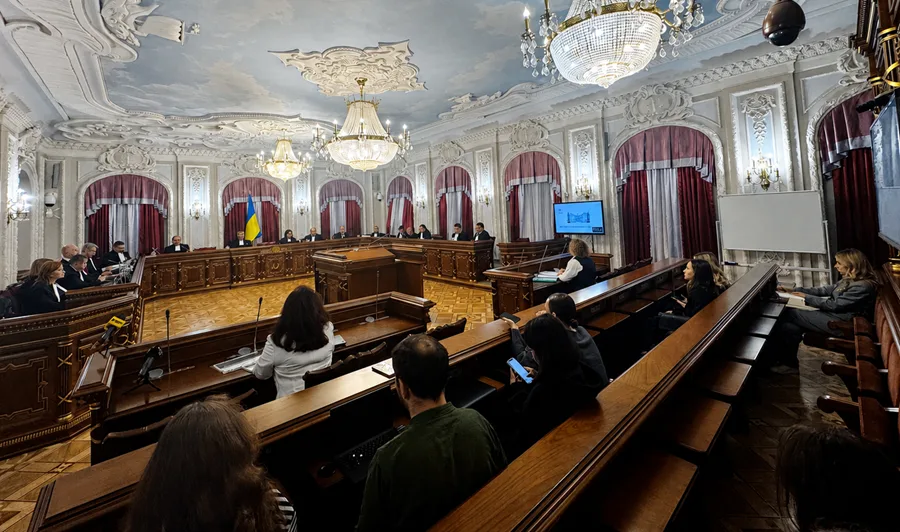










The Grand Chamber of the Supreme Court, in its ruling dated June 17, 2026, in case No. 917/1219/24, reviewed court decisions under exceptional circumstances following the ECHR ruling and determined that the formal application of the provisions of Article 8 of the Law of Ukraine "On Court Fees" without assessing the actual ability of a legal entity to pay the court fee does not comply with the requirements of Article 6 of the Convention for the Protection of Human Rights and Fundamental Freedoms.
The ruling of the Grand Chamber of the Supreme Court is of significant importance for all categories of cases in which legal entities apply for deferral, installment payment, reduction, or exemption from court fees due to difficult financial conditions, as it emphasizes the necessity of an individual assessment of the proportionality of such a restriction on the right of access to court.
Circumstances of the case
A limited liability company filed a claim with the Commercial Court of Poltava Region to remove obstacles in using its non-residential premises. The plaintiff requested, among other things, to cancel an archival entry in the State Register of Property Rights, the decision on state registration of ownership rights, and the decision of the state registrar, since due to the existence of the respective entry, it was denied state registration of ownership rights.
Along with the claim, the Company submitted a motion for deferral of court fee payment, stating that it had practically not conducted business activities during 2020–2023, received minimal income which was used to pay taxes and utilities, and had no funds in its bank account. Financial statements and bank statements were submitted as evidence.
The court of first instance refused the deferral of the court fee payment, left the claim without movement, and after the deficiencies were not remedied, returned the claim. The appellate court also denied the motions for deferral and reduction of the court fee, returned the appeal, and the Cassation Commercial Court refused to open cassation proceedings.
After that, the Company applied to the European Court of Human Rights, which in the case "Mohyla and others v. Ukraine" found a violation of paragraph 1 of Article 6 of the Convention, recognizing that an excessive court fee in the proceedings undermined the very essence of the Company's right of access to court.
Based on this ECHR decision, the Company applied to the Grand Chamber of the Supreme Court with a request to review the court decisions under exceptional circumstances.
Position of the Grand Chamber of the Supreme Court
The Grand Chamber of the Supreme Court noted that reviewing court decisions after the ECHR establishes a violation of the Convention is one of the mechanisms for restoring violated rights of a person and ensuring the principle of state responsibility to individuals for its actions.
The court indicated that reviewing court decisions in connection with the ECHR ruling establishing a violation of the Convention is one of the mechanisms to ensure the effectiveness of the principle of state responsibility to individuals for its actions.
The Grand Chamber emphasized that by applying for a review of a court decision in connection with the ECHR ruling establishing a violation of the Convention, the person in whose favor such a decision was made primarily seeks to eliminate the consequences of the violation of their rights guaranteed by the Convention.
The Grand Chamber stated that the application must be considered taking into account the conclusions of the ECHR about the violation of paragraph 1 of Article 6 of the Convention due to an excessive court fee in the proceedings that undermined the very essence of the Company's right of access to court.
Analyzing the ECHR practice, the Grand Chamber noted that the requirements to pay court fees themselves do not contradict the Convention, but their application must comply with the principle of proportionality.
The court noted that such a situation took place in this case, since the Commercial Court of Poltava Region by its ruling dated 26.07.2024 left the Company's claim without movement, and by the ruling dated 31.07.2024 returned the claim without consideration.
At the same time, the courts refused the Company a deferral of court fee payment, reasoning that paragraphs 1 and 2 of part one of Article 8 of Law No. 3674-VI do not apply to legal entities regardless of the presence of a financial criterion, and the provisions of paragraph 3 of part one of the same article may be applied to a legal entity if the financial criterion is met, but only in cases where the subject of the claim concerns the protection of social, labor, family, housing rights or compensation for health damage, which is not the case here.
However, the court of first instance, as well as the appellate and cassation courts, did not assess the Company's arguments about its inability to pay the court fee due to difficult financial conditions caused by a significant reduction in business activities during 2020-2023 and the evidence attached to the motion, including financial statements and bank statements.
The Grand Chamber pointed out that the courts' conclusion about the impossibility of deferring court fee payment for legal entities under Article 8 of Law No. 3674-VI without analyzing the circumstances of the specific case, according to the ECHR conclusions, does not comply with the requirements of the Convention, since the proportionality of restricting access to court must be assessed individually, taking into account the actual ability of the legal entity to pay the court fee and the consequences of refusal of such access for its right to judicial protection.
Instead, the lower courts failed to justify their decisions regarding the proportionality of the applied restriction (part five of Article 236 of the Civil Procedure Code of Ukraine), therefore the court decisions the Company requests to review under exceptional circumstances are not properly reasoned within the meaning of Article 6 of the Convention.
According to the Grand Chamber, the nature of the violation established by the ECHR in the ruling (restriction of access to court due to an excessive court fee without assessing the financial condition of the legal entity) fundamentally contradicts the Convention, as this restriction undermined the very essence of the Company's right of access to court.
Given the nature of the violation established by the ECHR in the ruling, the Grand Chamber decided that it can only be remedied by canceling the court decisions listed in the operative part of the application and referring the case to the court of first instance for proper consideration of the Company's motion for deferral of court fee payment in the context of deciding on the acceptance of its claim for consideration, taking into account the ECHR conclusions and evaluation of the evidence attached to the motion.
Referring the case to the court of first instance is necessary because it has the authority to decide on the acceptance of the claim for consideration and to evaluate evidence when considering the motion for deferral of court fee payment.
The Grand Chamber of the Supreme Court satisfied the application for review of court decisions under exceptional circumstances, canceled the rulings of the courts of first, appellate, and cassation instances, and referred the case to the Commercial Court of Poltava Region to decide on the opening of proceedings.
Thus, this ruling confirms that when deciding on the deferral of court fee payment, the court must assess the actual ability of the legal entity to pay it and the proportionality of restricting the right of access to court, taking into account the requirements of Article 6 of the Convention and the practice of the ECHR.
Additionally, read another position of the Grand Chamber of the Supreme Court: why the Supreme Court reduces lawyers' fees.
Subscribe to our Telegram channel t.me/sudua and to Google News SUD.UA, as well as to our VIBER and WhatsApp, Facebook page and Instagram to stay updated on the most important events.