Why the Victim's Gross Negligence Does Not Relieve Ukrainian Railways of Liability for Compensation and Why the Victim's Intent Must Be Proven: Supreme Court Case Law












Judicial practice in cases of compensation for damage caused by a source of increased danger (SID) has always been a battleground of interests between large carrier corporations and injured citizens. This issue is especially relevant in cases involving tragic incidents on railways, metro systems, airports, and other organizations whose activities involve the use of sources of increased danger.
In its ruling dated July 6, 2026, in case No. 173/2934/25, the Supreme Court confirmed the consistency of the approach to applying the rules on liability for damage caused by a source of increased danger. The decision is illustrative for practice as it outlines the limits of the carrier's liability and clarifies when referring to the injured party's behavior does not exempt the holder of the source of increased danger from the obligation to compensate for the damage caused.
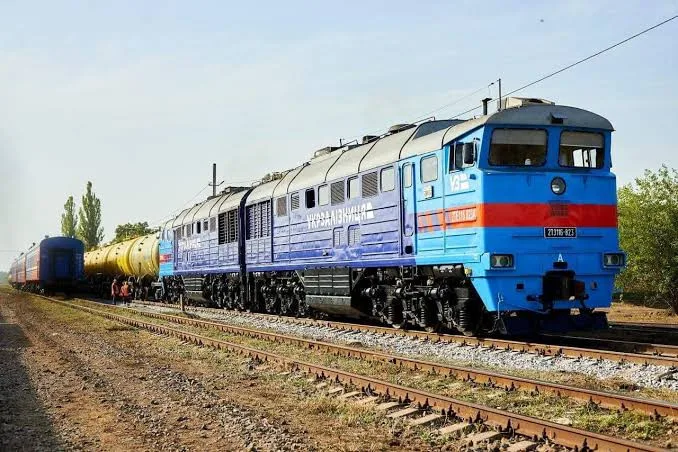
The tragedy occurred at a railway station. A passenger train struck a pedestrian who suffered fatal injuries. The deceased's relatives — mother, daughter, and wife — filed a lawsuit seeking 300,000 UAH each for moral damages (to the mother and daughter) and 29,170 UAH for material damages to the wife for burial expenses.
The railway's official investigation and the investigator's decision to close the criminal case confirmed the absence of the train driver's guilt, indicating that the cause of the tragedy was the injured party's own negligence.
Position of the courts of first and appellate instances
The District Court of Dnipropetrovsk region and subsequently the Dnipro Appellate Court reached the same conclusions regarding the disputed legal relations.
The courts proceeded from the fact that the railway, as the holder of a source of increased danger, bears civil liability for the damage caused regardless of fault, unless it proves the existence of grounds provided by law for exemption from such liability.
At the same time, the case materials contained no proper and admissible evidence that the deceased acted intentionally to deprive himself of life. Therefore, the courts found no grounds for full exemption of the defendant from liability.
However, the courts took into account that the injured party showed gross negligence, which contributed to the occurrence of the tragic consequences. Considering the provisions of Article 1193 of the Civil Code of Ukraine, the amount of compensation for moral damages was reduced from 300,000 UAH to 200,000 UAH for each of the two plaintiffs.
In addition, the courts fully satisfied the claim for reimbursement of burial expenses in the amount of 29,170 UAH, rejecting the defendant's objections regarding the validity of the submitted sales receipt as proof of incurred expenses.
The philosophy of justice in cases involving a source of increased danger
The railway filed a cassation appeal, advancing a new legal construction. The defendant argued that a person's conscious presence on the tracks in front of a train constitutes "indirect intent" by analogy with Article 24 of the Criminal Code of Ukraine. According to the railway, if a person is aware of the danger and consciously allows it, this should be considered the injured party's intent within the meaning of part 5 of Article 1187 of the Civil Code of Ukraine, which is grounds for full exemption from liability.
The Supreme Court agreed with the conclusions of the lower courts and left their decisions unchanged.
The Court emphasized that the norms of civil law independently and fully regulate the issue of liability for damage caused by a source of increased danger. The provisions of Articles 1187 and 1193 of the Civil Code of Ukraine clearly distinguish the injured party's intent, which may be grounds for exempting the holder of the source of increased danger from liability, and gross negligence, which is only grounds for reducing the amount of compensation.
The Court specifically noted that applying the criminal law concept of indirect intent to such legal relations is unfounded, since civil law contains no gaps that would require the application of analogy of law.
The Supreme Court also stressed that it is the holder of the source of increased danger who bears the burden of proving the injured party's intent to cause harm to himself. In this case, no proper evidence was provided that the deceased consciously sought his own death.
When assessing the amount of compensation, the Supreme Court concluded that the compensation for moral damages set by the lower courts at 200,000 UAH for each of the two plaintiffs corresponds to the principles of reasonableness, balance, and fairness, taking into account the injured party's gross negligence and the irreversibility of the loss of a loved one.
Significance of the decision for judicial practice
The Supreme Court's ruling is important for the further formation of unified practice in disputes over compensation for damage caused by a source of increased danger.
First and foremost, the Court confirmed that the absence of criminal liability of enterprise employees, including the train driver, does not in itself exempt the holder of the source of increased danger from civil liability for the damage caused.
Moreover, the Supreme Court drew attention to the issue of proving burial expenses, agreeing with the conclusions of the lower courts that a sales receipt may be valid evidence of incurred expenses if, together with other evidence, it confirms the fact of their occurrence.
At the same time, the Court confirmed the established approach that the injured party's violation of safety rules is not an unconditional ground for exempting the holder of the source of increased danger from liability. In the absence of proven intent of the injured party, such behavior can only be taken into account when determining the amount of compensation according to Article 1193 of the Civil Code of Ukraine.
According to the provisions of the Civil Code of Ukraine cited by the court in this case, liability for damage caused by a source of increased danger lies with any person (natural or legal) who legally possesses such a source.
Liability rests with the lawful holder — this may be the owner, a person possessing property based on another real right, lease agreement, contract, etc. This applies to metro systems, airports, and any other organizations whose activities involve the use of objects that create increased danger.
A source of increased danger is recognized as an activity related to the use, storage, or maintenance of vehicles, mechanisms, and other objects that, due to their properties, create a danger beyond full human control. This undoubtedly includes metro trains, airplanes at airports, or motorized watercraft at boat stations.
The main feature is that the holder is obliged to compensate for damage regardless of fault. Even if employees, such as a metro driver or pilot, did not violate any rules, the owning organization still bears civil liability.
The law provides only two exceptional circumstances under which the holder of a source of increased danger may be exempted from liability:
- If the damage was caused by force majeure (extraordinary and unavoidable external events).
- If the damage was caused by the injured party's intent (when a person not only foresaw but desired or consciously allowed the harm to himself, for example, in the case of suicide).
At the same time, if there was gross negligence on the part of the injured party, such as violating rules for being on transport facilities, this does not fully exempt the holder from liability but may only be grounds for reducing the amount of compensation.
Article 3 of the Constitution defines human life and health as the highest social value. In the conflict between the property interests of a large corporation and the right to life or the relatives' right to compensation for the loss of life, the law a priori sides with the person. The court emphasizes that "it is impossible to put a price on human life and bring back a loved one," so compensation is only a "fair satisfaction."
Is it fair that the holder pays the full amount if the injured party is at fault? From a legal perspective, justice lies not in finding who is to blame for the tragedy but in imposing the obligation to compensate on the party that consciously operates deadly dangerous equipment. However, if the injured party's actions involve gross negligence, the amount of payment should be reduced to avoid unjust enrichment.
Subscribe to our Telegram channel t.me/sudua and to Google News SUD.UA, as well as to our VIBER and WhatsApp pages on Facebook and Instagram to stay updated on the most important events.