Limits of Justice: Where the Powers of the High Council of Justice End and the Supreme Court's "Red Lines" Begin


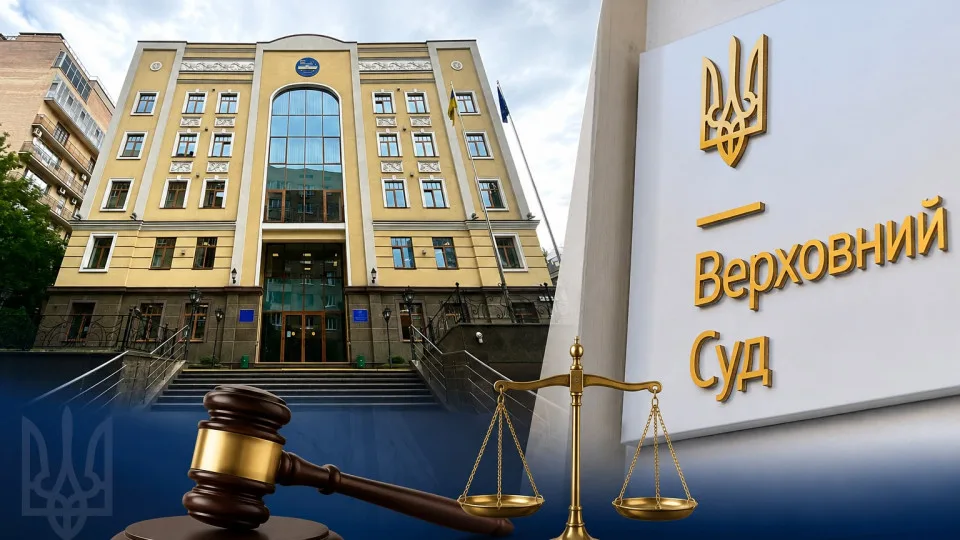










On July 21, the High Council of Justice published a Summary of the practice of reviewing decisions of the Disciplinary Chambers for 2025. This document is important for understanding whether the practice of holding judges accountable is truly stable and predictable, which is one of the requirements on Ukraine’s path to the EU.
The purpose of this report is to show uniformity of practice; however, the analysis of the Supreme Court’s Grand Chamber decisions indicates problems in the Council’s own interpretation of the law. The published summary presents a picture of a "stable and predictable" system. Yet behind the dry statistics of 84 decisions lie sharp conflicts with the Supreme Court’s Grand Chamber and changes in approaches previously considered unshakable.
Statistics of the High Council of Justice: almost 60% of disciplinary decisions regarding judges remain unchanged
In 2025, the High Council of Justice reviewed 110 complaints concerning 93 judges and adopted 84 decisions. In most cases, the Council upheld the conclusions of its Disciplinary Chambers: 58% of decisions (49) were left unchanged. At the same time, 13 decisions (15%) were completely annulled, and another 4 (5%) were changed in terms of the type of disciplinary sanction.
Most complaints concerned judges from Kyiv (30 judges), followed by the Poltava and Kharkiv regions. The vast majority of disciplinary proceedings involved judges of local general courts — 63%.
Limits of the High Council of Justice’s powers and judicial decision review
The Supreme Court’s Grand Chamber has repeatedly pointed out to the High Council of Justice the inadmissibility of substituting itself for the appellate court.
Case No. 990SCGC/2/24 (Proceeding No. 11-14sap24, Grand Chamber ruling dated June 13, 2024). The Court emphasized that the assessment of the validity of procedural requests, such as investigators' motions, belongs exclusively to higher courts. The disciplinary body has no right to give its own evaluation of such motions, as this exceeds its powers.
The summary also outlines the criteria for applying paragraph 4 of part one of Article 106 of the Law "On the Judiciary and the Status of Judges." To hold a judge accountable, it is not enough to merely state an error in the application of the law.
The High Council of Justice must prove the presence of a subjective side of the offense: intent or gross negligence, manifested in a clear excess of permissible judicial discretion. Furthermore, the Supreme Court’s Grand Chamber in its ruling dated January 22, 2026, emphasized that human rights violations cannot be equated with any legal error. For disciplinary liability, specific negative consequences and actual harm to the rights holder must be established. The Grand Chamber indicated that the Council did not substantiate the presence of gross negligence and a direct causal link, effectively conducting a "review" of the decision’s validity.
Stable approaches or changing practice?
Despite the High Council of Justice’s claim that disciplinary practice in 2025 remained "generally uniform and consistent," the published summary indicates otherwise. The document records several cases where approaches to assessing identical or similar violations were revised. This raises the question of whether the practice is truly stable or if the Council is gradually changing its approaches.
The Administrative Offenses Code Case
One of the most illustrative examples concerns cases regarding the qualification of judges' actions who exempted drivers from liability under Article 130 of the Administrative Offenses Code (driving under the influence).
Previously, judges' actions exempting persons from liability under Article 130, for example, by transferring materials for consideration by a public organization under Article 21 or for insignificance under Article 22, were mostly qualified under subparagraph "b" of paragraph 1 of part one of Article 106 of the Law "On the Judiciary and the Status of Judges."
The Council noted that judges did not provide proper reasoning in their rulings as to why they ignored the direct legislative prohibition on applying such types of exemption for such cases.
For such negligence, judges were usually sanctioned with a warning.
In 2025, the High Council of Justice officially changed its approach. Now such actions are qualified under paragraph 4 of part one of Article 106 of the Law — as a gross violation of the law that led to significant negative consequences.
Why did the Council consider the previous qualification (under subparagraph "b" paragraph 1) erroneous? The Council concluded that in such cases there is not just a lack of reasoning but a conscious non-application of the current legal norm. The main arguments for the stricter qualification boil down to the fact that those found guilty effectively do not bear responsibility (a fine of 17,000 UAH and license suspension), receiving only an "oral remark."
According to the Council, this undermines the Administrative Offenses Code’s goal of preventing new offenses and creates a sense of impunity among citizens. No funds from fines enter the state budget. Such judicial decisions violate the law and undermine public trust in the judiciary.
The summary provides details on how judges tried to circumvent the law:
Ignoring the note to Article 22 of the Administrative Offenses Code: Judges applied exemption for insignificance, although the law clearly and unequivocally prohibits this for Article 130 cases.
Substitution of concepts: Judges defined "insignificance" not by the nature of the act (driving under the influence) but by personal characteristics: participation in public organizations, volunteering, or caring for sick relatives.
Failure to state reasons for rejecting evidence: Judges closed cases for lack of offense without explaining why they rejected official police evidence (bodycam videos, medical conclusions), which have a presumption of reliability. The Supreme Court’s Grand Chamber agreed this is a violation, as a person’s status cannot make a dangerous act "insignificant."
The High Council of Justice and the Supreme Court’s Grand Chamber now view exemptions under Article 130 despite the law’s direct prohibition as a systemic threat to the authority of justice. Whereas previously a judge might receive only a warning for "poor motivation" of a decision, now this is treated as a gross violation with significant consequences, potentially leading to harsher disciplinary sanctions.
Ambiguity in the "Maidan Cases"
Analysis of the High Council of Justice’s disciplinary practice summary also reveals the problem of ambiguity in cases related to the Euromaidan events. This category remains one of the most complex due to high public resonance and the conflict between procedural difficulties and the need to ensure justice within reasonable timeframes.
The main legal issue in the "Maidan cases" concerns the qualification of judges' actions regarding delays in proceedings. The Council often faces situations where judges justify years-long delays by objective factors: absence of participants, a large number of victims, or case complexity.
However, in 2025, the Council again demonstrated a tougher approach, which the Supreme Court’s Grand Chamber assessed ambiguously:
The Council’s position is that a judge, aware of the significant public interest in Euromaidan cases, is obliged to take extraordinary measures to ensure the hearing. If there are 78 victims, including members of parliament and journalists, and the process is systematically covered by the media, simple postponements due to lawyers' absence are insufficient.
In one case, the Disciplinary Chamber initially did not see misconduct in the delay, but the Council itself recognized this as a mistake upon review. The Council ruled that systematic postponements leading to the expiration of limitation periods and case closure against the accused constitute a disciplinary offense under paragraph 2 of part 1 of Article 106 of the Law "On the Judiciary and the Status of Judges."
The greatest ambiguity lies in how different bodies interpret similar circumstances. The summary notes that the Supreme Court’s Grand Chamber directly pointed out to the Council the inconsistency of approaches in establishing signs of judicial misconduct.
The Grand Chamber noted that the Council sometimes assesses only the duration of the process without analyzing the judge’s specific actions in the context of each delay.
The Court emphasized that conclusions about the legality of judicial decisions (especially in Maidan cases) should be made through procedural channels, not by the disciplinary body, which sometimes effectively conducts a "review" of the decision instead of assessing behavior.
The Council tried to hold judges accountable for human rights violations without proving specific harm caused by the judge’s actions rather than by the objective complexity of the case or participants' medical conditions.
Due to the lack of a unified standard, judges in "Maidan cases" often become hostages of the situation. On one hand, Disciplinary Chambers may apply milder sanctions, considering delays a result of workload. On the other hand, the plenary composition of the Council may change this to harsher punishment — suspension from justice with referral for training at the National School of Judges.
The summary shows that the Council is trying to form a standard of an active judicial role in high-profile cases. However, ambiguity remains: the Supreme Court’s Grand Chamber continues to annul Council decisions due to incorrect qualification and violation of the proportionality principle.
Are all cases considered: "perfect picture" or objectivity?
The summary is prepared based on decisions made up to June 18, 2026. It includes both positive examples where the Council identified extraprocedural communication or justification of Russian aggression, and cases where the Council annulled chamber decisions due to lack of judge’s guilt. However, the text reveals a certain institutional bias.
The Council describes in detail its successes in combating "collaborator judges" and those who acquired foreign citizenship.
For example, the Grand Chamber emphasized that the Council cannot apply a strict formal approach to participants in disciplinary proceedings if the reason for missing a deadline was the untimely preparation or sending of the full text of the Disciplinary Chamber’s decision. The Court stressed that it is unfair to demand flawless compliance with deadlines from applicants when delays were caused by the disciplinary body itself.
For these reasons, the Grand Chamber annulled the Council’s ruling of January 23, 2025, which refused to restore the deadline by applying a purely formal "mathematical" approach to its calculation. Upon reconsideration, the Council was forced to take into account the applicant’s active efforts to obtain the full text of the decision.
Although the Council’s summary reflects this legal position of the Supreme Court, it is presented only as judicial practice. At the same time, the document does not acknowledge that untimely preparation and sending of decisions may also indicate problems within the High Council of Justice or its secretariat.
The Council’s summary demonstrates a desire to unify disciplinary practice, but the Supreme Court’s Grand Chamber decisions show that key debates are far from over. Primarily, these concern the distinction between judicial error and disciplinary offense, the limits of the disciplinary body’s discretion, and the inadmissibility of substituting disciplinary proceedings for appellate or cassation review of judicial decisions. These issues, rather than statistics, will determine the further development of disciplinary practice.
Subscribe to our Telegram channel t.me/sudua and to Google News SUD.UA, as well as to our VIBER and WhatsApp, Facebook page and Instagram to stay informed about the most important events.