Stanislav Kravchenko: In 2025, citizens submitted over 620 thousand appeals to administrative jurisdiction


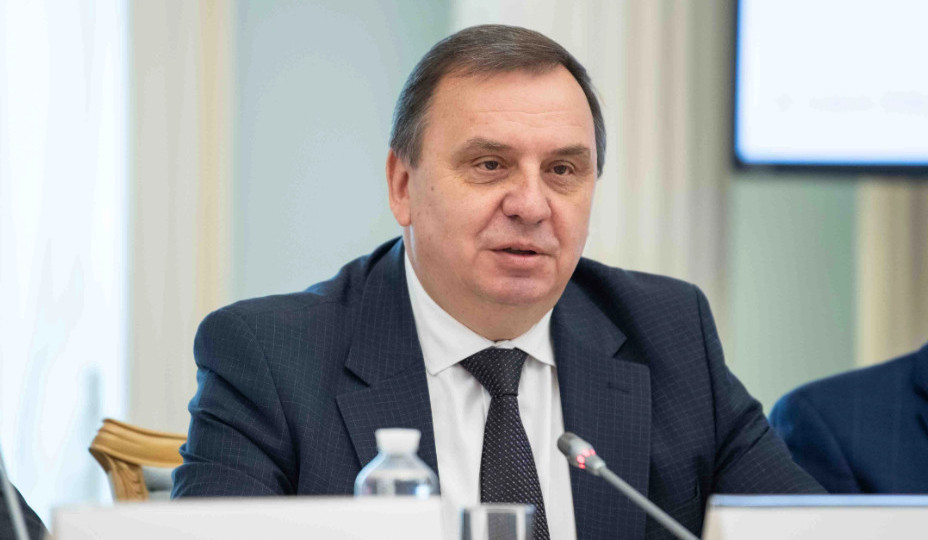










The Chairman of the Supreme Court, Stanislav Kravchenko, stated that in the development of Ukraine as an independent state, the creation of administrative jurisdiction was undoubtedly an important and serious step. The emergence of courts where one party is the state and the other is a natural or legal person has brought the national judicial system to a qualitatively new level. He said this during the presentation of the report "Application of the Law of Ukraine 'On Administrative Procedure'", which contains an analysis of regulatory legal regulation, judicial practice, as well as the results of sociological research.
Stanislav Kravchenko said that during the past year, about 93 thousand proceedings were received by the Supreme Court: 57 thousand of them (almost two-thirds of all submissions) were administrative cases. A similar situation exists in courts throughout the country. In 2025, citizens submitted over 620 thousand appeals specifically to administrative jurisdiction to protect their rights.
Such a number of appeals indicates people's trust in the courts and their desire to find protection precisely in the legal sphere. At the same time, these figures are extremely high, which forces a systematic reflection on the effectiveness of applying administrative procedure and optimizing the workload on courts. This is especially important in the context of fulfilling the European integration obligations provided by the Roadmap on the Rule of Law. And the adoption of the Law of Ukraine "On Administrative Procedure" (LAP) became a significant step towards improving the situation.
However, since the Law came into force (December 15, 2023), the number of administrative cases has not decreased, so there are grounds to consider the effectiveness of its application. "When we see that the state adopts a law, the court uses it, but then the court decision is not enforced, trust in both the court and the state is questioned, so it is important to find an effective mechanism to solve these problems and determine a common direction for the development of the application of administrative procedure in practice," noted the Chairman of the Supreme Court.
As emphasized by the sector manager of the EU Delegation to Ukraine, Thomas Stravinskas, the adoption of the Law of Ukraine "On Administrative Procedure" was an important event on the way to strengthening a fair and transparent model of interaction between citizens, business, and the state.
This Law aims to strengthen the level of protection of individuals, improve the quality of administrative procedures, and enhance trust in state institutions. At the same time, despite the strategic role of the Law, its implementation remains one of the key challenges requiring further systematic development and institutional support. One of the main issues is the development of a consistent approach to the interpretation and application of the Law by courts. Different judicial practices create risks regarding legal certainty, quality, and stability of law enforcement activities.
As the speaker reported, the research showed that fragmentation of administrative disputes among different jurisdictions does not contribute to the formation of unified judicial practice and opens the possibility for risks that similar situations may be assessed differently.
Overall, Thomas Stravinskas noted that administrative justice is a bridge to ensure the implementation of the provisions of the Roadmap on the Rule of Law. Proper, effective, and predictable judicial control over public administration strengthens any democratic state, so it is worth seeking ways to enhance further judicial practice of administrative courts while implementing the Law of Ukraine "On Administrative Procedure" according to the best EU practices.
Senior international expert of the EU project "Pravo-Justice", judge of the General Court of the EU (2016–2023), Virgilius Valancius, noted that just as the rule of law is the foundation of any democratic state, so the Law of Ukraine "On Administrative Procedure" is a key element ensuring the proper functioning of public administration (state governance).
Virgilius Valancius reported that the EU project "Pravo-Justice" both supported the development of the Law and in recent years contributed to organizing the professional development of judges of administrative jurisdiction. In particular, in January this year, the EU project "Pravo-Justice" together with the EU4PAR project organized a training event for authorities aimed at discussing key novelties of the Law of Ukraine "On Administrative Procedure".
At the same time, monitoring was conducted aimed at analyzing the regulatory framework, opinions of involved parties, and judicial practice regarding administrative procedure. The results of this monitoring, systematized in an analytical report, will give impetus for further contribution of administrative jurisdiction to the implementation of roadmaps on the rule of law and public administration reform.
The expert also warned that proper control over public administration (state governance) must be ensured precisely by administrative courts. Therefore, the judiciary must prevent possible fragmentation of disputes related to administrative legal relations among different jurisdictions. This is directly related to legal certainty, as similar cases cannot be resolved differently.
The first part of the event, dedicated to the topic "Implementation of the Law of Ukraine 'On Administrative Procedure' through the prism of judicial practice", was moderated by Virgilius Valancius. Participants discussed the purpose, methods, and scope of the study of the practice of applying the Law of Ukraine "On Administrative Procedure", as well as the significance of this act for transforming relations between individuals and the state.
The Chairman of the Cassation Administrative Court within the Supreme Court, Igor Dashutin, emphasized that the Law of Ukraine "On Administrative Procedure" became an important event for the Ukrainian legal system, as it for the first time at a general level enshrined fundamental principles of interaction between public authorities and private individuals, which are an integral part of the European legal tradition and democratic governance.
The Chairman of the CAC SC noted that today there is a gradual departure from the model where administrative procedure was perceived mainly as an internal technical mechanism of authority activity. Instead, an approach is forming according to which the procedure becomes a guarantee of human rights protection, since procedural violations are often the first sign of injustice. According to Igor Dashutin, a person has the right to be heard, to understand the motives of decisions affecting their rights and interests, and to expect consistency, good faith, and legal certainty from the state.
Igor Dashutin paid special attention to the role of administrative courts in shaping the practice of applying the new Law. He noted that judicial practice fills the law with real content, forming standards of behavior for both authorities and citizens. Among the key challenges of administrative justice, the Chairman of the CAC SC named defining the limits of discretionary powers of administrative bodies, assessing the materiality of procedural violations, requirements for motivation of administrative acts, and finding a balance between effective public administration and guarantees of human rights protection.
He also highlighted the role of judicial practice in forming a new legal culture of public administration. According to him, procedure should not become a bureaucratic barrier or an end in itself but should serve as a tool to ensure fairness of administrative decisions and effective protection of human rights.
The head of the CAC SC emphasized that the Law of Ukraine "On Administrative Procedure" is one of the most illustrative examples of Ukraine's movement towards European integration and implementation of European legal standards. He noted that principles of good governance, legal certainty, proportionality, the right to be heard, and the principle of protection of legitimate expectations are not only elements of legal technique but fundamental principles of a modern democratic state.
The Secretary of the Grand Chamber of the Supreme Court, Serhii Pohrebnyi, noted the emergence of clear criteria for assessing administrative acts in the Administrative Court of Ukraine in 2005. In his opinion, the Law of Ukraine "On Administrative Procedure" organically continued this logic and gave real content to the principles previously laid down by the legislator.
At the same time, the speaker emphasized that the LAP, according to its legal nature, contains norms of substantive, not procedural law. The Law of Ukraine "On Administrative Procedure" does not contain procedural law norms, the legislator did not introduce any changes to the Administrative Procedure Code of Ukraine, and therefore the Law does not introduce changes to the judicial process.
Serhii Pohrebnyi also noted that the Grand Chamber of the Supreme Court formulated and consistently adheres to the principle: "one dispute – one case," emphasizing the inadmissibility of considering one dispute by courts of different jurisdictions. A person must receive a final resolution of their dispute in one court – this is a requirement of legal certainty and a standard of the European Court of Human Rights.
The speaker noted that when private rights arise for two persons based on an administrative act, the dispute between them is no longer public-law and must be resolved under civil or commercial proceedings.
He also noted the important role of Article 77 of the Law of Ukraine "On Administrative Procedure" on the nullity of an administrative act. This provision overcomes the Soviet logic of mandatory judicial recognition of an act as illegal to terminate its effect. For court practice, this is, in the opinion of Serhii Pohrebnyi, a fundamentally new and important tool.
Cases related to the application of the Law of Ukraine "On Administrative Procedure" should be considered by administrative courts, as they arise in the sphere of public-law relations. This was emphasized by Supreme Court judge in the CAC, Nataliia Shevtsova, during the discussion.
The judge noted that today the Grand Chamber of the Supreme Court has not yet formed a separate legal conclusion regarding the jurisdiction of disputes related to the Law of Ukraine "On Administrative Procedure." At the same time, the practice that existed before the Law came into force does not take into account new approaches to regulating the activities of public administration.
Nataliia Shevtsova pointed out that the Law of Ukraine "On Administrative Procedure" regulates relations between the state represented by authorities and natural or legal persons, and public administration exercises its powers by adopting administrative acts that are mandatory for execution. According to her, such legal relations are characterized by the presence of an authoritative element and therefore belong to the sphere of public law.
The judge emphasized that according to Article 125 of the Constitution of Ukraine, administrative courts are called to resolve disputes in the sphere of public-law relations.
Nataliia Shevtsova also spoke about disputes in the field of state registration of property rights and land relations. In her opinion, decisions of state registrars, local self-government bodies, or the Ministry of Justice of Ukraine should be assessed precisely from the standpoint of legality of the actions of the authority and compliance with administrative procedure.
The judge also stressed that administrative justice ensures a proper balance between the individual and the state thanks to the principle of official clarification of all circumstances of the case and the obligation of the authority to prove the legality of its decision.
One of the biggest challenges for the judicial system after the launch of the State Register of Property Rights to Real Estate in 2013 was the lack of a unified approach to considering disputes regarding property rights and land relations. The regulation of this problem was named one of the key achievements of the Grand Chamber of the Supreme Court by the Secretary of the judicial chamber for land relations and property rights cases of the Cassation Commercial Court within the Supreme Court, Yuriy Chumak.
The Secretary of the judicial chamber noted that the Grand Chamber of the Supreme Court formed an approach according to which disputes over rights should be considered by commercial or civil courts, while administrative jurisdiction extends only to disputes with authorities. He also pointed out that the Law of Ukraine "On Administrative Procedure" does not resolve jurisdiction issues, as these rules are defined by procedural legislation.
Additionally, Yuriy Chumak addressed disputes regarding the renewal of land lease agreements and cancellation of registration actions by the Ministry of Justice of Ukraine. In such cases, he said, it is primarily about protecting property rights, and therefore they should be considered in commercial or civil jurisdiction, where full and final protection of the violated right is possible.
Summarizing, the judge emphasized the need to preserve the established practice of jurisdiction delimitation to avoid returning to situations where after lengthy consideration, proceedings were closed due to incorrect jurisdiction determination.
The Chairman of the Fifth Administrative Court of Appeal, Oleksandr Dzhaburiya, emphasized that the implementation of the Law of Ukraine "On Administrative Procedure" is directly related to ensuring the unity of judicial practice.
Commenting on the discussion regarding jurisdiction of disputes, the Chairman of the Fifth Administrative Court of Appeal noted that law enforcement issues should be assessed through the prism of the principle of legal certainty. In this context, he stressed the need for critical reflection on the already formed approaches of the Grand Chamber of the Supreme Court.
The speaker paid special attention to the so-called jurisdictional diffusion – the application of the Law of Ukraine "On Administrative Procedure" in decisions of civil and commercial courts. Some attempts to extend these approaches to other jurisdictions, he said, seem artificial and do not correspond to the nature of administrative proceedings.
At the same time, Oleksandr Dzhaburiya noted that each jurisdiction traditionally defends its own approach to resolving such disputes, and the formation of unified practice requires time. He is convinced that further development of judicial practice and the position of the Grand Chamber of the Supreme Court will determine the final approaches to applying the Law of Ukraine "On Administrative Procedure".
Judge of the Chernivtsi District Administrative Court, Oleg Anisimov, noted that the Law of Ukraine "On Administrative Procedure" has already positively influenced the interaction of citizens with authorities, as it provided people with more opportunities to be heard and understand the reasons for decisions made about them. According to him, the Law is aimed at implementing the principles of the rule of law, fairness, and respect for human dignity.
The speaker emphasized that jurisdiction issues should be resolved exclusively within procedural legislation (Code of Administrative Procedure of Ukraine, Commercial Procedural Code of Ukraine, and Civil Procedure Code of Ukraine). At the same time, he noted the need to form a unified approach in judicial practice to avoid different application of norms in regions.
Oleg Anisimov also drew attention to the importance of authorities adhering to administrative procedure. In his opinion, even a substantively correct decision should be canceled in case of a significant procedural violation, as the procedure guarantees a person the right to be heard and receive proper reasoning for the decision.
The practice of applying the Law of Ukraine "On Administrative Procedure" is still forming, and its further development requires joint work of courts, authorities, and legislators to develop a unified approach to law enforcement.
Summarizing the presentation of the report on the application of the Law of Ukraine "On Administrative Procedure", the Chairman of the CAC SC, Igor Dashutin, emphasized the importance of professional dialogue among representatives of administrative, commercial, and civil jurisdictions. According to him, such discussion allows a comprehensive assessment of law enforcement challenges and contributes to the formation of unified approaches in judicial practice.
Igor Dashutin noted that the effectiveness of administrative procedure depends not only on the quality of legislative norms but also on how consistently they are implemented in the activities of authorities and judicial practice. In this process, administrative justice must form clear and predictable standards for applying new procedural mechanisms and ensure a balance between public administration and protection of human rights.
The Chairman of the CAC SC also drew attention to the need for further development of stable and coordinated practice in applying the Law of Ukraine "On Administrative Procedure", particularly regarding jurisdictional disputes. He said that professional discussions, summarizing judicial practice, and developing possible legislative changes play an important role in this process.
At the end of the event, the Chairman of the Supreme Court, Stanislav Kravchenko, thanked the EU project "Pravo-Justice" for many years of support for judicial reform in Ukraine and noted that cooperation with international partners remains an important component of justice development. According to the Chairman of the Supreme Court, despite the changes already implemented, the reform process continues, and new challenges require further joint work.
Stanislav Kravchenko emphasized the importance of legislative mechanisms to ensure the unity of judicial practice, which, in his opinion, also require further improvement. At the same time, he stressed that the key remains a common aspiration to develop the legal system and strengthen the rule of law in Ukraine.
.jpg)
Subscribe to our Telegram channel t.me/sudua and to Google News SUD.UA, as well as to our VIBER and WhatsApp pages on Facebook and Instagram to stay informed about the most important events.