The Supreme Court discussed a new mechanism for distributing cases among commercial courts due to uneven workload


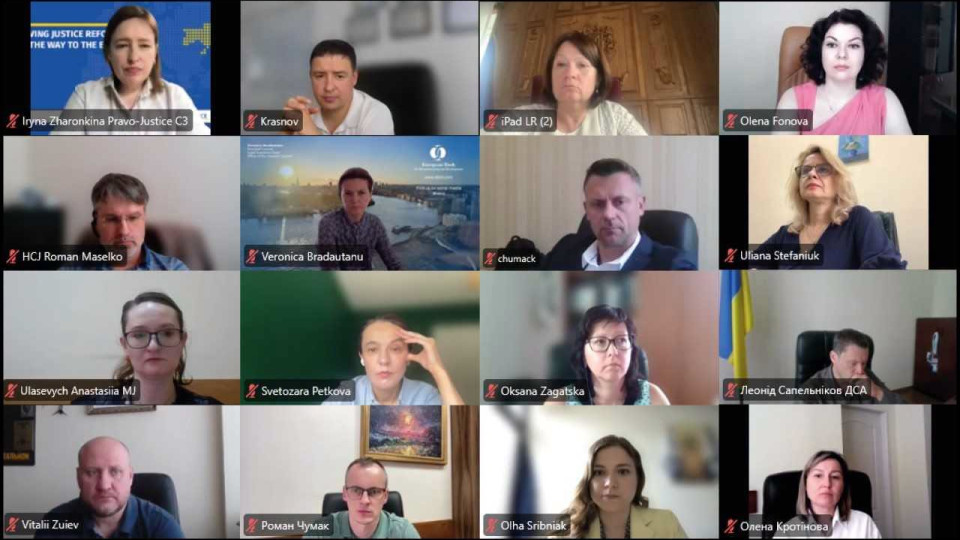










The Supreme Court held an expert discussion on the concept of the pilot project "Transterritorial Jurisdiction in Commercial Proceedings of Ukraine" to find a mechanism that would allow for a more even distribution of cases among commercial courts and more efficient use of the judicial system's resources.
The event was attended by Supreme Court judges, as well as representatives of the Ministry of Justice, the High Council of Justice, the High Qualification Commission of Judges, the Council of Judges of Ukraine, the State Judicial Administration, and the expert community.
Why the need for transterritorial jurisdiction arose
The issue of hearing cases outside territorial jurisdiction has become particularly relevant under martial law. After the start of Russia's full-scale aggression, commercial courts faced not only new categories of disputes but also challenges in judicial administration related to changes in the workload structure of the courts. In particular, the relocation of businesses from active combat zones to safer regions led to a significant decrease in the number of cases in the commercial courts of Donetsk and Luhansk regions, while certain courts in other regions, including the Commercial Court of Zakarpattia Region, the Commercial Court of Vinnytsia Region, and the Commercial Court of Kyiv city, operate under significant workload.
To overcome this imbalance, appropriate staffing mechanisms are already being implemented, including the completion of judge selection procedures and the use of temporary secondment of judges to other courts. At the same time, the search for additional tools that could contribute to more efficient and prompt case consideration continues. Meanwhile, in current conditions, the issue of rapid consideration of commercial disputes, necessary for the proper functioning of the economy, comes to the forefront.
The Chair of the Cassation Commercial Court within the Supreme Court, Larysa Rohach, noted that the discussion of the pilot project concept is part of a broader search for internal reserves of the judicial system to improve case consideration efficiency. In this context, transterritorial jurisdiction can be seen as one of the possible mechanisms to ensure access to justice and a more even distribution of cases among courts.
She also mentioned the development of digital judicial tools. According to her, commercial courts actively use the capabilities of the Unified Judicial Information and Communication System, the "Electronic Court" service, and videoconferencing. In particular, during 2025, almost 82.4 thousand court documents were sent to electronic participant cabinets, and 53% of cases in the Cassation Commercial Court of the Supreme Court were considered via videoconference. From January to May 2026, over a thousand court hearings took place in this format.
The Supreme Court also noted that the issue of hearing cases outside territorial jurisdiction requires comprehensive elaboration both in terms of legislative regulation and technical implementation. At the same time, according to the secretary of the judicial chamber for land relations and property rights cases of the Cassation Commercial Court of the Supreme Court, the level of digitalization of the judicial system and commercial jurisdiction, in particular, already creates prerequisites for introducing new approaches to organizing judicial proceedings.
He also drew attention to the trend of increasingly broad use of remote participation forms in the process and consideration of cases without the personal presence of party representatives, which is convenient for participants and corresponds to modern electronic justice capabilities. According to the judge, the development of electronic services and the gradual introduction of new modules of the Unified Judicial Information and Communication System indicate the readiness of the judicial system for further changes.
The Supreme Court emphasized that the introduction of the transterritorial jurisdiction mechanism should be gradual and take into account all possible risks and practical aspects. Therefore, according to the secretary of the judicial chamber for land relations and property rights cases of the Cassation Commercial Court, the pilot project may be the optimal way to test the effectiveness of this approach, assess its perception by process participants and judges, and determine prospects for further application of the mechanism to other categories of cases.
At the same time, the Supreme Court stressed the need to consider staffing factors and long-term consequences of possible changes, emphasizing that any decisions in this area must be carefully balanced.
Supreme Court judges also expressed the opinion that during the discussion of the transterritorial jurisdiction mechanism, attention should primarily focus on the practical tasks it is intended to solve. According to a Supreme Court judge in the Cassation Commercial Court, the problem of uneven workload among courts is objective, and its solution can positively affect both the speed and quality of commercial dispute consideration.
The speaker paid special attention to the development of electronic justice. He noted that the current level of digitalization of the judicial system, including the operation of the Unified Judicial Information and Communication System, already allows moving to new formats of organizing judicial proceedings. According to the Cassation Commercial Court judge, the experience of using electronic services confirms their effectiveness, and the number of complaints related to improper notification of case participants has significantly decreased.
Modern technologies should contribute to speeding up judicial proceedings and more efficient use of the judicial system's available resources.
Thus, supporting the idea of the pilot project on transterritorial jurisdiction, the Cassation Commercial Court emphasized the importance of its phased implementation. An analogy is seen here with the introduction of the Unified Judicial Information and Communication System subsystems, which also developed gradually.
According to the Cassation Commercial Court judge, it is advisable to first test transterritorial jurisdiction within the framework of order proceedings, and only after evaluating the results decide on its expansion to other categories of cases.
The parties also drew attention to the need to clearly define criteria for evaluating the pilot project's effectiveness. The issue of balancing workload among courts should primarily be addressed through proper staffing of the judicial system and determining the optimal number of judges in courts. At the same time, attention should be paid to the possible impact of the proposed changes on statistical indicators of judges' and courts' activities. In this regard, there may be a need in the future to revise certain approaches to evaluating judges' work applied by the High Qualification Commission of Judges of Ukraine and the High Council of Justice, particularly in matters of evaluation, appointment, and certain disciplinary procedures.
It is also necessary to consider the situations of courts that, due to the full-scale war, administer justice regarding territories where the volume of court cases has significantly decreased for objective reasons. It remains important not only to effectively distribute workload but also to preserve the staffing potential of such courts so that they can fully resume work in the future.
Subscribe to our Telegram channel t.me/sudua and to Google News SUD.UA, as well as to our VIBER and WhatsApp pages on Facebook and Instagram to stay informed about the most important events.