Posthumous Parenthood: Court Allowed a Woman to Give Birth to a Child from a Deceased Soldier Using Cryo-Embryos


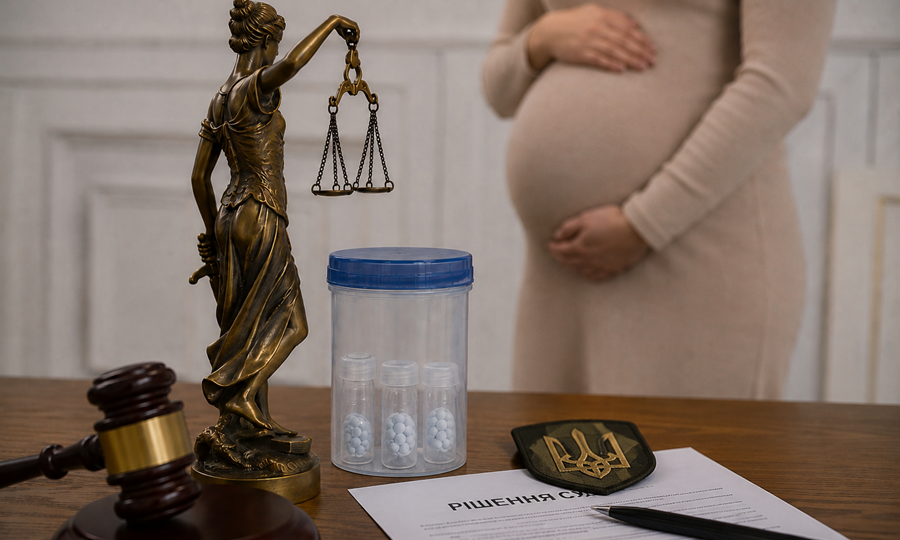










Lychakiv District Court of Lviv considered case No. 463/12547/25 regarding granting a woman the right to manage and use cryopreserved embryos created using the reproductive cells of the plaintiff and her civil husband, who died during a combat mission. The court examined the possibility of posthumous use of reproductive material in the absence of a direct legislative mechanism for such disposition.
Essence of the Case
The plaintiff applied to the court demanding the right to manage and use cryopreserved embryos stored at the reproductive medicine center based on a contract for cryopreservation and storage of biological material.
The court established that in July 2023, the woman and her civil husband concluded a contract with the medical center for the provision of medical services using assisted reproductive technologies.
The court also found that the parties were not in a registered marriage but lived as one family.
As a result of infertility treatment, 19 embryos were created in vitro using reproductive cells from both patients. Subsequently, the parties signed a contract for cryopreservation and storage of embryos and signed statements required by Order No. 787 of the Ministry of Health of Ukraine regarding the use of assisted reproductive technologies and embryo cryopreservation.
In September 2023, the first embryo defrosting and transferring procedure was performed, but pregnancy did not occur. After that, the couple temporarily stopped treatment. At the end of 2024, the man was mobilized into the Armed Forces of Ukraine. The couple planned to perform a repeated embryo transfer procedure during his leave, but the man died during a combat mission in Donetsk region due to an explosive injury.
After the husband's death, the plaintiff contacted the medical center intending to continue the treatment program and perform embryo transfer. However, the clinic informed her that the procedure could only be performed with the written consent of both patients, and due to the husband's death, only based on a court decision. The medical institution, in its response to the claim, effectively supported the stated demands and noted that current legislation does not provide a mechanism for the clinic to independently resolve such an issue without a court decision.
Position and Conclusions of the Court
The court noted that current Ukrainian legislation recognizes the right of adult women and men to use assisted reproductive technologies for medical indications. At the same time, the Procedure for the Use of Assisted Reproductive Technologies, approved by the Ministry of Health Order No. 787, regulates the cryopreservation and storage of embryos but does not provide a mechanism for the disposition of reproductive material in the event of the death of one of the patients.
The court found that when concluding contracts and signing statements, the parties were deprived of the opportunity to regulate the issue of posthumous use of embryos because the forms of documents in force at that time did not contain relevant provisions. The court also took into account that the deceased during his lifetime did not apply for the disposal of embryos and, together with the plaintiff, took all necessary legally significant actions to realize the intention to have a joint child.
The court also referred to Law No. 3496-IX dated November 22, 2023, which guarantees servicemen during martial law the right to free provision of the realization of biological parenthood (motherhood), including through cryopreservation of reproductive cells. However, the court noted that the legislator has not yet regulated the legal mechanism for the disposition and posthumous use of such reproductive material.
The court emphasized that reproductive rights are among the fundamental natural human rights, and ensuring their realization is the duty of the state.
The court also stressed that in the absence of direct legislative regulation, the dispute must be resolved taking into account the principle of the rule of law and the need to ensure a balance of private and public interests.
Considering the principle of the rule of law, the need to achieve a balance of private and public interests, and the factual circumstances of the case, the court concluded that the true will of the deceased was not to destroy the embryos in the event of his death but to have them used by the plaintiff to give birth to a joint child.
As a result, the court satisfied the claim and granted the plaintiff the right to manage and use cryopreserved embryos created using the reproductive cells of the plaintiff and the deceased serviceman, stored at the reproductive medicine center.
As reported by "Judicial and Legal Newspaper", during the work on the new Civil Code of Ukraine, special attention was paid to the legal regulation of cryopreserved embryos, their use, and donation. A discussion arose around the provisions of draft Civil Code No. 15150, which aims to update approaches to regulating private and personal non-property rights.
Among the key topics are the definition of the legal status of cryopreserved embryos, the procedure for their use and disposition, as well as the need for additional guarantees to protect the rights of the future person.
Subscribe to our Telegram channel t.me/sudua and to Google News SUD.UA, as well as to our VIBER and WhatsApp, Facebook page and Instagram account to stay informed about the most important events.