The Supreme Court clarified the procedure for partial and full suspension of enforcement actions in the Ukrenergo case


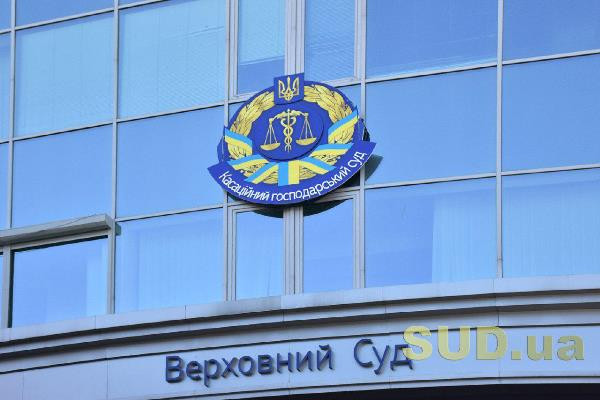










Private Joint Stock Company "National Energy Company "Ukrenergo" filed a complaint against the decision of the chief state executor of the Department of the State Executive Service in Lutsk city of the Lviv Interregional Department of the Ministry of Justice of Ukraine regarding the suspension of enforcement actions. The company requested to recognize the contested decision as unlawful and to cancel it. The claim was justified by the fact that the state executor completely suspended the enforcement of the court order, although the restrictions of the NEURC concerned only part of the amount, and as a result of such suspension, the possibility to recover significant funds was lost.
The dispute arose due to different interpretations of paragraph 10-5 of section XIII "Final and Transitional Provisions" of the Law of Ukraine "On Enforcement Proceedings," the provision of which limits the recovery of inflation losses and 3% annual interest on monetary obligations of business entities that arose during the period from 24.02.2022 to 01.09.2024 (the period of martial law). The law does not contain a direct mechanism for "partial" suspension of enforcement actions; accordingly, if the court decision contained claims for recovery of charges for the specified martial law period, executors suspended the proceedings entirely, regardless of what portion of the total debt these amounts constituted. This was the position followed by the state executor, who suspended the enforcement of the entire debt amount by the contested decision, although the official NEURC website published information only regarding part of the satisfied claims (interest and inflation losses).
The Supreme Court distinguished between the concepts of "suspension of enforcement proceedings as a whole" (regulated by Article 38 of the Law) and "suspension of enforcement actions and coercive enforcement measures." At the same time, the Court applied judicial practice regarding the possibility for the executor to separate in enforcement proceedings the amounts of debt for which there are grounds to suspend enforcement actions from other amounts subject to recovery, including court costs (Supreme Court rulings dated 24.04.2018 in case No. 922/2133/16 and 12.01.2026 in case No. 927/221/25). In such cases, the state executor does not independently assess which part of the enforcement amounts of inflation indexation and 3% annual interest on monetary obligations in enforcement proceedings paragraph 10-5 of section XIII of the Final and Transitional Provisions of the Law of Ukraine "On Enforcement Proceedings" applies to, since these amounts are already determined by NEURC, are publicly available, and are posted on the official NEURC website in Appendix No. 1 "Calculation of 3% annual interest and inflation losses (due to delayed payment by Volynelectrozbut LLC under the electricity transmission service agreement dated 01.01.2024 No. 0136-02024 for July-August 2024)".
The Supreme Court also emphasized that the European Court of Human Rights consistently points out in its practice that the failure of state authorities to enforce a court decision for a prolonged period deprives the provisions of Article 6 of the Convention for the Protection of Human Rights and Fundamental Freedoms (hereinafter - the Convention) of their effectiveness, and therefore finds violations of Article 6 of the Convention in such cases (decisions dated June 29, 2004, in the case of "Voitenko v. Ukraine," No. 18966/02, October 4, 2005, in the case of "Holovin v. Ukraine," No. 3216/02, and others).
The full text of the ruling of the Commercial Cassation Court dated 19.05.2026 in case No. 903/397/25 can be found at the link.
Subscribe to our Telegram channel t.me/sudua and to Google News SUD.UA, as well as to our VIBER and WhatsApp, Facebook page and Instagram to stay informed about the most important events.