Supreme Court: refusal of a complaint about failure to enter information into the Unified Register of Pre-trial Investigations can be appealed


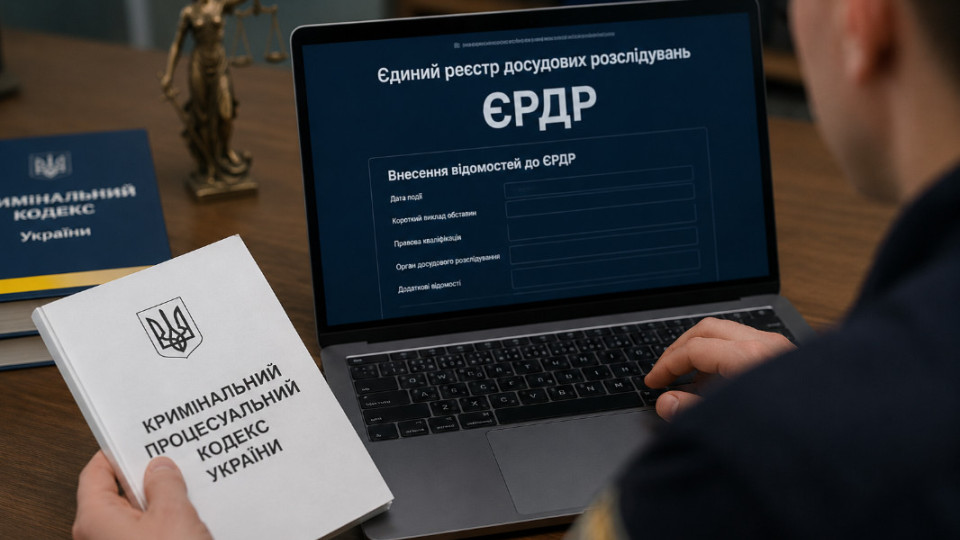










The ruling of the investigating judge refusing to satisfy a person's complaint about the prosecutor's refusal to enter information into the Unified Register of Pre-trial Investigations (URPI) under Article 214 of the Criminal Procedure Code is subject to appeal. This conclusion was reached by the First Judicial Panel of the Criminal Cassation Court of the Supreme Court on 07.04.2026 in case No. 129/1324/25.
Positions of the courts of first and appellate instances
The investigating judge's ruling refused to satisfy the complainant's complaint about the inaction of the deputy head of the district prosecutor's office, which consisted in the refusal to enter information into the URPI under Article 214 of the Criminal Procedure Code. The appellate court ruling refused to open appellate proceedings on the complainant's appeal against this ruling of the investigating judge based on part 4 of Article 399 of the Criminal Procedure Code, due to the fact that the appeal was filed against a local court decision that is not subject to appeal.
In the cassation complaint, the complainant states that the investigating judge unjustifiably refused to satisfy his complaint and conducted the court hearing incompletely and biasedly.
Position of the Criminal Cassation Court
The appellate court ruling was canceled and a new hearing was appointed in the appellate court.
Justification of the Criminal Cassation Court's position: the panel of judges indicated that the reporting judge of the appellate court refused to open appellate proceedings referring to the provisions of part 4 of Article 399 of the Criminal Procedure Code, according to which rulings of the investigating judge issued under Article 206 of the Criminal Procedure Code are not subject to appeal.
During the cassation review, it was established that in his complaint the complainant raised the issue of entering information into the URPI regarding the commission of a crime.
The ruling of the First Judicial Panel of the Criminal Cassation Court concluded that rulings of the investigating judge following the consideration of complaints about the inaction of an investigator or prosecutor consisting in the failure to enter information about a criminal offense into the URPI, issued after the recognition of the unconstitutionality of the provisions of part 3 of Article 307 of the Criminal Procedure Code, i.e., since 17.06.2020 (ruling dated 15.02.2021 in case No. 133/3337/19), are subject to appeal.
Therefore, the ruling of the investigating judge refusing to satisfy the complainant's complaint about the prosecutor's refusal to enter information into the URPI under Article 214 of the Criminal Procedure Code is subject to appeal.
By applying the provisions of part 4 of Article 399 of the Criminal Procedure Code, the appellate court limited itself to analyzing only the operative part of the investigating judge's ruling, which referred to the provisions of Article 206 of the Criminal Procedure Code, but did not assess its reasoning part, from which it is evident that the complainant's complaint concerned the unjustified failure to enter information into the URPI in accordance with Article 214 of the Criminal Procedure Code.
The ruling of the panel of judges of the First Judicial Panel of the Criminal Cassation Court of the Supreme Court dated 07.04.2026 in case No. 129/1324/25 (proceeding No. 51-4562km25) can be viewed at this link.
Subscribe to our Telegram channel t.me/sudua and to Google News SUD.UA, as well as to our VIBER and WhatsApp pages on Facebook and Instagram to stay informed about the most important events.