Being 6500 meters from the border itself does not prove an attempt to cross it — court


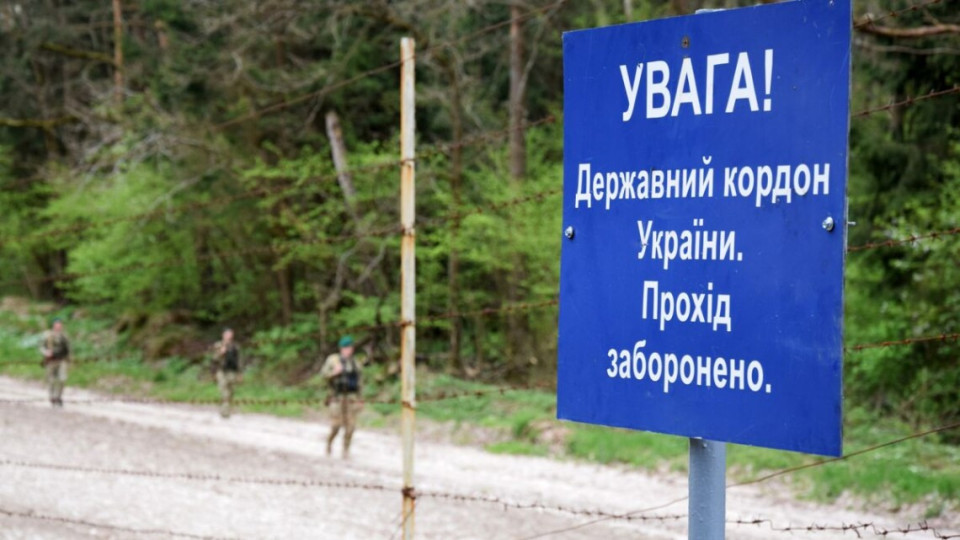










The Bolhrad District Court of Odessa Region considered case No. 497/757/26 concerning holding a citizen administratively liable under part one of Article 204-1 of the Code of Ukraine on Administrative Offenses (CUAO) for an alleged attempt to illegally cross the state border of Ukraine outside a checkpoint. Based on the review, the court concluded the absence of the event and elements of an administrative offense and closed the proceedings.
Case circumstances
According to the administrative offense protocol drawn up by a border service inspector on March 20, 2026, the citizen was found on the highway between the villages of Kalcheva and Kubey at a distance of 6500 meters from the state border of Ukraine in the direction of the Republic of Moldova. The protocol stated that he attempted to illegally cross the state border outside a checkpoint, thereby violating the Law "On the State Border of Ukraine" and committing an offense under part one of Article 204-1 of the CUAO.
The person against whom the protocol was drawn denied committing the offense. He explained that on that day he was traveling by car home to the village where he permanently resides and is registered. According to him, the border guards stopped the vehicle, after which he was taken to the border service unit to draw up the protocol and later to the territorial recruitment and social support center for document verification. After confirming his exemption from mobilization, he was released.
In his explanations, the citizen emphasized that he was stopped 6500 meters from the state border, had no intention to cross it, permanently lives and works in Odessa Region, and the case materials contain no evidence objectively indicating an attempt to illegally cross the border. He also pointed out that his surname was incorrectly indicated in the protocol's preamble.
The defense attorney supported this position and noted that his client was officially employed at a critical infrastructure enterprise, had valid exemption documents, was not wanted, and regularly traveled the mentioned route due to work.
What the court decided
The court recalled that according to Articles 245 and 280 of the CUAO, during case consideration it is necessary to comprehensively, fully, and objectively clarify the circumstances of the offense, establish the fact of its commission, the person's guilt, and other circumstances relevant to the correct resolution of the case.
The court noted that administrative liability under part one of Article 204-1 of the CUAO arises for crossing or attempting to cross the state border of Ukraine outside checkpoints or without proper documents. To hold a person liable, all elements of the administrative offense must be present, including the objective side and guilt.
Analyzing the protocol's content, the court stated that the accusation's wording lacks specific information about how the person was moving, which would indicate movement specifically toward the state border and what confirms the purpose of illegal crossing.
To confirm the circumstances stated in the protocol, the case materials included the protocol itself, reports from border service employees, a scheme of the offense detection, and photographs. However, the court noted that the persons who drew up the reports have an interest in resolving the issue of holding the person liable, and their reports are official documents but not evidence confirming the person's guilt. Furthermore, the scheme of the offense detection did not even show the state border line of Ukraine.
The court stated that the case materials contain no evidence that the person directly attempted to illegally cross the state border. There was no detention protocol, personal inspection protocol, witness statements, or other evidence confirming preparation for crossing the border or intent to do so.
Separately, the court noted that the protocol's preamble incorrectly indicated the surname of the person involved. According to the court, such an error renders the protocol inadmissible as evidence.
The court also analyzed the Cabinet of Ministers Resolution No. 1147 dated July 27, 1998, on the border regime. It was noted that a border strip 5 kilometers wide is established along the state border, and land plots from 3 to 50 meters wide may be allocated for the arrangement and maintenance of engineering and technical structures, within which a special regime applies.
The court observed that mere presence near the state border may be one of the circumstances indicating a possible intent to cross it, but even in such cases, intent must be proven by appropriate evidence. The court noted that the person was 6500 meters from the state border line and therefore was not within the border strip where a special border regime applies.
The court emphasized that being 6500 meters from the state border line is not an attempt to cross it, as the person was still separated from the actual crossing by 6500 meters.
Additionally, the court noted that the authorized person did not clarify or record in the protocol whether the citizen had any items or means that could indicate preparation for illegal crossing of the state border, such as tools for overcoming engineering barriers, a backpack with belongings, documents, or other items.
Referring to Article 62 of the Constitution of Ukraine, the Constitutional Court decision of December 22, 2010, No. 23-rp/2010, and the European Court of Human Rights practice in the cases "Luchaninov v. Ukraine," "Malofeyev v. Russia," and "Karelin v. Russia," the court emphasized that all doubts regarding the proof of guilt are interpreted in favor of the person, and the court is not entitled to independently correct the prosecution's shortcomings or seek evidence of guilt.
As a result of the case review, the court concluded that the materials do not confirm the presence of the objective side of the offense under part one of Article 204-1 of the CUAO in the citizen's actions. The court found that the case materials do not confirm the presence of the objective side of the offense under part one of Article 204-1 of the CUAO, and guilt is not proven by proper and admissible evidence. Therefore, the court established the absence of both the event and the elements of the administrative offense.
Accordingly, the proceedings were closed based on paragraph 1 of part one of Article 247 of the CUAO due to the absence of the elements and event of the administrative offense.
Subscribe to our Telegram channel t.me/sudua and to Google News SUD.UA, as well as to our VIBER and WhatsApp, page on Facebook and on Instagram to stay informed about the most important events.