The Territorial Recruitment and Social Support Center has the right to appeal decisions on sole child upbringing if it affects mobilization — Supreme Court


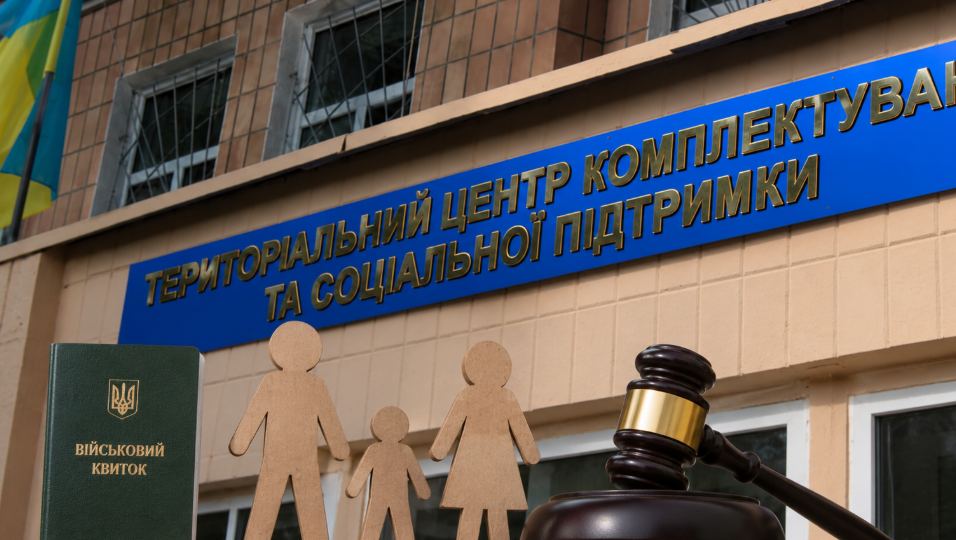










The Supreme Court, in the composition of the panel of judges of the First Judicial Chamber of the Cassation Civil Court, confirmed that a child's residence with the father and even a notarized agreement between the parents regarding the child's place of residence are not sufficient grounds for the court to establish the fact of sole upbringing and maintenance of the child by the father. To reach such a conclusion, it is necessary to prove that the other parent actually does not participate in the upbringing of the child or that their parental rights or the possibility of exercising them are restricted in the manner prescribed by law.
Furthermore, the Supreme Court confirmed that the Territorial Recruitment and Social Support Center has the right to appeal court decisions in cases where establishing the fact of sole child upbringing may affect the grounds for deferment from mobilization or exemption from military service.
Circumstances of case No. 725/5985/25
In July 2025, a man filed a lawsuit seeking divorce, determination of the minor daughter's place of residence with him, and establishment of the fact that he solely raises and maintains the child. The parents had effectively ceased cohabitation, and a notarized agreement was concluded between them regarding the child's maintenance and residence with the father.
The court of first instance fully granted the claim. It dissolved the marriage, determined the child's place of residence with the father, and established the fact of sole upbringing and maintenance by the father, based on the absence of dispute between the parties on these circumstances and the mother's de facto acknowledgment of the relevant claims.
After this decision, the Territorial Recruitment and Social Support Center appealed the part establishing the fact of sole child upbringing as a party not involved in the case. The appellate court agreed with its arguments and annulled the decision in this part. The court concluded that the evidence only confirmed the child's residence with the father but did not prove that the mother had withdrawn from fulfilling parental duties. The court also noted that the agreement between the parents, on the contrary, indicated their consent on the procedure for exercising parental rights and the participation of both parents in raising the child.
What the Supreme Court decided
The Cassation Civil Court in the Supreme Court left the appellate court's ruling unchanged.
First of all, the Supreme Court agreed that the Territorial Recruitment and Social Support Center had the right to file an appeal. The panel of judges noted that if the establishment of a certain legal fact may lead to the emergence or confirmation of grounds for deferment from mobilization or exemption from military service, such a decision concerns the interests of the state and the authority of bodies responsible for enforcing military duty. Therefore, the Territorial Recruitment and Social Support Center has the right to appeal such decisions even if it was not a party to the case.
Regarding the substance of the dispute, the Supreme Court emphasized that family law is based on the principle of equality of rights and duties of the mother and father concerning the child. Divorce or separate residence of the parents does not terminate their parental rights and duties and does not by itself indicate sole upbringing of the child by one of them.
The court stated that to establish the fact of sole child upbringing, it is necessary to prove circumstances indicating the absence or significant limitation of the second parent's participation in the child's upbringing. The mere fact of the child living with one parent does not confirm this fact.
The Supreme Court noted that the mere acknowledgment of the claim by the child's mother and the notarized agreement between the parents do not relieve the court of the obligation to verify the real family relations, the participation of each parent in raising the child, and the presence of grounds for concluding sole upbringing by one parent.
In this case, the courts found that the mother was not deprived of parental rights, not declared missing or incapacitated, and the case materials contained no evidence of her evading child upbringing. Instead, the evidence only showed that the child lives with the father.
Separately, the Supreme Court supported the appellate court's conclusion that private-law mechanisms cannot be used to create conditions that may lead to non-fulfillment of public duties. The court agreed that in this case, the claim to establish the fact of sole child upbringing was filed by a conscript during martial law and could have been aimed at creating conditions for obtaining deferment from mobilization or exemption from military service due to family circumstances. At the same time, the evidence collected in the case did not confirm that the mother did not participate in raising the child at all.
Legal position of the Supreme Court
In this ruling, the Supreme Court confirmed the previously established practice regarding disputes about sole child upbringing.
The court emphasized that the child's residence with one parent alone does not mean sole upbringing by that parent. Also, separate residence of the mother or father does not terminate their rights and duties regarding the child.
A notarized agreement between parents about the child's place of residence or the procedure for exercising parental rights is not proof of sole child upbringing. To establish such a fact, proper and admissible evidence is required showing that the other parent actually does not participate in raising the child or that their parental rights or ability to exercise them are restricted in the manner prescribed by law.
The Supreme Court also confirmed that the Territorial Recruitment and Social Support Center has the right to appeal court decisions if they may affect issues of mobilization, deferment from conscription, or exemption from military service.
By the ruling dated June 1, 2026, in case No. 725/5985/25, the Supreme Court dismissed the cassation appeal and left the ruling of the Chernivtsi Appellate Court unchanged.
Subscribe to our Telegram channel t.me/sudua and to Google News SUD.UA, as well as to our VIBER and WhatsApp, our page on Facebook and on Instagram to stay informed about the most important events.