Voluntarily handed over documents to the investigator are admissible evidence — Supreme Court


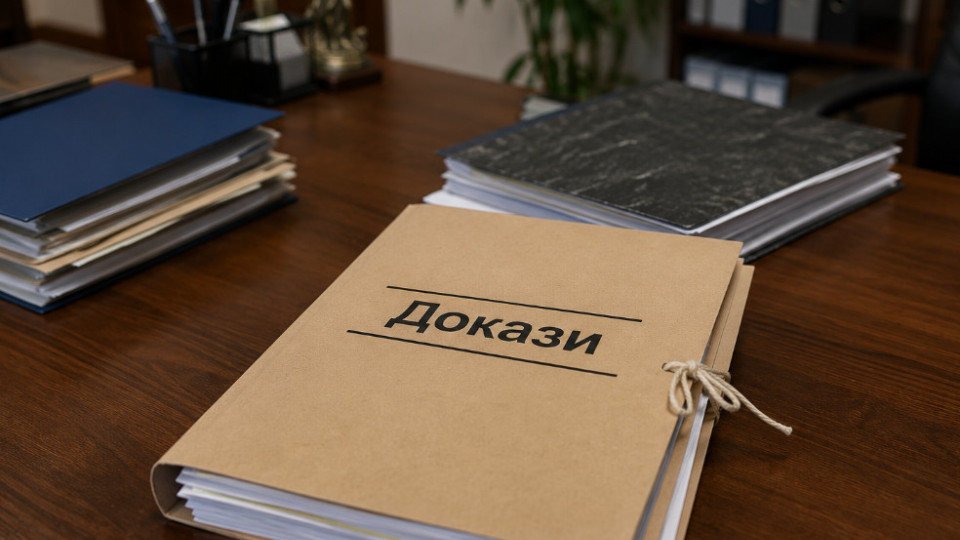










If a person who has items, documents, and other materials that have evidentiary value for establishing the circumstances of a criminal offense voluntarily provides them to the investigator, this does not indicate that such evidence was obtained by the pre-trial investigation body in an extrajudicial manner and is not grounds for declaring them inadmissible. This conclusion was made by the Third Judicial Panel of the Criminal Cassation Court of the Supreme Court in case No. 529/1660/22.
Positions of the courts of first and appellate instances
As a result of the new review, the appellate court overturned the acquittal verdict of the local court and issued a new verdict, finding the accused guilty under Article 111-2 of the Criminal Code.
In the cassation appeal, the accused notes that the case materials do not confirm that the "certificate," "letter of gratitude," employment contract, and extracts from the order were signed by representatives of the Russian Federation. He points out that these documents were attached in violation of procedural law and are not evidence.
Position of the Criminal Cassation Court of the Supreme Court
The appellate court's verdict was amended by excluding from the reasoning part of the verdict, which recognized the accusation as proven, references to the accused committing other acts that undermine Ukraine's national security and pose a direct threat to the state's sovereignty, territorial integrity, and constitutional order.
Justification of the position of the Criminal Cassation Court of the Supreme Court
The panel of judges of the Criminal Cassation Court noted that a witness questioned at the appellate court session testified that he worked as an investigator for the Security Service of Ukraine (SBU) and investigated a criminal proceeding regarding the commission of a criminal offense under part 7 of Article 111-1 of the Criminal Code, including information about the accused's complicity. After the partial de-occupation of the Kupiansk district, he was provided with many documents related to the criminal proceeding, including the "letter of gratitude" and "certificate," which indicated the presence of elements of a criminal offense in the accused's actions, which became the basis for entering information into the Unified Register of Pre-Trial Investigations under part 7 of Article 111-1 of the Criminal Code concerning the accused. Considering the heavy workload of SBU investigators, the case was transferred to the investigative department of the Kupiansk police department.
The panel of judges of the Criminal Cassation Court indicated that when a person who has items, documents, and other materials that have evidentiary value for establishing the circumstances of a criminal offense voluntarily provides them to the investigator, expressing their will, this does not indicate that such evidence was obtained by the pre-trial investigation body in an extrajudicial manner and is not grounds for declaring them inadmissible.
Given the above, and the fact that witnesses in court confirmed the voluntary surrender of the above-mentioned written evidence, the appellate court reasonably concluded that the defense's arguments about obtaining the said written evidence in an extrajudicial manner are unfounded and do not affect the admissibility of the evidence.
The decision of the panel of judges of the Third Judicial Panel of the Criminal Cassation Court of the Supreme Court dated 15.04.2026 in case No. 529/1660/22 (proceeding No. 51-7201km23) can be found at this link.
Subscribe to our Telegram channel t.me/sudua and to Google News SUD.UA, as well as to our VIBER and WhatsApp pages on Facebook and Instagram to stay informed about the most important events.