A man claimed he was held in the TRC for two days and demanded the cancellation of mobilization: what the court decided


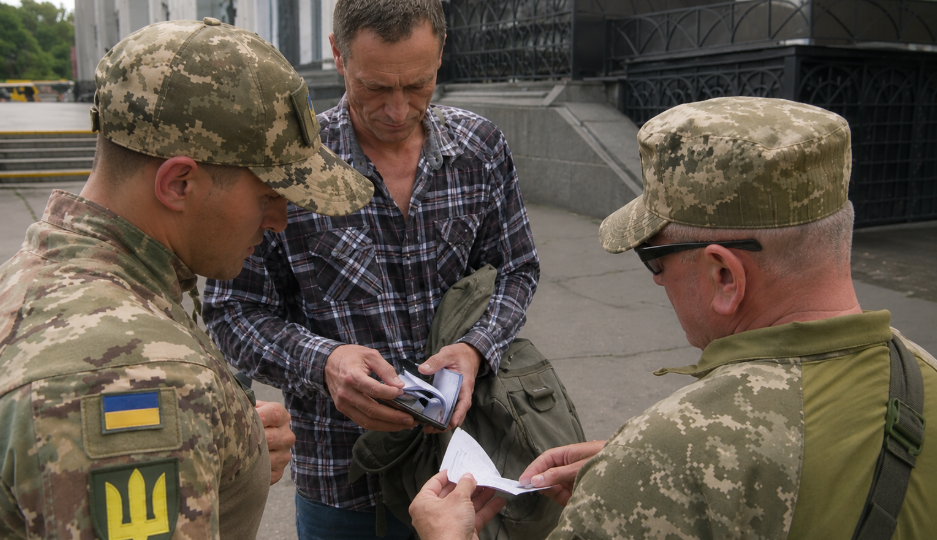










The Third Administrative Court of Appeal upheld the decision of the court of first instance, which denied the serviceman's claim to cancel the mobilization order, recognize the actions of the TRC as unlawful, and release him from military service. The court supported the approach of the Supreme Court, according to which even a possible recognition of the conscription procedure as unlawful does not automatically lead to the dismissal of the person from service.
The plaintiff claimed that he was illegally detained and held by the TRC staff, after which he was mobilized and sent to a National Guard military unit. In this regard, he requested to cancel the conscription order, recognize the actions of the officials as unlawful, remove him from the personnel lists, and release him from military service.
The appellate court agreed with the conclusion of the court of first instance that after the actual conscription and enrollment of the person in the military unit, the mobilization order is considered an implemented individual act, the effect of which is exhausted. Therefore, its cancellation alone cannot be grounds for dismissal from military service.
Circumstances of the case
The plaintiff was registered for military service and in February 2025 underwent a military medical commission that recognized him fit for military service. After that, by order of the head of the TRC, he was conscripted for military service during mobilization and sent to a National Guard military unit. By the corresponding order of the unit commander, he was enrolled in the personnel lists and provided with all types of support.
Subsequently, the military unit issued an order stating that the serviceman was considered to have left the place of service without permission and was absent without valid reasons. Later, he was placed at the disposal of the unit commander.
Considering his mobilization illegal, the man turned to the court. Among other things, he demanded to recognize the actions of the TRC officials as unlawful, cancel the mobilization order, and oblige the military unit to release him from service.
Court's position
The panel of judges noted that the territorial recruitment and social support centers are military administration bodies empowered by law to conduct mobilization and conscription of citizens for military service during a special period.
The court also took into account the legal position of the Cassation Administrative Court within the Supreme Court, set out in the ruling dated February 5, 2025, in case No. 160/2592/23. The Supreme Court stated that the conscription procedure of a reservist during mobilization is irreversible, and even recognizing the conscription procedure as unlawful does not lead to automatic dismissal from military service and does not restore the previous status.
The panel emphasized that the mobilization order is an individual legal act. After its execution — the actual conscription and enrollment into the military unit — such an act is considered implemented and exhausted. Therefore, recognizing the actions as unlawful or canceling the conscription order will not result in dismissal from military service.
The court specifically noted that after conscription, new legal relations arise regarding military service. The legislation does not provide a mechanism for dismissing a serviceman by canceling the conscription order or the order of enrollment into the military unit. Instead, the grounds for dismissal during martial law are defined by Article 26 of the Law "On Military Duty and Military Service."
In the court's opinion, the demand to oblige the military unit to release the plaintiff from service actually goes beyond the legal relations regarding his conscription during mobilization.
What the court decided
The Third Administrative Court of Appeal concluded that the arguments of the appeal do not refute the findings of the court of first instance and dismissed it. Accordingly, the decision of the Dnipropetrovsk District Administrative Court in case No. 160/23234/25 to deny the claim remains unchanged.
Thus, the appellate court confirmed the approach formed by the Supreme Court: after the actual conscription and enrollment of a person into a military unit, the cancellation of the mobilization order is not an independent legal basis for dismissing a serviceman from service.
Subscribe to our Telegram channel t.me/sudua and to Google News SUD.UA, as well as to our VIBER and WhatsApp, our pages on Facebook and Instagram to stay informed about the most important events.