Man Claimed Forced Mobilization and Demanded Bodycam Recordings from TRC, Police, and Border Guards — but Failed to Convince the Court












The Eighth Administrative Court of Appeal upheld the decision of the Zakarpattia District Administrative Court, which denied the securing of evidence in a case challenging conscription for military service during mobilization. The court concluded that the applicant did not properly justify the need to secure the requested video and audio recordings and did not prove their relevance to the subject matter of the dispute.
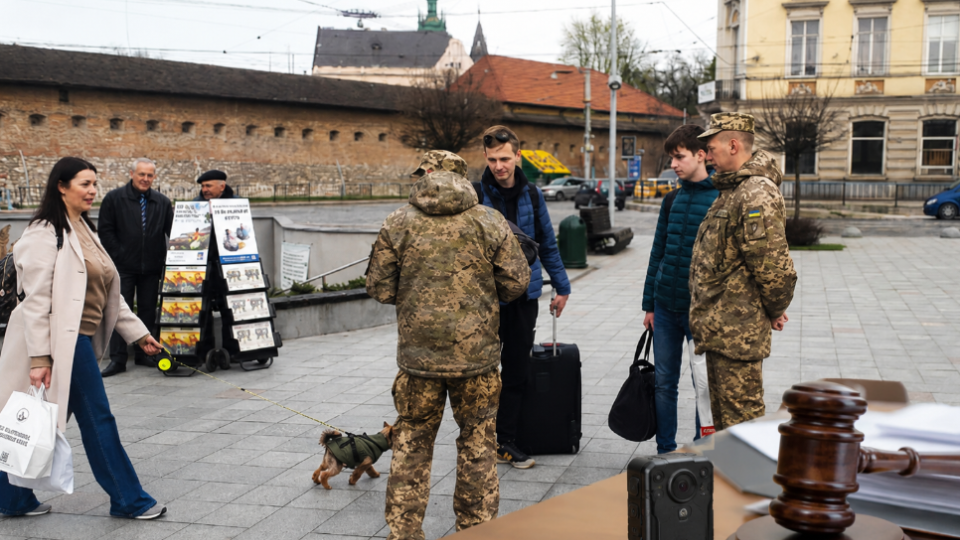
The plaintiff contests the actions related to his conscription for military service and the mobilization order. Within this case, he requested the court to secure and obtain video recordings from the body cameras of border guards, police officers, and TRC employees, recordings from service vehicles, and stationary surveillance cameras. He believed these materials could confirm the use of physical coercion against him, the non-provision of documents for review and signature, as well as the absence of an actual medical examination.
However, the appellate court agreed with the first-instance court's conclusion that the applicant did not demonstrate the necessity of securing such evidence and did not adequately explain which circumstances they were supposed to confirm within the dispute over the legality of conscription. The court also separately noted that the fact of undergoing the military-medical commission is confirmed by the relevant documents, not video recordings.
Circumstances of the Case
A citizen filed a lawsuit with the administrative court seeking to recognize as unlawful the actions related to his conscription for military service and to cancel the mobilization order.
Along with the lawsuit, he submitted a motion to obtain evidence. In particular, he requested video and audio recordings from the body cameras of border guards, police officers, and TRC employees, recordings from service vehicles, and stationary surveillance cameras that captured events on March 2, 2026. Among the requested materials were also the conscription order and a mobile phone which, according to the plaintiff, was held by one of the authorities.
Additionally, the plaintiff asked to oblige the relevant authorities to preserve the recordings to prevent their automatic deletion or overwriting, and to provide files without editing or changes while preserving metadata.
After the proceedings were opened, the Zakarpattia District Administrative Court denied the motion to obtain evidence. Later, the plaintiff filed a separate motion to secure evidence, which was also denied by the court.
The first-instance court noted that the applicant did not explain which specific circumstances required securing the requested evidence and how they were related to the subject matter of the dispute.
Disagreeing with this decision, the plaintiff filed an appeal. He argued that the video recordings were necessary not only to establish the absence of a medical examination but also to confirm the use of physical coercion by TRC employees and the non-provision of documents for review and signature. In his opinion, such circumstances indicate violations of the conscription procedure and may confirm the illegality of mobilization.
Position of the Appellate Court
The Eighth Administrative Court of Appeal analyzed the provisions of Articles 114–116 of the Code of Administrative Procedure of Ukraine, which regulate the securing of evidence.
The panel of judges reminded that securing evidence is allowed when there are grounds to believe that the evidence may be lost or its submission in the future will become impossible or significantly difficult. At the same time, the person must not only specify the evidence they request to be secured but also justify which circumstances they confirm and why securing them is necessary.
The court noted that the subject of the dispute in this case is the actions related to the plaintiff's conscription for military service and the order for his conscription during mobilization.
At the same time, the appellate court agreed with the first-instance court's conclusion that the applicant did not properly justify which circumstances required securing the requested recordings and how they were related to the subject of the case.
Separately, the panel of judges addressed the arguments about the absence of a medical examination. The court stated that undergoing the military-medical commission is confirmed by the referral for medical examination, the examination card and medical examination of the MMC, the decision of the military-medical commission, and other relevant documents.
According to the court, video and audio recordings are not the type of evidence that can confirm the presence or absence of a medical examination.
The appellate court also emphasized that the relevance and admissibility of evidence, their scope, and the method of securing them are directly related to the subject of the claim and the content of the claims.
Under these circumstances, the panel of judges concluded in case 260/1777/26 that the Zakarpattia District Administrative Court correctly established the facts of the case and made a decision in compliance with procedural law requirements.
As a result, the appeal was dismissed, and the decision denying the securing of evidence remained unchanged.
The ruling took legal effect from the day of its adoption and may be appealed to the Supreme Court in cassation within thirty days.
Subscribe to our Telegram channel t.me/sudua, Google News SUD.UA here, as well as our VIBER and WhatsApp, Facebook page and Instagram account to stay updated on the most important events.