A government body cannot sue the media for criticism as a business — Supreme Court


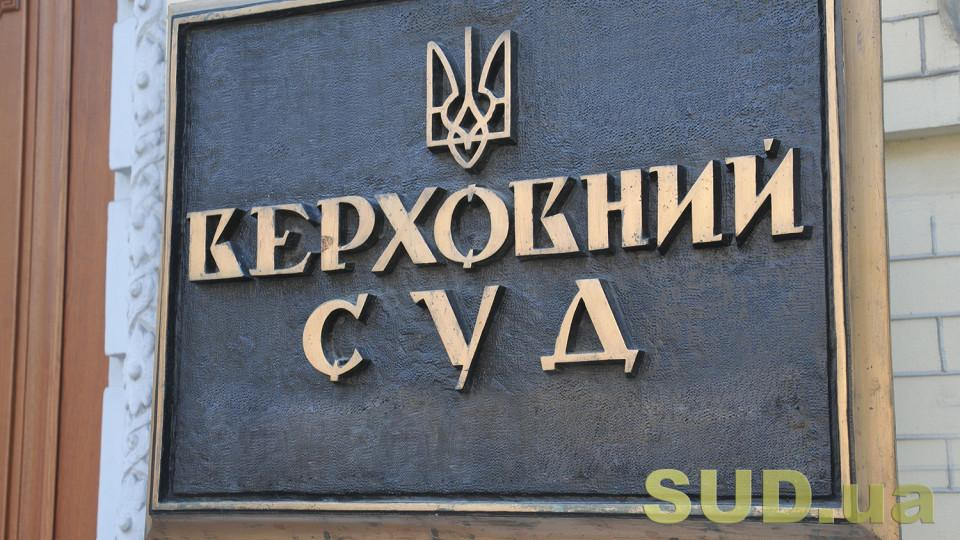










An executive authority body endowed with state powers and funded from the budget cannot protect its business reputation from media criticism in the manner provided for business entities engaged in competitive market activities. Financing by the plaintiff of another legal entity and assigning management functions over it is not grounds to conclude that information disseminated about such a legal entity violates the non-property rights (damages the business reputation) of the executive authority itself. This conclusion was made by the Supreme Court in the composition of the panel of judges of the Second Judicial Chamber of the Cassation Civil Court.
On May 27, 2026, the Cassation Civil Court of the Supreme Court considered, under simplified proceedings, the cassation appeal of an individual and an NGO in the case filed by the State Administration of Affairs (hereinafter – SAA) against an individual, an NGO, and a third party – the National Natural Park "Synigora", regarding the refutation of false information and protection of business reputation.
To substantiate the claims, the plaintiff referred to information published on the Internet about the alleged significant losses incurred by the SAA subordinate institution (DO "Residence "Synigora"), which the plaintiff considered false and forming a negative impression of its effectiveness.
The case was reviewed multiple times by the courts.
The court of first instance satisfied the claim, reasoning that the information disseminated by the defendants was false, damaged the plaintiff's business reputation, and could lead to a negative public attitude towards it. Moreover, the negative information about the SAA was presented as factual statements, not evaluative judgments.
The appellate court disagreed with the first instance court's conclusions regarding the method of refuting the information, amending only the operative part concerning the method of refutation, indicating the need to exclude personal data and publish only part of the court decision as a sufficient means of protection.
The Supreme Court disagreed with the courts' conclusions, annulled the court decisions, and issued a new ruling denying the claim for the following reasons.
The dissemination of information about the activities of an institution subordinate to a state body does not in itself indicate a violation of the business reputation of such a body, even if it finances or manages it.
To satisfy a claim for protection of business reputation, it is necessary to prove that the disseminated information directly concerns the plaintiff and violates its personal non-property rights.
The Supreme Court emphasized that state bodies exercising governmental powers and funded from the budget are subject to broader limits of public criticism than private individuals or business entities. Considering the practice of the European Court of Human Rights, defamation claims by state authorities may impose disproportionate restrictions on freedom of expression and do not always pursue a legitimate aim of protecting reputation within the meaning of Article 10 of the Convention for the Protection of Human Rights and Fundamental Freedoms.
According to the Regulations, the SAA is a special state body responsible for material, technical, social, domestic, and other support for the activities of the President of Ukraine, the Verkhovna Rada of Ukraine, the Cabinet of Ministers of Ukraine, the National Security and Defense Council of Ukraine, and other state bodies.
Thus, the SAA is a special state body and the main administrator of budget funds.
In this case, the disputed publication concerned the activities of DO "Residence "Synigora", not directly the SAA, and there were no grounds to protect the business reputation of the SAA. The mere fact that the SAA performs management and financing functions for this institution does not mean that any information about the subordinate organization automatically violates the business reputation of the state body.
More details and the text of the Supreme Court ruling dated May 27, 2026, in case No. 357/1265/22 (proceeding No. 61-5888sv25) can be found at this link.
Subscribe to our Telegram channel t.me/sudua and to Google News SUD.UA, as well as to our VIBER and WhatsApp, Facebook page and Instagram account to stay informed about the most important events.