Automatic Recording of Telephone Conversations as Admissible Evidence, and Military Medical Commission as a Prerequisite for TRC's Actions: Criminal Cassation Court of the Supreme Court Practice Review


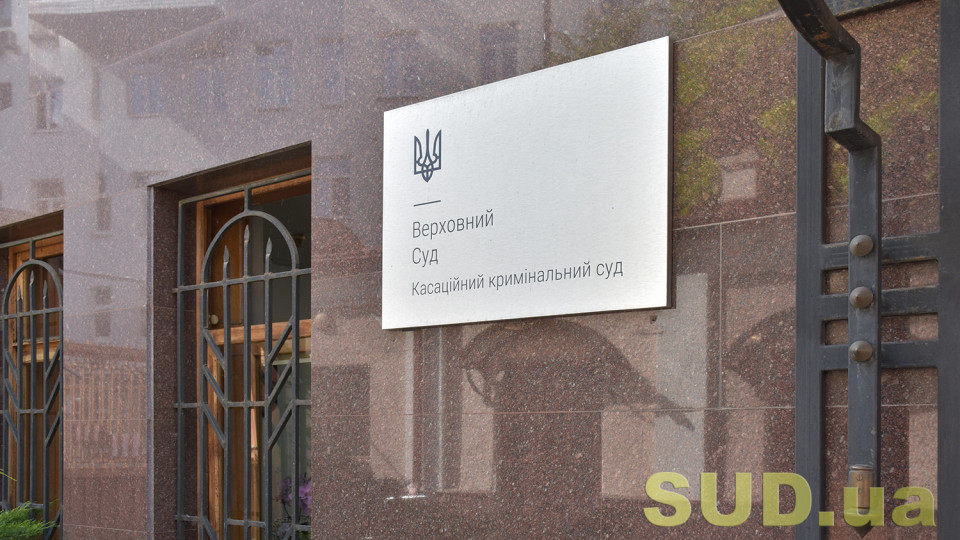










The Supreme Court published a review of the current judicial practice of the Criminal Cassation Court of the Supreme Court for May 2026, reflecting important legal positions in criminal and criminal procedural law.
Criminal law emphasizes that:
– in the event of establishing the guilt of a person in committing a criminal offense for which the limitation period has expired at the time of sentencing, the court by verdict imposes a punishment on the convicted person according to the general principles provided by Article 65 of the Criminal Code of Ukraine and simultaneously exempts them from this punishment. If the limitation periods expired at the stage of appellate review, the appellate court, if upholding the verdict in the part of conviction, must amend the verdict and exempt the convicted person from the punishment determined by the court of first instance;
– establishing the fitness of a conscript for military service through a properly conducted Military Medical Commission (MMC) is a mandatory prerequisite for further actions of the Territorial Commissariats and Military Prosecutors related to issuing summons and organizing the dispatch of the person to the military unit. This is of significant importance for resolving the issue of the presence or absence of the elements of a criminal offense under Article 336 of the Criminal Code of Ukraine in the person's actions. If the scope of the medical examination of the person is unlawfully narrowed, and the MMC results on fitness for military service are issued in violation of the established procedure, this indicates the absence of the elements of the criminal offense under Article 336 of the Criminal Code of Ukraine;
– a user of the social network "Odnoklassniki," which is banned in Ukraine, who disseminates pro-Russian materials in their personal profile at their place of residence in Ukraine, becomes part of Russian information propaganda directed against Ukraine, and therefore their actions are subject to qualification under Article 436-2 of the Criminal Code of Ukraine as committed on the territory of Ukraine. The place of commission of this criminal offense is not the information space but the territory where it was committed. The absence of a legislative definition of the term "glorification" in the Criminal Code of Ukraine does not affect the possibility of holding a person criminally liable under Article 436-2 of the Criminal Code of Ukraine.
Criminal procedural law says that:
– automatic recording of telephone conversations made by a program installed by a person on their mobile phone and provided to law enforcement agencies does not contain signs of interception of information from telecommunications networks within the meaning of covert investigative (search) actions and is admissible evidence;
– conducting an examination in an institution belonging to the Security Service of Ukraine system, whose investigators conducted the pre-trial investigation in the criminal proceeding, cannot indicate expert bias in the absence of other specific data;
– rulings made by the court without going to the deliberation room are entered by the secretary in the court session journal. The Criminal Procedure Code of Ukraine does not contain requirements to include motions of participants in the process, which were resolved orally without going to the deliberation room, in the court verdict.
The review also highlights other no less relevant legal positions.
Subscribe to our Telegram channel t.me/sudua and to Google News SUD.UA, as well as to our VIBER and WhatsApp pages, and on Facebook and Instagram to stay informed about the most important events.