Automatic recording of conversations made on the victim's phone is admissible evidence and is not a special investigative measure — Cassation Criminal Court of the Supreme Court


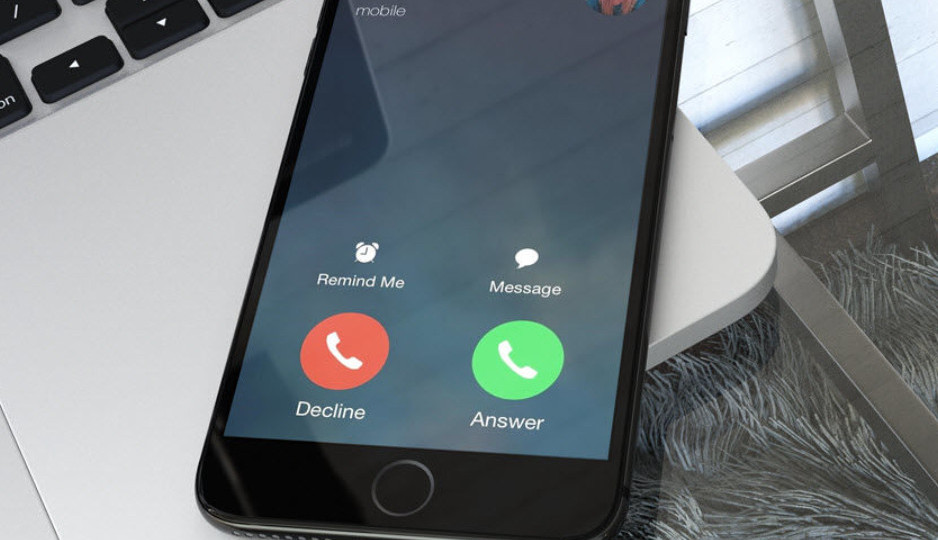










Automatic recording of telephone conversations made by a program installed by a person on their mobile phone and provided to law enforcement agencies does not contain signs of information interception from telecommunications networks within the meaning of special investigative measures and is admissible evidence. This conclusion was made by the panel of judges of the Second Judicial Chamber of the Cassation Criminal Court of the Supreme Court on 21.05.2026 in case No. 450/1952/
Positions of the courts of first and appellate instances
The courts of previous instances found two defendants guilty and convicted them under Part 2 of Article 187, Part 4 of Article 187 of the Criminal Code.
In the cassation appeal, the defense claims that the audio recordings of telephone conversations are inadmissible evidence because they were made by the victim using a program of automatic recording installed on his phone, and therefore were obtained extrajudicially and through interference with private life without prior court permission.
Position of the Cassation Criminal Court of the Supreme Court
The decisions of the courts of previous instances were left unchanged.
The panel of judges of the Cassation Criminal Court indicated that according to Article 31 of the Constitution of Ukraine, everyone is guaranteed the secrecy of correspondence, telephone conversations, telegraph and other communications. Exceptions may only be established by a court in cases provided by law, in order to prevent a crime or to ascertain the truth during the investigation of a criminal case, if it is impossible to obtain information by other means.
No one may suffer interference in their personal and family life except in cases provided by the Constitution of Ukraine. The collection, storage, use, and dissemination of confidential information about a person without their consent is not allowed, except in cases defined by law and only in the interests of national security, economic welfare, and human rights (Article 32 of the Constitution of Ukraine).
The panel of judges of the Cassation Criminal Court noted that the courts of previous instances examined the circumstances of the specific case and reasonably stated that the victim did not engage in wiretapping the phones of each of the convicted persons, but the program installed by him on his own mobile phone automatically recorded all his personal telephone conversations. Such recording was not targeted at the convicted persons and does not contain signs of information interception from telecommunications networks within the meaning of special investigative measures.
Meanwhile, the defense does not indicate how the audio recording by the victim of his own telephone conversations could have affected the violation of the rights or freedoms of the convicted persons, who at the stage of preparing to commit especially serious crimes found the victim's mobile phone number on the Internet, then, under the pretext of exchanging foreign currency, called him and arranged a meeting place in a settlement where on the same day they committed a robbery attack on the victim.
The victim voluntarily handed over audio recordings of his telephone conversations to law enforcement officers only after the convicted persons committed a crime against him, and an appropriate examination was conducted to confirm the authenticity of the voices.
Thus, the courts of previous instances reached a reasoned conclusion that in this particular case there was no interference in the private life of the defendants, since the public interest in obtaining information about the commission of an especially serious crime outweighed the private interest, which corresponds to the practice of the European Court of Human Rights.
The ruling of the panel of judges of the Second Judicial Chamber of the Cassation Criminal Court of the Supreme Court dated 21.05.2026 in case No. 450/1952/18 (proceeding No. 51-4608km19) can be found at this link.
Subscribe to our Telegram channel t.me/sudua and to Google News SUD.UA, as well as to our VIBER and WhatsApp pages on Facebook and Instagram to stay informed about the most important events.