An heir can recover a loan debt if the transfer of money is confirmed by an IOU — CCS of the Supreme Court


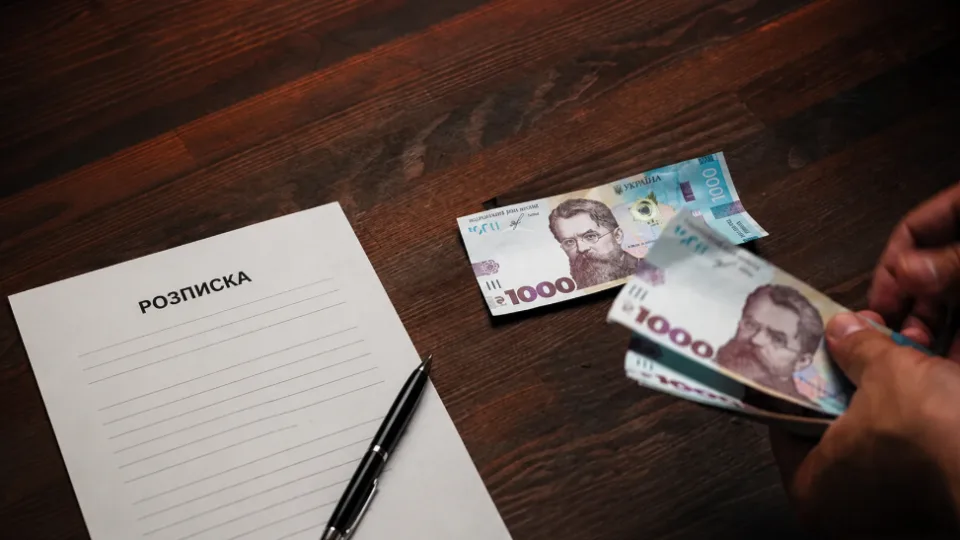










The creditor’s right to claim under a loan agreement is part of the inheritance and passes to the heir. At the same time, the creditor’s possession of the original handwritten IOU creates a presumption that the borrower received the funds.
If the debtor denies the fact of concluding the agreement or receiving the money, they must refute this with proper and admissible evidence.
Also, after the loan repayment term expires, the right to accrue interest provided by the agreement ceases, and the protection of the creditor’s rights in such a case is possible by applying the consequences of delay provided by Article 625 of the Civil Code of Ukraine, if the relevant claims are made.
This conclusion was reached by the Supreme Court in the composition of the panel of judges of the Third Judicial Chamber of the Cassation Civil Court.
Circumstances of the case
After the husband’s death, the wife accepted the inheritance. Among other property, it included the right to claim under a loan agreement concluded by the deceased in 2011.
According to the agreement, the borrower received 19 thousand US dollars, which had to be repaid by December 1, 2015, with payment of interest and penalties in case of delay.
After the creditor’s death, the debtor continued to make some payments, but irregularly. Considering that the debt was not fully repaid, the heir applied to the court to recover over 83 thousand US dollars, including the principal debt, interest, and penalties.
The court of first instance partially satisfied the claim and recovered over 44 thousand US dollars.
The appellate court reviewed the calculation and significantly reduced the amount to 14,130 US dollars. The court reasoned that after the loan repayment term expired, the creditor’s right to accrue interest ceased, so all payments made by the debtor after December 1, 2015, should be credited primarily towards the repayment of the principal debt, not interest. In addition, the court denied the recovery of penalties, taking into account legislative restrictions on their accrual during quarantine and martial law. At the same time, the appellate court concluded that the statute of limitations had not expired, as partial payments indicated acknowledgment of the debt and interrupted its course.
In the cassation appeal, the debtor argued that the mere fact of money transfer was not properly proven, requested a handwriting examination, insisted on the expiration of the statute of limitations, and pointed to procedural violations during the case consideration.
What the Cassation Civil Court decided
The Supreme Court dismissed the cassation appeal and left the appellate court’s ruling unchanged.
The court emphasized that a loan agreement is a real contract, meaning it is considered concluded from the moment of actual transfer of money. Therefore, the IOU has special evidentiary significance. It is evidence both of the conclusion of the loan agreement and the actual transfer of funds if its content shows that the borrower received the money and undertook to return it.
The CCS of the Supreme Court stressed that the IOU does not necessarily have to use the word "loan." The decisive factor is the content of the document. If it follows from it that the person received money as a loan, confirmed it with their signature, and agreed on the repayment terms, such a document confirms the conclusion of the loan agreement and the transfer of funds.
The Supreme Court noted that if the creditor has the original handwritten IOU, the borrower who denies the conclusion of the agreement or receipt of funds must refute these circumstances with proper and admissible evidence. A simple denial of receiving money or signing the document is insufficient.
The CCS of the Supreme Court in case 757/17779/22-c also noted that a handwriting examination alone cannot confirm or refute the fact of money transfer, as it only establishes the authenticity of the signature but not the performance of the loan agreement by the parties.
Separately, the Supreme Court confirmed the appellate court’s conclusion that after the expiration of the loan repayment term specified in the agreement, the creditor’s right to accrue interest ceases. In such a case, the creditor’s rights may be protected by applying the consequences of delay provided by part two of Article 625 of the Civil Code of Ukraine, if the relevant claims are made. However, in this case, the plaintiff did not make such claims. Therefore, the appellate court reasonably credited payments made after December 1, 2015, towards the repayment of the principal debt, not interest.
The cassation court also agreed with the conclusion regarding the statute of limitations. It noted that partial fulfillment of the debtor’s obligation is an act that indicates acknowledgment of the debt and therefore, according to Article 264 of the Civil Code of Ukraine, interrupts the statute of limitations. After such interruption, the term starts anew.
Thus, the Supreme Court left unchanged the appellate court’s ruling, which recovered 13,270 US dollars of the principal debt and 860 US dollars of interest from the borrower, denying the recovery of penalties and other claimed amounts.
Subscribe to our Telegram channel t.me/sudua and on Google News SUD.UA, as well as on our VIBER and WhatsApp, Facebook page and on Instagram to stay updated on the most important events.