Property of Entities Controlled by the Russian Federation Can Be Used to Pay Russia's Debts — Supreme Court


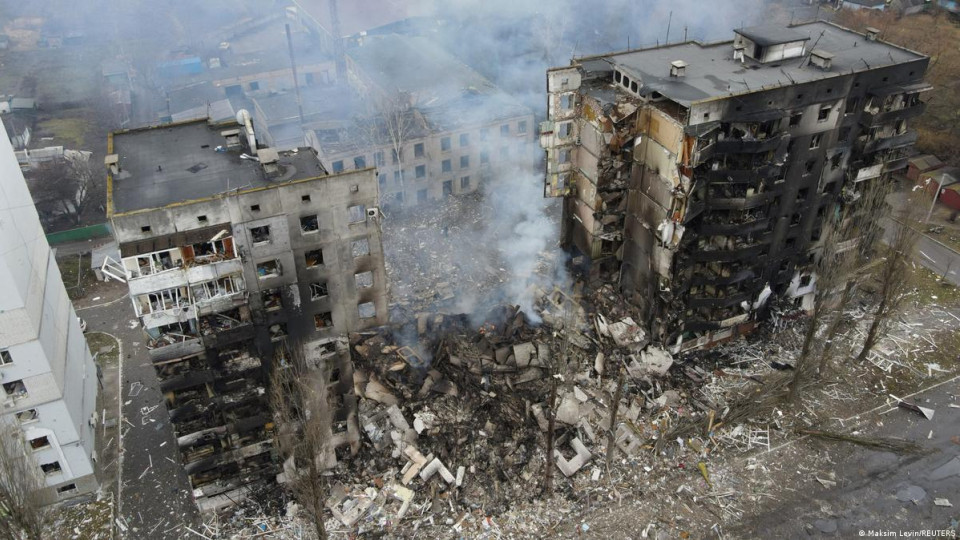










Judge of the Grand Chamber of the Supreme Court Vitaliy Urkevych spoke about the Supreme Court's practice in overcoming Russia's judicial immunity, the specifics of considering claims for compensation for damage caused by armed aggression, as well as the formation of an international compensation mechanism.
Vitaliy Urkevych analyzed international legal approaches to the application of state jurisdictional immunity, referring to the provisions of the 2004 UN Convention on Jurisdictional Immunities of States and Their Property and the 1972 European Convention on State Immunity. He noted that these international acts reflect the concept of limited state immunity and provide for cases when a state cannot invoke it in disputes concerning compensation for damage caused to a person's life, health, or property.
Vitaliy Urkevych pointed out that although Ukraine is not a party to these conventions, courts consider their provisions as a codified set of customary international law norms. At the same time, the practice of international judicial institutions for a long time was based on the necessity to preserve state immunity even in cases related to serious violations of international humanitarian law provisions.
Outlining the Supreme Court's approaches to this issue, the judge recalled the practice formed by the Supreme Court after the start of Russian aggression. Thus, according to the resolution of the Commercial Cassation Court of the Supreme Court dated April 14, 2022, in case No. 308/9708/19, the aggressor state cannot enjoy judicial immunity in cases concerning compensation for damage caused on the territory of Ukraine. The aggressor state, which grossly violated the sovereignty and territorial integrity of Ukraine, cannot rely on legal protection arising from the principle of state immunity.
The judge paid special attention to the Supreme Court's conclusions regarding ensuring the right of access to justice. In conditions where the Russian Federation denies its responsibility for armed aggression and does not provide effective mechanisms to protect violated rights, recourse to Ukrainian courts remains practically the only available means of judicial protection for victims.
The speech also highlighted the main categories of disputes considered by courts in connection with Russia's armed aggression. In civil jurisdiction courts, these are cases concerning compensation for material and moral damage caused by death or injury of people, destruction or loss of property, forced displacement, captivity, as well as other consequences of the war. Commercial courts resolve disputes regarding compensation for losses related to the loss or damage of property of business entities, vehicles, commodity stocks, production assets, and the inability to exercise corporate rights.
Separately, Vitaliy Urkevych focused on procedural aspects of considering such cases. In particular, he drew attention to the Supreme Court's legal position (resolution of the Commercial Cassation Court of the Supreme Court dated April 1, 2025, in case No. 916/293/24), according to which claims for compensation for environmental damage caused to the state of Ukraine as a result of Russian aggression must be filed by the state through authorized bodies, not by public organizations.
The analysis also covered the practice regarding the enforcement of claims against the property of entities effectively controlled by the Russian Federation. As noted, in the case concerning the state development corporation "VEB.RF," the Supreme Court concluded that this structure performs functions inherent to state bodies and is under such significant control of the Russian Federation that its property can be considered a source for fulfilling the obligations of the aggressor state.
"The plaintiff is a state corporation created by the Russian Federation. The main purpose of the existence of the state development corporation 'VEB.RF' is the sustainable socio-economic development of the Russian Federation. At the same time, entrepreneurial activity is an additional type of activity and is carried out only to achieve the main goal.
From the relevant provisions of the Law on the state development corporation 'VEB.RF,' it is evident that the Russian government effectively considers 'VEB.RF' as a subordinate government body, not an independent legal entity that engages in entrepreneurial activity at its own discretion and risk, so this and the Russian government's control over the activities of 'VEB.RF' resulted in the formation of principal-agent relations. The property of the Russian Federation and 'VEB.RF' is so mixed that there are no grounds to consider such property as belonging to a legal entity rather than the Russian Federation.
'VEB.RF' is essentially a body of the Russian Federation, as it performs goals, functions, and tasks inherent to state bodies, is under tight control of the Russian Federation to the extent that it is its alter ego ('second self'), and its property is managed by the state as its own.
The courts of previous instances made a generally correct conclusion (although with somewhat different reasoning) that the property of 'VEB.RF' located on the territory of Ukraine may be subject to enforcement for the debts of the Russian Federation," the judge noted (resolution of the Commercial Cassation Court of the Supreme Court dated July 20, 2022, in case No. 910/4210/20).
Regarding international mechanisms for compensation of damages, the judge recalled that within the implementation of the UN General Assembly Resolution on ensuring compensation for damage caused by aggression against Ukraine, the Damage Registry for Ukraine (RD4U) was created, operating under the auspices of the Council of Europe. As of May 2026, over 130,000 claims from individuals have been submitted to the Registry. In April 2026, legal entities also gained the opportunity to apply to the Damage Registry.
At the end, the judge emphasized the prompt ratification by Ukraine of the Convention on the Establishment of the International Compensation Commission for Ukraine. According to its provisions, the Commission will consider claims for compensation, determine the amount of compensation, and make decisions on payments from a special compensation fund.
Subscribe to our Telegram channel t.me/sudua and to Google News SUD.UA, as well as to our VIBER and WhatsApp pages on Facebook and Instagram to stay informed about the most important events.