Prosecutor with disability pension over 1 million UAH banned from promotion – he has been off staff for over half a year


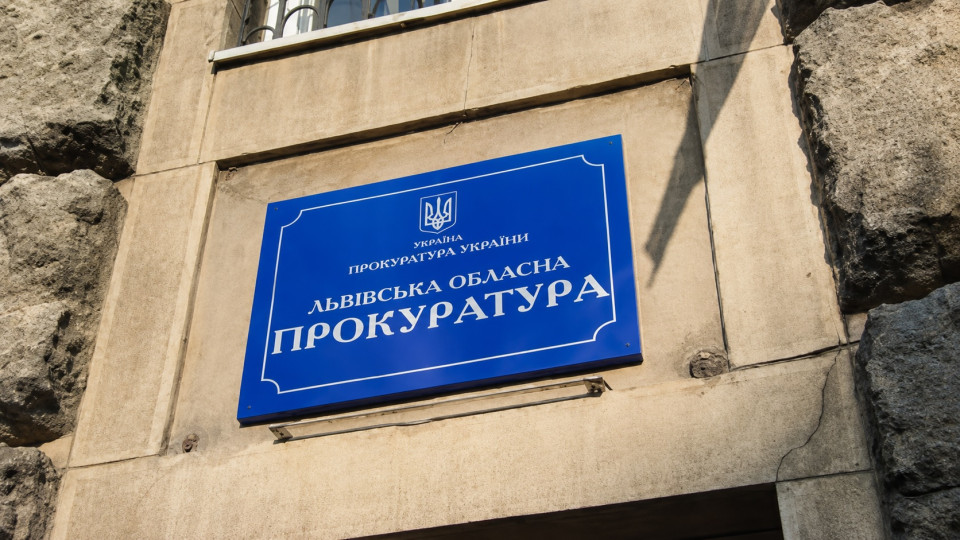










The Qualification and Disciplinary Commission of Prosecutors held prosecutor Oleg Sydorchuk of the Lviv Regional Prosecutor's Office disciplinarily liable and imposed a penalty prohibiting him for one year from transferring to a higher-level prosecutor's office and from being appointed to a higher position.
The relevant decision No. 239dp-26 was adopted by the QDCP on May 20, 2026.
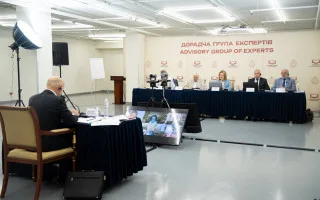
The disciplinary proceeding concerned the circumstances of establishing disability for the prosecutor and his subsequent behavior after being instructed to undergo a repeated medical examination.
Following public resonance around the possible illegal establishment of disability for officials, a check was initiated regarding the validity of the decisions of the Medical-Social Expert Commission (MSEC). Within this check, the prosecutor was expected to undergo a medical examination.
What is known about the prosecutor
Oleg Sydorchuk has worked in the prosecutor's offices since July 1999, holding the position of head of the Specialized Environmental Prosecutor's Office (as a department) of the Lviv Regional Prosecutor's Office from May 8, 2023, to October 14, 2025.
By order of the Prosecutor General dated October 9, 2025, No. 502k, Oleg Sydorchuk was dismissed from the position of head of the Specialized Environmental Prosecutor's Office (as a department) of the Lviv Regional Prosecutor's Office as of October 14, 2025, due to termination of his powers in the administrative position based on changes in the structure and staff number of the Lviv Regional Prosecutor's Office.
According to the decision, Sydorchuk was first assigned a Group III disability in April 2015, Group II in 2020, and in May 2024, a lifelong Group II disability.
Since 2020, he has received a disability pension, with total pension payments amounting to 1,099,316 hryvnias. In January 2025, he was transferred to a pension based on length of service.
At the time of disability establishment in 2015 and re-examination in 2020, the prosecutor was not working in the prosecutor's offices.
According to case materials, during the period designated for arrival at the medical institution, Sydorchuk was on sick leave. However, after the temporary incapacity ended, he did not undergo re-examination at the designated institution and, as established by the Commission, did not take sufficient and documented measures to officially arrange a new examination date.
On October 1, 2025, the prosecutor effectively familiarized himself with the content of the letter about the need to undergo examination but refused to sign an acknowledgment. Sydorchuk explained this by stating that at the time of familiarization, the deadline for fulfilling the requirement had already expired.
The prosecutor claimed he took active steps to undergo re-examination, including calling the medical institution and sending a written request. However, apart from the letter he acknowledged on October 1, he received no other summons and could not come on his own, as he was instructed to wait for an official summons, although his name was not mentioned in the summonses received by the regional prosecutor's office.
Thus, the prosecutor denied any disciplinary offense. Sydorchuk explained that from 2014 to 2020 he did not work in the prosecutor's offices due to measures applied to him under the legislation on lustration. In 2020, based on a court decision, he was reinstated in the prosecutor's offices. Therefore, he noted that at the time of the initial assignment of Group III disability and later Group II disability, he could not have used his official position or status as a prosecutor since he was not actually serving in the prosecutor's offices at that time.
He stated that he obtained disability on legal grounds, did not use his official position for this, and did not hide the fact of his disability status. He also reported that he independently underwent medical commissions and examinations in Lviv.
Explanation of the complainant's representative
The complainant's representative stated that on September 15, 2025, a letter from the Prosecutor General's Office was received by the Lviv Regional Prosecutor's Office regarding the need to notify prosecutors in the region with established disabilities about their arrival in Dnipro for examination.
In compliance with this letter, a notification was prepared for Sydorchuk about the need to appear at the Ukrainian State Scientific Research Institute of Medical and Social Problems of Disability of the Ministry of Health of Ukraine.
According to the complainant's representative, on September 15, 2025, the day the letter from the Prosecutor General's Office arrived, Sydorchuk began a period of temporary incapacity. Due to his absence at work, the notification was not sent via the Electronic Document Management System.
However, on September 22, 2025, the deputy head of the personnel and civil service department of the Lviv Regional Prosecutor's Office sent this notification to Sydorchuk via WhatsApp messenger. The complainant's representative claims that the prosecutor's acknowledgment of the notification is confirmed by the delivery and read status.
She also noted that sending notifications via WhatsApp is a proper way to inform a person, as it confirms the message was sent to the actual mobile phone number and read by the recipient. To support this position, she referred to the Supreme Court ruling dated January 9, 2026, in case No. 751/4083/24, where messenger screenshots were recognized as admissible evidence of party awareness, provided delivery and reading were confirmed.
Additionally, on September 25, 2025, the Lviv Regional Prosecutor's Office sent Sydorchuk a summons for examination by registered mail to the address he indicated as his residence in the autobiography dated April 15, 2025. However, this letter was returned to the prosecutor's office marked as recipient absent.
The complainant's representative also pointed out that Sydorchuk's sick leave lasted until September 30. Therefore, it was impossible to familiarize him with the notification directly at work between September 15 and 30.
On October 1, after the sick leave ended, Sydorchuk came to the personnel department of the Lviv Regional Prosecutor's Office. There he reviewed the Prosecutor General's order on the liquidation of the Specialized Environmental Prosecutor's Office (as a department) of the Lviv Regional Prosecutor's Office, which he headed.
After that, he was informed of the content of the notification about the need to appear at the medical institution in Dnipro for examination due to established disability. According to the complainant's representative, Sydorchuk was also given a document for personal acknowledgment. He read it but refused to sign, explaining that the deadline for the examination had already passed.
After the prosecutor refused to sign, employees of the Lviv Regional Prosecutor's Office repeated the requirement to appear in Dnipro for examination. In the presence of four people, an act was drawn up about Sydorchuk's refusal to sign the acknowledgment of the notification.
At the same time, the complainant's representative noted that the notification addressed to Sydorchuk by the Lviv Regional Prosecutor's Office did not specify a deadline for the examination. In her opinion, this meant the prosecutor could undergo the medical examination at any convenient time.
According to her, the deadline for the examination was contained only in the order of the Prosecutor General's Office, which was not provided or sent to Sydorchuk.
Therefore, the complainant's representative believes that Sydorchuk was effectively informed about the need to undergo the examination.
She also disagreed with the prosecutor's claims that he did not receive other summonses to the Ukrainian State Scientific Research Institute of Medical and Social Problems of Disability of the Ministry of Health of Ukraine.
During the meeting, the complainant's representative attached to the disciplinary case materials a summons addressed to Sydorchuk at his registered residence address.
At the same time, the prosecutor himself, answering the Commission members' questions, stated that he did not receive this letter.
The complainant's representative also referred to information from the State Border Guard Service of Ukraine that Sydorchuk crossed the state border of Ukraine 73 times from 2022 to 2024. In her opinion, this indicates that the prosecutor had the actual opportunity to travel long distances.
Summarizing, the complainant's representative stated that the totality of these circumstances indicates the presence of a disciplinary offense in Sydorchuk's actions.
In view of this, the complainant's representative considered it appropriate to apply the disciplinary sanction of dismissal from the prosecutor's offices to Sydorchuk. She also noted that since October 2025, the prosecutor has been off staff, so the prohibition on transfer to a higher-level prosecutor's office or appointment to a higher position, in her opinion, will not have real negative consequences for him and will not meet the purpose of disciplinary liability.
Commission's decision
The Commission emphasized in its decision that the prosecutor, being aware of the high public sensitivity of the issue related to possible illegal receipt of disability by prosecutors during martial law, was obliged not only to act in accordance with current legislation but also to take all necessary measures to protect his business reputation and the authority of the prosecutor's offices in general. However, despite leadership appeals, the prosecutor consciously evaded undergoing a repeated medical examination, has not appeared at the relevant medical institution to date, and did not initiate any actions aimed at publicly refuting doubts about the legality of his disability group assignment.
At the same time, the Commission took into account mitigating circumstances: the prosecutor's sick leave during the initially designated period for arrival at the medical institution, positive character reference, long service in the prosecutor's offices, and absence of disciplinary sanctions in the past.
Considering this, the QDCP did not apply dismissal from the prosecutor's offices but chose a less severe sanction – a one-year ban on transfer to a higher-level prosecutor's office and appointment to a higher position.
The decision may be appealed to the administrative court or to the High Council of Justice within one month from the date of delivery or receipt of its copy.
Subscribe to our Telegram channel t.me/sudua and to Google News SUD.UA, as well as to our VIBER and WhatsApp, Facebook page and Instagram page to stay informed about the most important events.