Sanctions Against Russia and Weapons and Air Defense for Ukraine — G7 Countries Adopt Final Statement


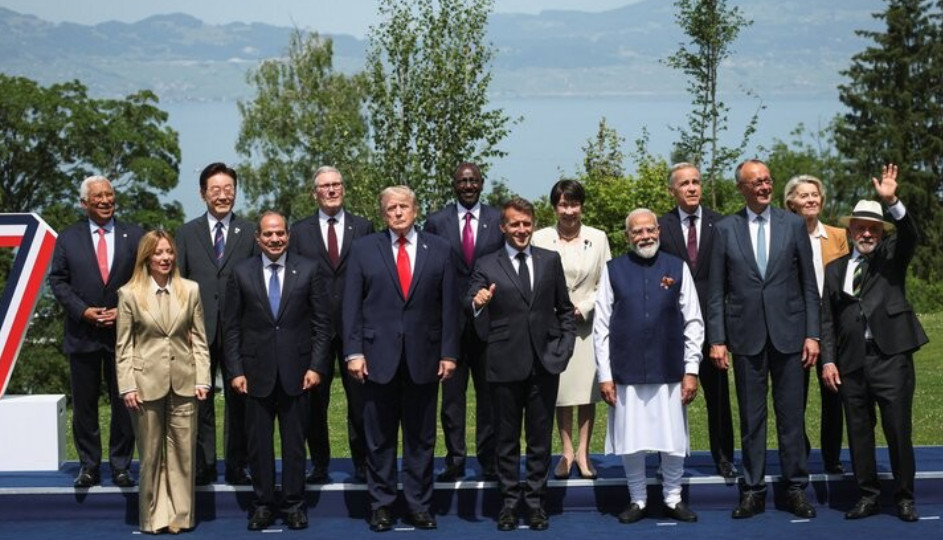










Leaders of the Group of Seven (G7) countries have agreed to increase supplies of air defense systems, interceptor missiles, and long-range weapons to Ukraine. They also expressed readiness to consider the possibility of granting licenses for their production directly in Ukraine. This is stated in the official joint communiqué of the G7 leaders published on June 17.
The G7 leaders declared unwavering support for Ukraine in defending its freedom, sovereignty, and territorial integrity and confirmed solidarity with Ukrainians amid Russian strikes on critical infrastructure and cultural heritage sites. They assessed Ukraine's resilience and battlefield successes over recent months and noted the emergence of a new momentum.
"In order to support and accelerate this new momentum, we agree to increase the supply of air defense means, additional systems and interceptors, as well as long-range weapons. We are also ready to consider the possibility of granting Ukraine licenses to facilitate increased military production," the statement reads.
The G7 also highlighted the importance of energy resilience considering the needs and priorities set by the Ukrainian authorities and promised to provide additional support to help Ukraine get through the next winter.
Separately, the leaders pledged to intensify pressure on the Russian military economy, including through sanctions targeting the oil and gas sectors. They consider this an opportune moment for additional measures.
The statement also noted the leaders’ support for the agreement reached by U.S. President Donald Trump regarding the opening of the Strait of Hormuz.
The G7 also backed the multinational defense initiative led by France and the United Kingdom, aimed at restoring maritime navigation in the Strait of Hormuz — protecting commercial vessels and overseeing demining efforts. Separately, the leaders called for accelerating humanitarian aid and reconstruction of Gaza, ending violence in the West Bank, and supported Lebanese authorities’ efforts to disarm Hezbollah.
The G7 leaders also emphasized the importance of a free and open Indo-Pacific region based on the rule of law and confirmed their opposition to attempts to change the status quo by force in the East China Sea, South China Sea, and the Taiwan Strait. In their view, these issues should be resolved peacefully through dialogue only. The G7 expressed deep concern about North Korea’s nuclear and missile programs and reaffirmed the course toward its complete denuclearization.
Subscribe to our Telegram channel t.me/sudua and to Google News SUD.UA, as well as to our VIBER and WhatsApp, and follow us on Facebook and Instagram to stay informed about the most important events.