In Ukraine, the dismantling of kiosks may be prohibited without a court decision, compensation, or an alternative location


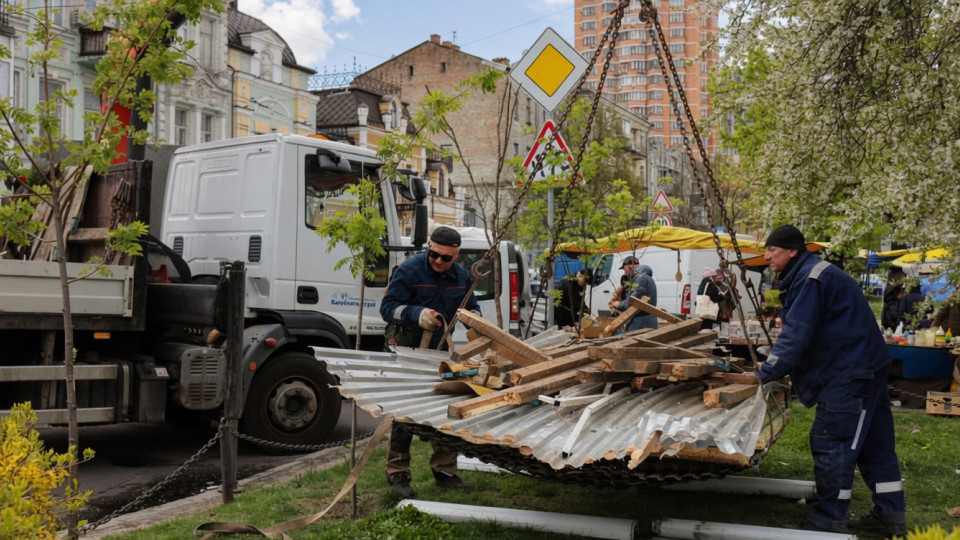










The Verkhovna Rada Committee on Social Policy and Veterans' Rights Protection emphasized the need for urgent consideration and adoption in the first reading of draft law No. 15035, aimed at protecting employment and self-employment in the field of small entrepreneurship. The committee believes that the document should become an important mechanism for protecting the labor rights of employees and self-employed persons, preserving jobs, and supporting small businesses amid economic challenges and social instability.
Parliament notes that decisions by local self-government bodies to dismantle temporary structures (kiosks) often lead to the cessation of small business activities, loss of jobs, and sources of income for citizens.
Why it is proposed to change the rules for dismantling kiosks
The draft law "On Amendments to Certain Laws of Ukraine Regarding the Protection of Employment and Self-Employment in the Field of Small Entrepreneurship" was registered in the Verkhovna Rada on February 17, 2026.
The explanatory note to the document states that in various cities of Ukraine, local self-government bodies systematically adopt decisions in the areas of urban planning, improvement, land use, and management of communal property, which result in the cessation of small business activities. This concerns, in particular, the dismantling, forced relocation, or removal of temporary structures and small architectural forms, which effectively leads to the simultaneous loss of jobs and deprives people of their means of livelihood.
According to the authors of the legislative initiative, such practice during martial law may cause a reduction in family incomes, a decrease in budget revenues, increased social tension, and the displacement of small entrepreneurship from urban spaces.
The Verkhovna Rada Committee on Social Policy and Veterans' Rights Protection has already reviewed the draft law and recommended that parliament adopt it as a basis in the first reading. This concerns not only small architectural forms but primarily the preservation of jobs, the economic stability of the state, and support for small businesses during the war.
What the draft law on protecting small business and self-employment provides
Draft law No. 15035 provides for:
- a ban on dismantling temporary structures if it leads to job losses, without a court decision or without providing compensation;
- an obligation for local self-government bodies to assess the impact of such decisions on employment, including determining the number of jobs that may be lost and the availability of alternatives;
- in case of demolition of structures, to provide alternative places for conducting activities considering the needs of the so-called cluster economy, so that basic services — repair, key making, flower sales, animal feed, coffee, and others — remain accessible to residents of districts, including small settlements and areas near military facilities.
In which cases the dismantling of kiosks will still be allowed
As previously reported by the "Judicial and Legal Newspaper", the document also proposes allowing the dismantling of temporary structures for entrepreneurial activities only in three exceptional cases: to ensure the defense of the state, the protection or functioning of critical infrastructure, and to eliminate an immediate threat to human life and health.
Additionally, the draft law proposes that dismantling or forced relocation of temporary structures be carried out exclusively based on a court decision. At the same time, the mere absence of documents for placing the structure will not be considered sufficient grounds for its demolition.
Authorities will be required to assess the impact of dismantling on employment
The document also obliges authorities to conduct economic and social calculations before making decisions on dismantling, assessing the impact on the number of jobs, the level of self-employment, and possible losses to local budgets.
At the same time, the Main Scientific and Expert Department of the Verkhovna Rada expressed a number of comments on the draft law. In particular, the department believes that some provisions of the document may limit the constitutional powers of authorities, and some norms are formulated insufficiently clearly and allow for different interpretations.
Subscribe to our Telegram channel t.me/sudua and to Google News SUD.UA, as well as to our VIBER and WhatsApp pages on Facebook and Instagram to stay updated on the most important events.