Insult a police officer — risk a fine of 5100 UAH or arrest: what the initiative awaiting the Rada's decision proposes


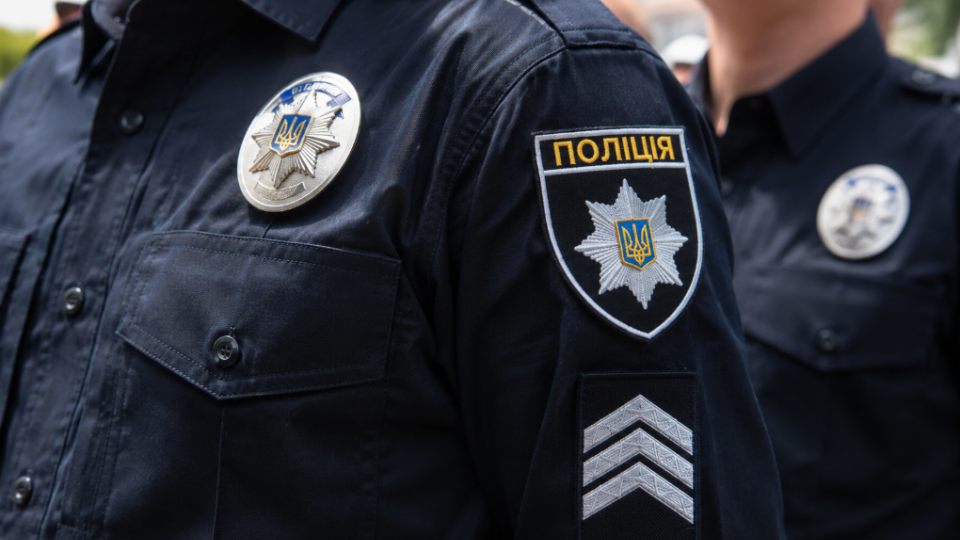










In Ukraine, a legislative initiative that proposes to introduce separate liability for insulting police officers, border guards, servicemen, and members of public formations while performing their official duties has remained without a final decision for several years. The authors of the bills insist that the current legislation does not provide adequate protection of the honor and dignity of law enforcement officers, while critics see risks to freedom of expression and possible problems with law enforcement.
As a result, one of the bills was rejected by parliament, and the other was supported by the Verkhovna Rada only in the first reading back in 2022. Since then, the document has been formally prepared for the second reading, but no further progress has been made.
Fines for insulting police officers: what the first initiative provided
In February 2021, bill No. 5050 "On Amendments to the Code of Ukraine on Administrative Offenses regarding the Protection of the Honor and Dignity of Employees of the National Police of Ukraine, Members of Public Formations for the Protection of Public Order and State Border, and Servicemen" was submitted to the Verkhovna Rada.
The document proposed to rewrite Article 185 of the Code of Ukraine on Administrative Offenses and extend its application not only to cases of malicious disobedience to lawful demands of police officers but also to intentional public actions that insult the honor and dignity of National Police employees during the performance of their official duties.
Separately, the bill provided liability for actions defined by the authors as insulting the honor and dignity of a law enforcement officer expressed in an indecent form, as well as for desecration of the police uniform.
A similar approach was proposed to be applied to members of public formations for the protection of public order and the state border, as well as servicemen during their participation in public order protection.
The sanctions were proposed to remain at the level of the current Article 185 of the Code of Administrative Offenses:
- fine from 136 to 255 hryvnias;
- community service from 40 to 60 hours;
- corrective labor for a period of one to two months;
- administrative arrest up to 15 days.
Why one version of the bill was immediately set aside
During the consideration of the bill, the Verkhovna Rada Committee on Law Enforcement drew attention to the existence of an alternative bill No. 5050-1.
The committee's conclusion noted that the alternative initiative is more substantive and comprehensively regulates the issue raised.
As a result, the committee recommended the Verkhovna Rada reject bill No. 5050 following the first reading.
Effectively, after this, the main focus of parliament was on the alternative bill No. 5050-1.
What new punishments are proposed
The alternative bill No. 5050-1 is not limited to changes only to Article 185 of the Code of Administrative Offenses.
The authors propose a comprehensive amendment of several provisions of the Code of Ukraine on Administrative Offenses, including Articles 173, 185, 185-7, 185-10, 262, and 263.
The explanatory note states that the last increase in fines for petty hooliganism took place back in 1997, and the current amounts have effectively lost their educational function.
Additionally, the authors emphasize that separate liability for insulting law enforcement officers is not directly provided in the Code of Administrative Offenses, which often leads to such cases being qualified under other articles, creating legal inconsistencies.
Fines up to 5100 hryvnias and arrest: what the bill proposes
Bill No. 5050-1 provides for increased liability for petty hooliganism.
In particular, the fine for such actions is proposed to be increased from the current 51–119 hryvnias to 170–510 hryvnias. For repeated offenses within a year, the fine may amount to 510–850 hryvnias.
Separately, the document proposes to establish liability for public insult of:
- a police officer during the performance of official duties;
- a serviceman;
- an employee of the State Border Guard Service;
- members of public formations involved in the protection of public order or the state border.
For such actions, it is proposed to impose a fine from 340 to 680 hryvnias or community service for 20 to 30 hours.
The bill also provides for increased liability for malicious disobedience to lawful demands of police officers, border guards, and servicemen.
In such cases, the fine may range from 850 to 1700 hryvnias, and for repeated offenses or offenses committed by a group — from 1700 to 5100 hryvnias or administrative arrest up to 15 days.
Moreover, the document expands the list of cases when law enforcement officers can apply administrative detention to formalize the relevant offenses.
Why the discussion about freedom of expression arose
The Main Scientific and Expert Department of the Verkhovna Rada Apparatus generally did not object to the idea of protecting the honor and dignity of persons performing official duties.
At the same time, experts expressed a number of remarks.
One concerned the concept of "public insult." The conclusion noted that the use of the public nature criterion may create difficulties in holding someone accountable, as disputes may arise about whether the actions were truly public.
Experts also pointed out that creating separate offenses for different categories of officials could lead to excessive complication of the Code of Administrative Offenses.
According to the Main Scientific and Expert Department, it would be more logical to create a single norm on liability for intentional public actions that insult the honor and dignity of a person while performing official or public duties.
It was precisely around the definition of insult and the limits of permissible criticism of government representatives that much of the discussion about the legislative initiative arose.
Similar initiatives also concern the protection of servicemen
It is worth noting that this is not the only legislative initiative in recent years that provides liability for insulting representatives of law enforcement agencies.
As reported by the "Judicial and Legal Newspaper", there are also bills in the Verkhovna Rada regarding the introduction of administrative and criminal liability for insulting the honor and dignity of servicemen, as well as threats against them.
One such document is bill No. 10014, registered in 2023. It proposes to supplement the Code of Ukraine on Administrative Offenses with a new article on disrespect towards servicemen and establish penalties in the form of fines from 3400 to 5100 hryvnias, community service, or administrative arrest up to 15 days.
Additionally, in 2025, bills No. 13384 and No. 13384-1 were submitted to parliament, proposing criminal liability for insulting the honor and dignity of servicemen. If the main bill provides for punishment of up to five years imprisonment, the alternative allows sanctions ranging from fines up to 68,000 hryvnias to imprisonment for up to 12 years depending on the nature of the offense.
At the same time, as with the bills on insulting police officers, some of these initiatives received critical remarks from parliamentary experts, who pointed out risks of excessive criminalization and problems with compliance with the principle of legal certainty.
What the scientific-expert department disliked
Some remarks concerned the legal drafting of the bills.
For example, regarding bill No. 5050, experts questioned the use of the term "desecration of the police uniform." In their opinion, this wording is traditionally applied to religious shrines, graves, or monuments and is not entirely appropriate for state institutions and their representatives.
Regarding bill No. 5050-1, experts also noted the risks of excessively expanding the number of special types of administrative offenses.
The bill was supported in the first reading: what happened next
In July 2021, the Verkhovna Rada Committee on Law Enforcement considered bill No. 5050-1.
Despite expert remarks, the committee supported the main goal of the document and recommended parliament adopt it as a basis.
At the same time, deputies emphasized the need to refine the draft before the second reading, particularly regarding the definitions of "insult" and "public insult."
The document has not been finally adopted for over three years
On May 3, 2022, the Verkhovna Rada supported bill No. 5050-1 in the first reading and adopted it as a basis with a shortened preparation period.
Since then, the document has officially been at the stage of preparation for the second reading.
However, more than four years after registration and over three years after the first reading vote, parliament has not reconsidered it.
Thus, bill No. 5050-1 provides for the introduction of separate liability for insulting police officers, border guards, and servicemen, but the relevant changes have not yet come into force because the document, after being adopted as a basis in 2022, has not been considered by parliament in the second reading.
Subscribe to our Telegram channel t.me/sudua and to Google News SUD.UA, as well as to our VIBER and WhatsApp pages on Facebook and Instagram to stay updated on the most important events.