Bailiffs prohibited from seizing the sole housing of military personnel, but not extended to persons in the Joint Forces Operation zone


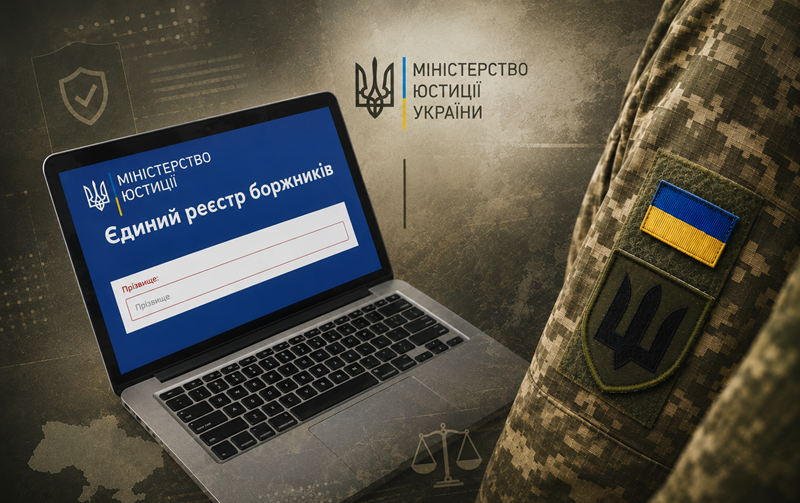










The process of enforcing court decisions in Ukraine has long remained one of the most bureaucratic and problematic areas of law enforcement. Law No. 4833-IX and the Ministry of Justice Order No. 1337/5 aim to change this model through the digitalization of enforcement proceedings and expanding automatic interaction between state electronic registers.
The new rules provide for simplification of certain procedures for state and private bailiffs, reduction of paperwork, and acceleration of information exchange between government bodies. A special place among the changes is the protection of the rights of military personnel and their family members during martial law.
The introduction of a special Section XXII to the Instruction on the Organization of Enforcement Proceedings creates a clear algorithm for preserving the sole housing of defenders. At the same time, rules become stricter for ordinary debtors: from automated searches for electronic money to restrictions on registration actions with vehicles.
Protection of the sole housing of military personnel
During martial law in Ukraine, a temporary ban was introduced on the forced seizure of the sole housing of military personnel and other protected categories of citizens. The new rules are provided by Law No. 4833-IX and the Ministry of Justice Order No. 1337/5, which also strengthen the digitalization of enforcement proceedings.
The protection covers military personnel of the Armed Forces of Ukraine, National Guard, Security Service of Ukraine, State Border Guard Service, State Special Communications Service, and other lawful military formations serving on the territory of Ukraine. At the same time, the moratorium does not apply to persons who voluntarily left their military unit or deserted.
To stop the seizure, the debtor or their representative must submit an appropriate application to the bailiff—in paper or electronic form. It must be accompanied by a certificate of service issued no earlier than 10 days before the application and certified by a seal or qualified electronic signature.
After receiving the application, the bailiff is obliged to suspend the seizure or sale of the housing at auction no later than the next working day.
At the same time, the law establishes exceptions. The moratorium does not apply if the housing is subject to a mortgage in a case of foreclosure on pledged property, as well as in cases of compensation for damage caused by a criminal offense, injury, or death of a person.
The protection extends to the sole housing of the debtor, including the land plot on which it is located. The bailiff has the right to refuse to suspend the seizure if it is established that the debtor owns two or more residential properties (except those located in occupied territories or combat zones).
The debtor is obliged to notify the bailiff of the loss of military status within 10 days. In turn, the bailiff has the right to verify information by requests to the Territorial Recruitment and Social Support Centers or central government bodies, which must respond within 10 days.
Electronic money and the Automated Enforcement Proceedings System (AEPS)
Separately, changes concern the digital assets of debtors and the automation of enforcement proceedings. Law No. 4833-IX expands the powers of bailiffs to the sphere of electronic money and integrates the Automated Enforcement Proceedings System (AEPS) with banks and payment services.
From now on, bailiffs have the right to seize not only bank accounts but also funds stored in debtors' electronic wallets. Issuers of electronic money and non-bank payment service providers are obliged to notify the bailiff about the opening of accounts or electronic wallets on the day such an operation is conducted.
Moreover, within six months, banks and financial institutions must connect to the information interaction system with AEPS. This will allow practically instant seizure of debtors' funds in automatic mode.
At the same time, the reform also provides simplification for debtors in case of full debt repayment. If the debt amount does not exceed 10 minimum wages, AEPS will automatically generate a repayment notification. This notification will serve as grounds for prompt removal of the person from the debtors register and automatic lifting of seizures from accounts.
Unified Debtors Register
The role of the Unified Debtors Register (UDR) is also significantly changing, becoming a key tool for controlling debtors' property transactions.
From now on, notaries, state registrars, and Ministry of Internal Affairs bodies are obliged to check the presence of a person in the UDR before performing registration or notarial actions related to property alienation. If the owner is listed in the debtors register, such actions must be refused.
In addition, in case of an attempt to alienate property, the bailiff must be notified no later than the next working day.
At the same time, the law provides certain exceptions. In particular, restrictions do not apply to vehicle registration if it is not related to its alienation. Also, registration of property purchased through the electronic trading system SETAM within the relevant enforcement proceeding is allowed.
Separate control is introduced for securities transactions. Depository institutions, when opening accounts for depositors, will also be obliged to check information about the person in the Unified Debtors Register.
Property realization
The Ministry of Justice order clarifies the operation of the SETAM system. The main change concerns property that is mortgaged or pledged.
Unrealized pledged property is put up for a repeated auction at a price that cannot be less than the amount of debt owed to the pledgee plus enforcement proceeding costs. This prevents depreciation of the collateral during forced sale.
Subscribe to our Telegram channel t.me/sudua and to Google News SUD.UA, as well as to our VIBER and WhatsApp pages, and follow us on Facebook and Instagram to stay informed about the most important events.