Ratification of the Loan Agreement: Who Will Actually Repay the EU's 90 Billion Euro Loan


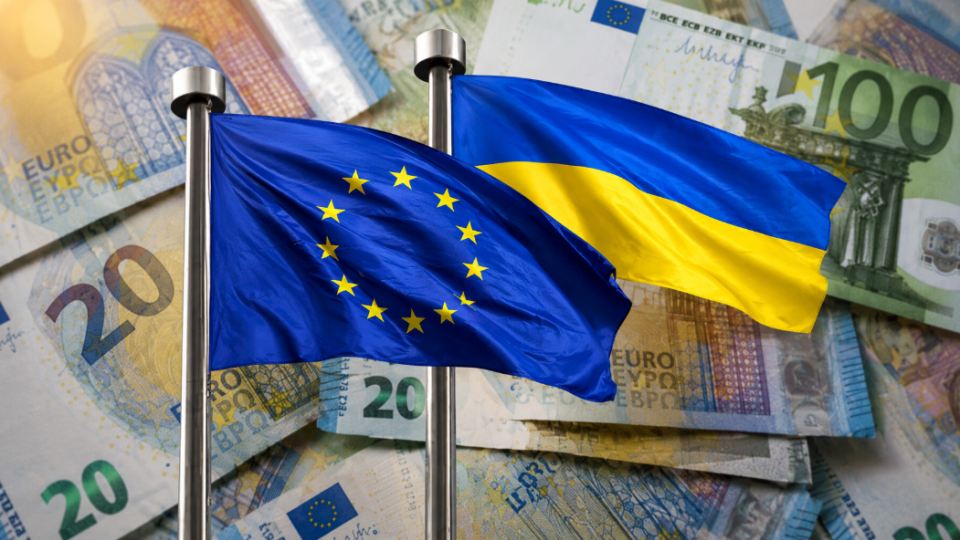










Following the progress of the Loan Agreement process for Ukraine, the "Judicial and Legal Newspaper" was one of the first to report on its ratification and on the conditions upon which the receipt of three tranches totaling up to 8.35 billion euros will depend.
It should be noted that the Verkhovna Rada ratified in full draft law No. 0376, which enacts both the Loan Agreement to support Ukraine (UA Support Loan) and the Memorandum of Understanding with the European Union. The total amount of funds raised is 90,000,000,000 euros.
The Agreement and the Memorandum were submitted to the Rada as one package, although these are fundamentally different documents. The Agreement regulates the technical terms of lending, while the Memorandum contains a list of political and fiscal obligations that Ukraine undertakes in exchange for the provided funds. The main question rapidly spreading through society is: who and how will repay these funds?
Although some parliament members refer to the concept of a "reparations loan," the conditions stipulated in the contract include certain triggers that could turn this aid into an unavoidable sovereign debt.
According to Article 2 of the Agreement, the amount of up to 90 billion euros is distributed across three main vectors:
- Budget support within the Ukraine Facility, i.e., direct financing of the budget deficit.
- Macro-financial assistance aimed at stabilizing the financial system.
- Assistance to support defense-industrial capacity, i.e., funds for weapons and technical rearmament.
The loan to support Ukraine must be provided by December 31, 2027. December 31, 2027, and the payment of all tranches must be completed no later than 2028.
Repayment Mechanism
Article 3 of the Agreement establishes that the loan is a limited recourse loan.
This means that under the main scenario, the loan must be repaid exclusively from war reparations, compensation, or any financial settlement from the Russian Federation.
If reparations from Russia are insufficient to fully cover the debt, Ukraine is not responsible for the unpaid portion. The creditor (EU) in this case has no right to claim other Ukrainian assets.
As security for fulfilling obligations, Ukraine grants the EU a security interest in its claim against Russia for reparations. In other words, Ukraine pledges to the European Union its future payments from the aggressor.
When does the loan become Ukraine's debt?
Articles 11 and 13 of the Agreement are interesting as they define the conditions under which the limited recourse right ceases to apply. In such cases, Ukraine is obliged to repay the funds from its own budget.
Circumstances under which, if necessary, the Creditor may have a claim on the Borrower's assets other than war reparations:
- Violation of democratic standards. Ukraine is obliged to maintain a multi-party system, the rule of law, guarantee human rights, and fight corruption. If the EU establishes systemic violations of these norms, the loan will no longer be limited to reparations — Ukraine will have to pay the full amount from its own resources.
- Corruption and fraud. If it is established that Ukrainian officials committed fraudulent or corrupt actions during the management of this loan, Ukraine must immediately repay an amount equivalent to the damage caused.
- Misuse of funds. Violation of the Financing Strategy or the Memorandum may also be grounds for declaring default on the loan.
While the Loan Agreement provides financial support in the form of billions of euros, the Memorandum of Understanding defines the framework parameters of economic policy that Ukraine must adhere to.
Ratification of draft law No. 0376 as one package means agreement to the corresponding obligations.
Among them is the introduction of VAT on international postal shipments, which may affect the online trade segment, as well as strengthening regulation of digital platforms. Separately, a revision of approaches to the simplified taxation system and tightening fiscal requirements are envisaged.
There are also new tax and customs obligations, which at the same time can be considered part of internal reforms implemented within Ukraine's strategic documents.
Who controls the process?
Regarding institutional support, the National Bank of Ukraine performs the functions of the borrower's financial agent but is not responsible for state financial obligations.
The National Defense Coordinator, namely the Ministry of Defense, is responsible for the targeted use of funds in the defense industry and reports to the European Commission, OLAF, and the European Public Prosecutor's Office (EPPO).
The Ministry of Justice provides a legal opinion on the validity and binding nature of Ukraine's respective obligations.
The assertion that Ukraine owes nothing and that obligations will be covered by reparations applies within the current financial mechanisms only if Ukraine complies with the criteria defined in agreements with the EU. This concerns requirements in the areas of the rule of law, anti-corruption policy, and media freedom.
In case of significant deviation from agreed reforms, mechanisms for reviewing financing conditions are provided, which may affect the nature of budgetary obligations related to the attracted funds.
The combination of the loan agreement with the reform memorandum allowed the implementation of a number of unpopular fiscal and regulatory changes, in particular in the field of taxation of imported parcels and VAT for individual entrepreneurs, as part of an agreed package of obligations within the financial support totaling about 90 billion euros.
Subscribe to our Telegram channel t.me/sudua and to Google News SUD.UA, as well as to our VIBER and WhatsApp pages on Facebook and Instagram to stay informed about the most important events.