Ukrainians May Lose the Right to Housing Due to Prolonged Stay Abroad


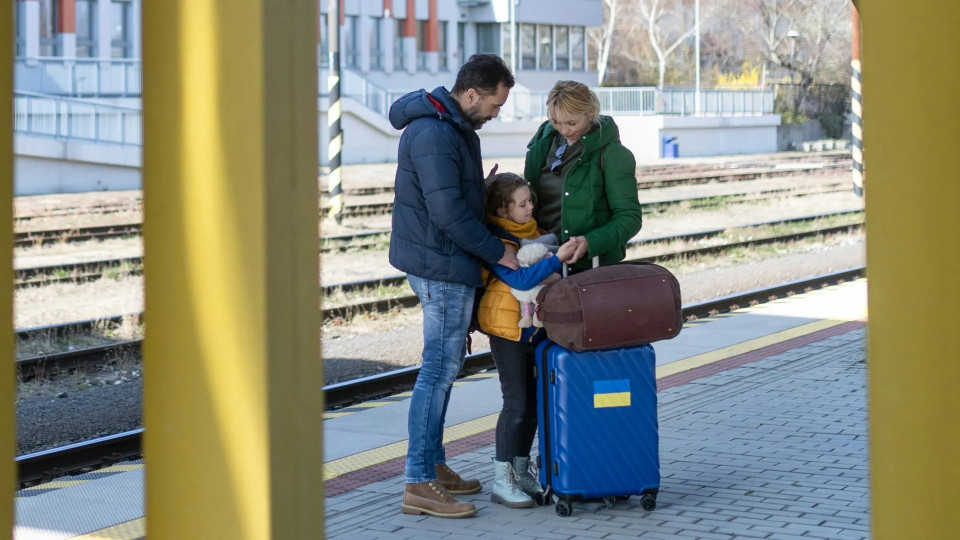










After the start of the full-scale war, millions of Ukrainians left the country. This caused an increase in disputes regarding the right to use housing: apartment owners try to deregister persons who have not lived in the premises for years, while those persons insist that forced or temporary departure does not mean losing housing rights.
Most often, such disputes concern family members of the owner, former spouses, or other persons registered in the housing but who have not actually lived there for a long time. This concerns not the loss of ownership rights to the apartment or house, but specifically the loss of the right to use the housing—that is, the right to reside in it.
What the legislation provides
The main regulation is contained in Articles 71–72 of the Housing Code of the Ukrainian SSR and Article 405 of the Civil Code of Ukraine.
After the Law of Ukraine "On the Basic Principles of Housing Policy" came into force, housing legislation was updated, but Articles 71–72 of the Housing Code of the Ukrainian SSR continue to operate during the transitional period and remain the basic norms in disputes about losing the right to use housing.
Article 71 of the Housing Code of the Ukrainian SSR provides that housing is preserved for a temporarily absent person for six months, and this period can be extended for valid reasons. The law also explicitly provides cases when the right to use housing is preserved for a longer period, in particular in cases of military service, work or study abroad, treatment, serving a sentence, or performing guardian duties.
At the same time, according to Article 72 of the Housing Code of the Ukrainian SSR, recognition of a person as having lost the right to use housing due to prolonged absence is possible only by court order.
Article 405 of the Civil Code of Ukraine defines that a family member of the housing owner may lose the right to use it if absent for more than one year without valid reasons, unless otherwise established by agreement of the parties or by law.
It is worth noting that the legislation does not provide for automatic loss of rights due to the mere fact of being abroad. Courts assess the specific circumstances of each dispute.
The new Law of Ukraine "On the Basic Principles of Housing Policy" is also relevant, which enshrines the priority of the right to housing, the principle of proportionality, and the need to balance the interests of participants in housing legal relations.
Current practice of the Supreme Court
In disputes about losing the right to use housing, the Supreme Court has formed several important approaches directly related to cases of prolonged stay abroad or actual non-residence in the apartment.
For example, in the ruling of the Commercial Cassation Court of the Supreme Court dated December 14, 2023, in case No. 521/7073/21, the Court emphasized that the demand to recognize a person as having lost the right to use housing is effectively an interference with the right to housing, so such interference must be justified, necessary to protect the owner's rights, and proportionate to the consequences for the person losing the housing.
At the same time, in the Supreme Court ruling dated September 4, 2024, in case No. 756/1384/20, the Supreme Court stressed that recognizing a person as having lost the right to use housing is an interference with the right to housing, so courts are obliged to thoroughly investigate the reasons for the person's prolonged absence, their connection with the housing, possible obstacles to its use, and also assess the proportionality of such interference in light of Article 8 of the Convention for the Protection of Human Rights and Fundamental Freedoms.
A notable ruling is the decision dated September 25, 2024, in case No. 161/15630/22, where the Supreme Court stated that the right to use private housing has a proprietary nature, and therefore its termination must comply with the requirements of Articles 405–406 of the Civil Code of Ukraine. The Court emphasized that the key factor for losing the right to use housing is the absence of the person without valid reasons for more than one year, as well as their actual loss of connection and interest in the housing.
In the Supreme Court ruling dated April 2, 2025, in case No. 607/19247/21, the Court effectively summarized the criteria for such disputes and noted that to recognize a person as having lost the right to use housing, two conditions must be met simultaneously:
- non-residence for more than the period established by law;
- absence of valid reasons for such absence.
At the same time, it is the plaintiff who must prove the absence of the person without valid reasons.
The formed practice shows that the Supreme Court is gradually moving away from a purely formal approach, where the mere fact of long-term absence was sufficient.
That is, courts generally consider:
- whether the absence was forced;
- whether the person maintained a connection with the housing;
- whether they participated in paying utility bills;
- whether they have another permanent place of residence;
- whether they actually ceased using the apartment.
In the Supreme Court's practice, work abroad, treatment, study, or forced departure due to hostilities may be recognized as valid reasons for non-residence.
However, judicial practice also shows an approach where prolonged non-residence without valid reasons, lack of participation in housing maintenance, presence of another residence, and loss of actual connection with the disputed housing may indicate loss of the right to use it.
For example, in the Supreme Court ruling dated March 3, 2021, in case No. 161/2007/18, the Court directly stated that prolonged non-residence, moving to another city, starting a family, having other housing, and lack of sufficient ongoing ties with the disputed housing indicate loss of interest in it.
Practice of the European Court of Human Rights (ECHR)
The ECHR in its practice proceeds from the fact that the right to housing is part of the right to respect for private and family life guaranteed by Article 8 of the Convention.
In the case Kryvitska and Kryvitskyy v. Ukraine, the ECHR emphasized that loss of housing is the most extreme form of interference with the right to respect for housing, and therefore national courts must assess the proportionality of such interference considering all specific circumstances of the case, rather than applying a purely formal approach.
That is why Ukrainian courts must consider not only the duration of the person's absence but also the reasons for departure and the nature of their connection with the housing.
Problematic aspects of practice
One of the main problems remains the lack of clear criteria for assessing the validity of reasons for non-residence.
In practice, courts evaluate prolonged residence abroad, employment in another country, obtaining temporary protection, or starting a family outside Ukraine differently. Martial law has effectively become a new factor in assessing "valid reasons."
Particular difficulties are created by the circumstances of martial law, as current housing legislation is effectively not adapted to the mass forced departure of citizens abroad.
In summary, in such disputes, not only the periods of non-residence are key, but primarily evidence of the person's actual connection with the housing.
Therefore, persons who stay abroad for a long time should keep proof of housing use: pay utility bills, maintain contact with the owner, keep personal belongings or documents regarding residence. At the same time, housing owners usually need to prove not only the person's prolonged absence but also the absence of valid reasons for non-residence and the actual loss of connection with the disputed housing to prove loss of the right to use it.
Also read the material from "Judicial and Legal Newspaper" regarding the Supreme Court's position, where the Court stated that prolonged residence and a strong connection of the person with the housing may be grounds for refusal to evict if such interference is disproportionate within the meaning of Article 8 of the Convention.
Subscribe to our Telegram channel t.me/sudua and on Google News SUD.UA, as well as on our VIBER and WhatsApp, page on Facebook and on Instagram to stay updated on the most important events.