Mother requested to change child's surname due to possible bullying in Poland: case went to court


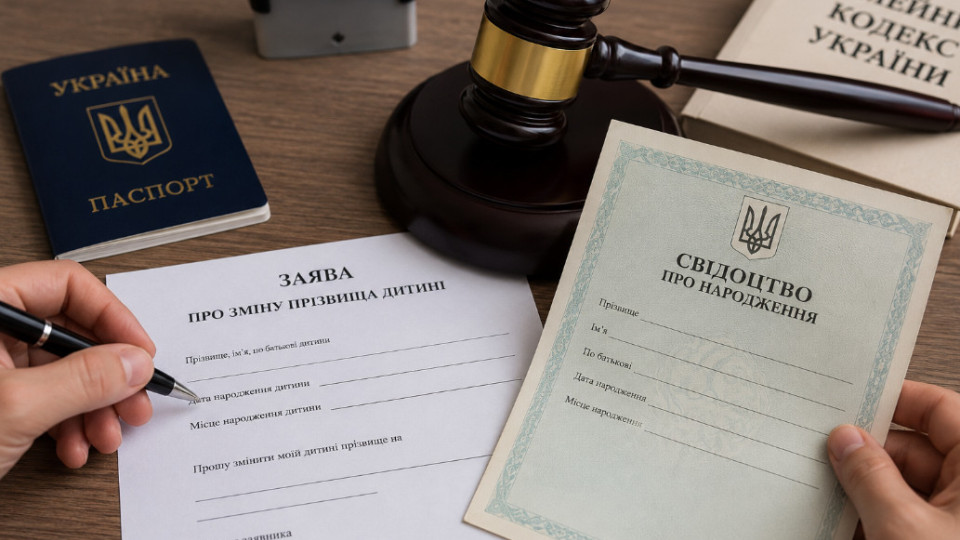










The issue of changing a child's surname remains particularly sensitive in family disputes, as it concerns not only the child's formal data but also their personal identity, connection with parents, and the implementation of the principle of the child's best interests. Such disputes become especially acute after the parents' divorce and the child's relocation abroad.
In case No. 369/10819/25 dated April 16, 2026, the Kyiv Court of Appeal considered a dispute regarding the legality of the executive committee's decision to change the surname of a minor child. The court examined whether the requirements of part 5 of article 148 of the Family Code of Ukraine were met and whether the surname change corresponded to the child's best interests.
Circumstances of the case
After the dissolution of the marriage between the parties, their minor son lives with his mother in the Republic of Poland. The child's mother applied to the guardianship authority with a request to change the child's surname from the father's surname to her own, citing that the transliteration of the surname in the Polish language allegedly causes psychological discomfort to the child and may be a reason for bullying.
The executive committee of the Borshchahivka village council made a decision to grant permission to change the child's surname. Subsequently, the relevant changes were made to the birth record.
The child's father filed a lawsuit to declare the executive committee's decision illegal and to cancel it, as well as to amend the birth record by restoring the child's previous surname.
The court of first instance denied the claim, but the appellate court overturned this decision and satisfied the claim.
Position of the appellate court
The appellate court noted that changing a child's surname is a significant interference with their personal identity, therefore, the authorities authorized to decide such matters are obliged to establish the real, not hypothetical, conformity of such a change to the child's interests based on specific, confirmed circumstances.
The child's interests are the priority and decisive criterion for resolving disputes regarding surname changes; however, such interests must be supported by concrete circumstances and evidence.
As established during the case review, the only basis for the contested decision was solely the oral explanations of the child's mother, which were not supported by any objective, proper, and admissible evidence.
From the content of the Conclusion of the Child Services, it is evident that the basis for initiating the issue of changing the surname was the mother's claims that the transliteration of the surname in Polish allegedly causes bullying of the child. At the same time, the case materials contain no evidence to support this claim.
Thus, the executive committee's decision was made solely based on the subjective statements of one parent, which is a gross violation of the principle of objectivity and comprehensiveness when considering matters concerning the child's interests.
The appellate court noted that the executive committee's decision contained no justification as to how the surname change corresponds to the child's interests.
The decision text lacks analysis of the evidence on which the authority based its conclusion; there is no reference to specific circumstances indicating real harm to the child from bearing the surname; there is no assessment of the father's position and his attitude toward the surname change issue.
Instead, the contested decision boils down to a formal reproduction of the mother's request, which essentially means substituting an authoritative decision with simple agreement with one party's position — which is unacceptable.
The appellate court indicated that the child's surname is an element of their legal status, and its change must occur exclusively under conditions provided by law, taking into account all circumstances of the case, not just everyday inconveniences or emotional perceptions.
Part five of article 148 of the Family Code of Ukraine explicitly defines the mandatory range of circumstances to be clarified and assessed when deciding on changing a child's surname, namely: the fulfillment by the parents of their duties towards the child, as well as other circumstances that confirm the conformity of the surname change to the child's interests.
These criteria are not recommendations but legislatively established procedural requirements, non-compliance with which indicates the illegality of the adopted decision.
However, none of these criteria were investigated by either the Child Services or the executive committee.
In particular, the following were ignored:
- the nature and quality of the child's relationship with the father;
- the level of the father's involvement in the upbringing process;
- the child's own attitude towards the father's surname and the father as such;
- the presence or absence of a stable psychological attachment of the child to their own identity, of which the surname is a part.
The appellate court stated that substituting a comprehensive analysis of the case circumstances, as required by law, with a one-sided subjective statement of one party is a gross violation of the requirements of part 5 of article 148 of the Family Code of Ukraine.
The court also noted that the conclusion of the Child Services itself contained a recommendation to "listen to both parents and the child to make an objective decision." Thus, it can be concluded that the authority preparing the conclusion was aware of the impossibility of resolving the issue without first hearing the child's father.
Despite this, the executive committee of the village council adopted the contested decision, effectively ignoring the guardianship authority's own recommendation.
According to the panel of judges of the appellate court, the contested decision of the executive committee of the Borshchahivka village council was made in violation of the requirements of part 5 of article 148 of the Family Code of Ukraine, without proper investigation of the case circumstances, without proper justification of the child's interests, and based solely on subjective, unsubstantiated statements of one parent.
Thus, the Kyiv Court of Appeal concluded that the guardianship and care authority, when deciding on changing a child's surname, is obliged to fully and comprehensively investigate all circumstances provided for by part 5 of article 148 of the Family Code of Ukraine, consider the positions of both parents, and provide proper justification as to how the surname change corresponds to the child's interests.
The absence of proper evidence, a formal approach, and making a decision solely based on subjective statements of one parent are grounds for declaring such a decision illegal.
Read additionally: changing a child's surname by their parents: what documents need to be submitted.
Subscribe to our Telegram channel t.me/sudua and to Google News SUD.UA, as well as to our VIBER and WhatsApp pages on Facebook and Instagram to stay informed about the most important events.