The Supreme Court Confirmed the Right of Military Personnel to 100,000 Combat Pay Even Without Reports and Logs


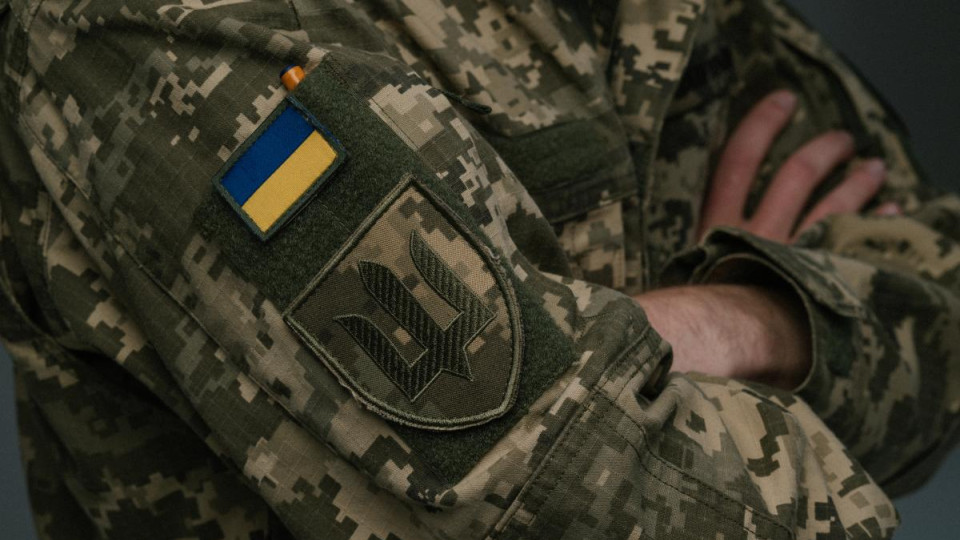










In recent years, Ukraine's judicial system has been filled with lawsuits from servicemen regarding the accrual of additional rewards under the Cabinet of Ministers Resolution No. 168, namely the combat 100,000 hryvnias. The main problem in awarding the deserved funds to the military is the lack of evidence of performing combat missions. Combat days are counted for each day spent on the front line, and payments are made only after the unit commander submits a report and the unit leadership issues a combat order.
However, practice shows that documents can be delayed during the transfer of lists from the front line, non-payments are justified by lack of funding, commanders incorrectly calculate the number of days on the front line. And when the case reaches the court, the latter demands combat orders and logs from the military, which are classified and exclusively held by commanders.
In May 2026, the Supreme Court, composed of judges of the Cassation Administrative Court panel, issued several important rulings in cases No. 440/17696/23, No. 620/4254/23, and No. 380/137/25 that not only protect the right to monetary compensation for military personnel but also require courts to fulfill their primary duty — to officially clarify all circumstances of the case.
In case No. 620/4254/23, a sergeant of the State Border Guard Service who was injured during the defense of Chernihiv region demanded an additional reward of 100,000 UAH for the period of participation in combat operations in Chernihiv and the time spent in treatment after the injury related to the defense of the homeland.
The court of first instance dismissed the claim, reasoning that the plaintiff did not provide combat orders and combat action logs. The appellate court recognized the plaintiff's participation in combat based on a letter from the military unit but still denied the payment. The appeal justified the decision by stating that the plaintiff did not submit reports for payment and did not attach medical certificates to his written claim.
The Supreme Court pointed out that the additional reward is paid based on commanders' orders, not servicemen's reports. The responsibility for preparing documents for payment lies with the units of the State Border Guard Service.
In administrative cases, it is the defendant, i.e., the military unit, that must prove the legality of its inaction. Violations in the procedure of transferring documents or reports between units cannot be grounds for depriving a serviceman of the right to a reward.
The Supreme Court overturned the previous courts' decisions and sent the case for a new trial, emphasizing that the courts should have independently requested the primary documents, namely combat orders and logs, instead of limiting themselves to general letters.
In case No. 440/17696/23, a serviceman similarly demanded payment of 100,000 UAH for participation in combat and 30,000 UAH for performing special tasks in 2022–2023. The courts of first and appellate instances denied the claim, stating that the serviceman did not confirm participation with combat action logs, although the military unit itself refused to provide them to the court, citing the secrecy of the materials.
The military unit refused to provide the requested documents to the court, citing that combat action logs are marked "For Official Use Only" (FOUO) or are state secrets, for which the unit allegedly is not the custodian.
The Supreme Court emphasized that combat orders and logs cannot be in the plaintiff's possession since these documents are prepared by the head or commander of the unit where the serviceman serves. Direct participation of the serviceman in combat or national security and defense activities was confirmed by performing specific combat tasks and should have been documented accordingly, including: combat orders (combat directives); combat action logs, operational situation logs, combat reports, or post reports; reports (notifications) from the unit commander about each serviceman's participation in combat or combat tasks.
According to Article 9 of the Code of Administrative Procedure of Ukraine, the court cannot be passive. If the unit claims secrecy, the court must verify these claims and, if necessary, request evidence from higher headquarters, such as the Joint Operational Headquarters or the Operational Command, which are the information custodians.
The courts denied payment for the time spent in the hospital because the soldier did not provide a "certificate of injury" indicating the connection with the defense of the homeland. The Supreme Court recognized this approach as erroneous, stating that the courts should have established the reasons for treatment themselves and requested the necessary acts instead of merely noting their absence.
The absence of personalized entries in combat action logs or the loss of copies of certificates in the unit cannot be grounds for restricting the rights of the serviceman.
The Supreme Court overturned the decisions and sent the case for a new trial. The court noted that the courts of first and appellate instances approached the case formally, failing to ensure the actual collection of evidence held by the state.
In case No. 380/137/25, a junior sergeant demanded 100,000 UAH for service in the Sumy region. The courts refused because the certificate of participation in activities was issued for obtaining the status of a combat veteran, not for payments.
The Supreme Court noted that the courts should have clarified not the name of the certificate but the content and nature of the tasks performed by the medic. Even if the certificate was issued for the combat veteran status, it is evidence that must be evaluated together with the combat orders it references.
The court should have independently requested the combat orders from the Commander-in-Chief of the Armed Forces of Ukraine and the Joint Operational Headquarters, rather than simply noting the absence of the "necessary" documents in the case.
Conclusions
Cases No. 440/17696/23, No. 380/137/25, and No. 620/4254/23 demonstrate that the right to decent monetary compensation for defenders cannot depend on the perfection of military paperwork or the presence of a paper report. The Supreme Court confirmed: if the state sends a person to a combat zone, it bears full responsibility for proper documentation and payment for this work.
The Supreme Court's decision is a victory of substance over form. State bodies have no right to use secrecy and internal procedural shortcomings as a refusal to fulfill financial guarantees to defenders.
Of course, there is a risk that local courts will again try to limit themselves to formal explanations from units despite clear instructions from the Cassation Court. However, we hope that judicial practice will still reach a common position regarding the state's full responsibility for proper documentation of combat deployments and payment for this work.
Subscribe to our Telegram channel t.me/sudua and to Google News SUD.UA, as well as to our VIBER and WhatsApp, Facebook page and Instagram to stay updated on the most important events.