Vitaliy Urkevych, Judge of the Grand Chamber of the Supreme Court, spoke about the unity of practice, "double lease" and new standards for protecting business rights


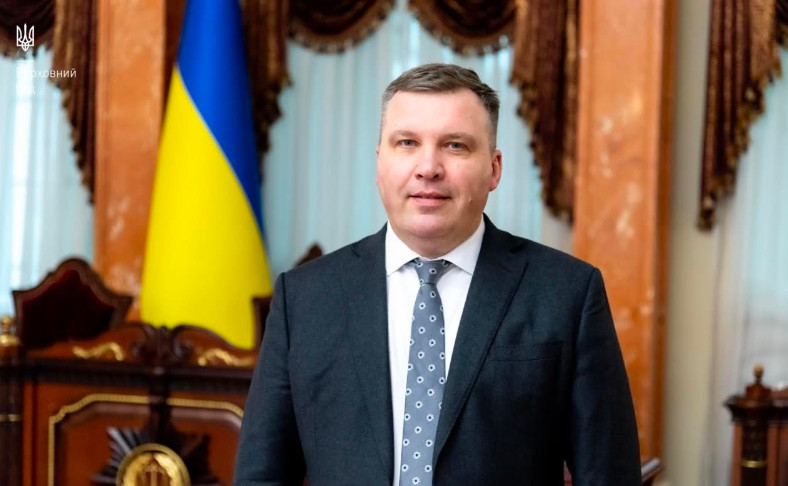










Despite the war and shortage of judges, the Grand Chamber of the Supreme Court is actively forming a unified judicial practice and bringing justice closer to European standards. In an interview for "Judicial and Legal Newspaper", judge of the Grand Chamber of the Supreme Court Vitaliy Urkevych talks about the protection of bona fide farmers in disputes regarding "double lease" of land, strengthening the legal regime of border territories, as well as the impact of requests to the ECHR under Protocol No. 16 on Ukrainian judiciary and eurointegration reforms.
1. What are the main challenges in determining the jurisdiction of land and agricultural disputes? How does the practice of the Grand Chamber of the Supreme Court, in particular regarding "double lease", registration of additional agreements or land allocation, affect the protection of the rights of bona fide acquirers and the state?
Vitaliy Urkevych: One of the problems in outlining the jurisdiction of land and agricultural disputes is determining the proper court to consider cases regarding the so-called double lease of land (simultaneous existence of several lease agreements for one land plot, state registration of lease rights of several persons to such a land plot). The practice of resolving this category of cases was ambiguous for a long time. Initially, the Supreme Court of Ukraine (hereinafter – SCU) held that claims to cancel the state registration of the lease rights of new lessees should be considered in administrative proceedings and that the registration of the lease right made later should be canceled. Accordingly, the actions of registrars regarding the registration of lease rights for the new lessee were recognized as illegal and canceled.
In 2017, the SCU formed a new approach according to which disputes concerning "double lease" of land are disputes over the right to the land plot and therefore should be considered in civil or commercial proceedings.
At the beginning of its activity, the Grand Chamber of the Supreme Court (hereinafter – GC SC) in rulings dated April 4, 2018, in cases No. 465/7909/15-а (proceeding No. 11-209app18), No. 817/1048/16 (proceeding No. 11-202app18), and others also concluded that this category of disputes belongs to the jurisdiction of civil or commercial courts (depending on the composition of the parties).
In the ruling dated April 18, 2023, in case No. 357/8277/19 (proceeding No. 14-65cs22), the GC SC made a conclusion still valid today that a claim to recognize a new lease agreement invalid and to recover disputed land plots from unlawful possession belongs to civil proceedings (considering that the owner of the plot in the case was an individual).
In this case, the GC SC reasoned about the rights of the lessee under the primary lease agreement to protect their right, determining that if during the validity of the first lease agreement a second agreement was concluded with another lessee and the latter's right was registered, the court can protect the primary lessee's right only when, based on the relevant court decision, this lessee can register their lease right in the State Register of Property Rights to Real Estate.
Thus, the GC SC's practice regarding "double lease" of land is based on the priority of the first state registration of the lease right. Protection of the lessee's rights is possible only if their right is registered in the State Register of Property Rights to Real Estate. The GC SC also recognizes the preferential right of the previous lessee to renew the agreement if the "double lease" arose due to the owner's ignoring this right.
The approach of the GC SC ensures proper protection of the rights of bona fide "primary" acquirers (lessees) of land plots (provided their rights are registered in the mentioned register).
Regarding additional agreements to the land lease agreement concluded after January 1, 2013 (the introduction of the state registration system of land lease rights), according to the GC SC practice, they do not require state registration, since the rights and obligations of the parties (including changes in rent) arise from the moment of signing the agreement (see, for example, the GC SC ruling dated October 15, 2025, in case No. 907/882/22 (proceeding No. 12-23gs25)).
2. How has the war affected the legal regime of lands, especially in the border zone? What key positions of the Supreme Court regarding such disputes would you recommend to lawyers and businesses for practical application?
Vitaliy Urkevych: The Russian armed aggression and the country's defense needs have determined the importance of the GC SC's position regarding the legal regime of lands located in the border zone.
Regarding the specifics of the legal regime of such lands, attention should be paid to the conclusion made by the GC SC in the ruling dated July 2, 2025, in case No. 902/122/24 (proceeding No. 12-15gs25), namely that land plots within the border zone (30–50 meters wide along the state border line) are defense lands intended exclusively for the construction, arrangement, and maintenance of engineering and fortification structures, fences, border signs, border clearings, communications, etc. Therefore, these land plots can be used exclusively for the needs of the State Border Guard Service of Ukraine, remain exclusively state-owned, and are not subject to alienation.
Hence, citizens, business entities, and local self-government bodies should consider this legal position and refrain from attempts to acquire ownership of land plots located within the border zone.
3. How effectively does the mechanism of implementing the practice of the European Court of Human Rights, in particular advisory opinions, work in Ukraine? Do you expect an expansion of this practice?
Vitaliy Urkevych: Protocol No. 16 to the Convention for the Protection of Human Rights and Fundamental Freedoms (hereinafter – the Convention) provides the right of the highest judicial authorities of member states to request advisory opinions from the European Court of Human Rights (hereinafter – ECHR) on key issues of protection of rights and freedoms defined by the Convention or its protocols. It came into force on August 1, 2018.
On June 25, 2025, within case No. 607/15144/20 (proceeding No. 14-29cs25), the GC SC for the first time in the history of national judiciary applied to the ECHR with a preliminary ruling request to resolve the issue of the right of a former nun to use a cell in a monastery after losing her monastic status. The question posed to the ECHR was whether premises of religious buildings – monasteries (cells) – are considered a home within the meaning of Article 8 of the Convention. On March 5, 2026, the Grand Chamber of the ECHR issued an advisory opinion in this case. This opinion is part of the ECHR practice and aimed at its implementation into national judiciary.
The second request to the ECHR was sent by the Administrative Cassation Court within the Supreme Court (hereinafter – ACC SC) by ruling dated December 4, 2025, in case No. 240/3843/24 (proceeding No. K/990/38755/24). It concerns the interpretation of Article 1 of the First Protocol to the Convention (the right to peaceful enjoyment of possessions) in the context of proportionality of the tax authority's imposition of a fine on a private enterprise, specifically whether a national court, recognizing a fine as disproportionate, can apply a lesser sanction than provided by law if it meets the proportionality requirement.
The ECHR accepted this second request of the Supreme Court for consideration.
Thus, the mechanism for obtaining preliminary advisory opinions of the ECHR under Protocol No. 16 has practically started to function. In the future, an expansion of the practice of its application can certainly be expected. At the same time, it should be understood that such appeals to the ECHR by the Supreme Court must concern complex, fundamental issues of applying the Convention and also be relevant for the development of Strasbourg Court jurisprudence.
4. What systemic problems in the judicial system, in your opinion, most hinder the unity of practice today and what can the Grand Chamber or the legislator do to solve them?
Vitaliy Urkevych: The main problems that most hinder the Supreme Court in general and the GC SC in particular from fulfilling their function of ensuring the unity of judicial practice include frequent changes and imperfections of legislation, shortage of judges, and excessive workload of judges with cases.
As of May 18, 2026, the number of vacant judge positions in the cassation courts within the Supreme Court is: 13 in the administrative court (43 judges working), 9 in the commercial court (36 working), 13 in the criminal court (29 working), and 16 in the civil court (37 working).
In total, in 2025, the Supreme Court received 93,599 procedural appeals and cases (3% more than in 2024). It considered 91,714 procedural appeals and cases (4,219 more than in 2024). At the same time, for effective work and quality assurance of the unity of judicial practice, the number of cases should be significantly lower.
Therefore, it is worth considering changing the provisions of the legislation regarding cassation appeals of court decisions, changing the current "procedural filters." By the way, this task is outlined in the Roadmap on the Rule of Law issues approved by the Government of Ukraine in May 2025, which is important in Ukraine's eurointegration process.
Obviously, the highest court in the judicial system should consider cases that are most important for protecting fundamental human rights, developing law enforcement and law in Ukraine, thus ensuring the unity of judicial practice. It should not become a third instance in every case but is called to ensure the correct application of legal norms and the formation of unified judicial practice, which is why the issue of the effectiveness of procedural filters remains relevant.
Also, a new selection for the Supreme Court should be conducted to fill existing vacancies to solve the problem of high workload on working judges.
5. Public organizations and the Public Integrity Council actively influence the processes of selection and disciplinary accountability of judges through public conclusions and media campaigns. Has this influence turned into excessive media pressure? Where should the boundary of public organizations' participation be so as not to harm judicial independence?
Vitaliy Urkevych: Public organizations effectively perform the function of public control in the procedures of selection and disciplinary accountability of judges. In particular, the Public Integrity Council (hereinafter – PIC) provides the High Qualification Commission of Judges of Ukraine (hereinafter – HQCJ) with conclusions regarding the compliance of a judge (candidate for a judge position) with criteria of professional ethics and integrity for qualification assessment purposes, and public organizations inform society through media and social networks about facts of unethical behavior or inconsistency of judges' (candidates') lifestyle and property status with official income. Thus, they ensure public trust, assist the HQCJ and the High Council of Justice (hereinafter – HCJ) in ensuring the formation and functioning of an honest judiciary. This corresponds to European standards of openness and increases public trust in the judiciary.
At the same time, the dissemination by public organizations of information in the media about individual judges (candidates) should not cross the boundaries of correctness and accuracy, should not turn into actual pressure, should not violate universally recognized standards of judicial independence, and should not aim to interfere with judges' resolution of cases based on objectivity and law. It is important that the media activity of public organizations does not become a tool of pressure on judges. Their participation in the procedures of selection and disciplinary compliance of judges should be purely advisory, and final decisions regarding judges' careers and responsibility should be made by the HQCJ and HCJ based on law and proper verification of evidence.
6. For eurointegration, Ukraine must significantly improve disciplinary procedures and the selection of judges. What key recommendations of the Venice Commission, in your opinion, should be implemented first, and which should not?
Vitaliy Urkevych: Within the course towards European integration, a number of draft laws aimed at significantly improving disciplinary procedures and the selection of judges were submitted to the parliament. These include draft laws "On Amendments to the Law of Ukraine 'On the Judiciary and the Status of Judges' and Certain Legislative Acts of Ukraine Regarding Improvement of Disciplinary and Other Procedures" (registration No. 13137 dated March 26, 2025, and No. 13137-1 dated April 7, 2025) and "On Amendments to the Law of Ukraine 'On the Judiciary and the Status of Judges' and Certain Laws of Ukraine Regarding Improvement of Judges' Integrity Declarations and Judges' Family Relations" (registration No. 13165-2 dated April 25, 2025).
These draft laws aim to simultaneously strengthen guarantees of judicial independence and increase their accountability by eliminating existing gaps in the current system of disciplinary responsibility. The drafts aim to address key problems such as unclear grounds for disciplinary responsibility of judges and insufficient procedural certainty.
At the request of the HCJ, the Venice Commission together with the Directorate General of Human Rights and Rule of Law of the Council of Europe (DGI) adopted an Opinion on these draft laws at the plenary session on October 9–10, 2025 (CDL-AD(2025)044), published on October 14, 2025, which expressed a number of recommendations aimed at improving legislative regulation of disciplinary procedures and selection of judges.
It seems appropriate to implement in legislation the Venice Commission's recommendation stated in paragraph 96 of the Opinion (CDL-AD(2025)044), namely that the right to file disciplinary complaints against a judge should be limited only to persons who suffered from the judge's actions or those who have a certain "legitimate interest" in the case.
Attention should also be paid to the fact that on May 23, 2025, during the regular meeting, the Plenum of the Supreme Court approved conclusions regarding draft laws of Ukraine aimed at improving procedures for submitting and verifying judges' integrity declarations, as well as improving disciplinary and other procedures concerning judges.
The Chairman of the Supreme Court emphasized that the Plenum generally supports the idea of improving disciplinary procedures concerning judges, as proper regulation of disciplinary responsibility is a key factor ensuring the accountability of the judiciary and increasing public trust in it. At the same time, it is extremely important that any reform in the field of justice, including disciplinary responsibility of judges, be based on universally recognized international and European requirements and standards (ECHR practice, recommendations of the Committee of Ministers of the Council of Europe, opinions of the Consultative Council of European Judges and the Venice Commission in the field of judiciary).
After reviewing draft laws No. 13137 and No. 13137-1, the Plenum of the Supreme Court concluded that they require further refinement. In particular, this concerns provisions regarding temporary suspension of a judge from administering justice; grounds for disciplinary responsibility of a judge; introduction of significant fines (monetary penalties ranging from 25 to 50% of the monthly judicial remuneration with deprivation of the right to receive supplements to the judge's salary for six months, as well as strict monetary penalties ranging from 50 to 100% of the monthly judicial remuneration with deprivation of the right to receive supplements to the judge's salary for nine months) for committing disciplinary offenses; the circle of subjects who can appeal to the HCJ regarding a judge's disciplinary offense, etc.
Subscribe to our Telegram channel t.me/sudua and to Google News SUD.UA, as well as to our VIBER and WhatsApp, Facebook page Facebook and on Instagram to stay updated on the most important events.