Judges Will Be Required to Disclose Family Ties: Verkhovna Rada Committee Approved New Rules












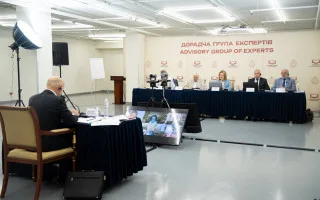
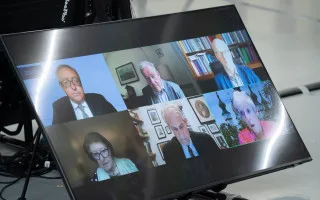
The meeting of the Verkhovna Rada of Ukraine Committee on Legal Policy, held on June 3, 2026, marked another important stage in shaping the further course of judicial reform. During the consideration of legislative initiatives, members of parliament focused on issues of judges' integrity, transparency of the judiciary, and information protection under martial law conditions.
Two bills were at the center of the discussion — No. 13165-2 regarding the improvement of the procedure for declaring judges' integrity and No. 7033d, which provides for restricting access to certain court decisions. Both initiatives reflect the complexity of balancing international partners' demands for openness of state institutions and the need to protect sensitive information related to Ukraine's national security and defense.
During the meeting, the Committee recommended adopting in the second reading draft No. 13165-2 "On Amendments to the Law of Ukraine 'On the Judiciary and the Status of Judges' and Certain Laws of Ukraine Regarding the Improvement of Judges' Integrity Declarations and Judges' Family Ties."
Integrity Declarations
Recall that the draft proposes introducing a unified declaration of integrity and family ties. This aims to simplify the data submission process while expanding the list of information subject to verification.
A judge must confirm not only the legality of the sources of property acquisition but also the absence of illegal influence, non-public contacts with case participants, and conscientious adherence to the oath.
Based on information that may indicate unreliability, including incompleteness of information or statements in the integrity and family ties declaration, failure to submit or untimely submission of the declaration, verification is conducted by the High Qualification Commission of Judges of Ukraine.
The bill provides a very broad definition of relatives. These are persons who live together, share a household, and have mutual rights and obligations (including in a civil marriage). Regardless of cohabitation, this includes husband or wife, as well as close relatives of both spouses.
A judge is obliged to indicate data of such relatives (place of work, position) if they held significant public, political, or law enforcement positions during the last 5 years. The new version includes a wide list: from members of the High Council of Justice, High Qualification Commission of Judges, judges and prosecutors to the President, Head of the Office of the President, members of parliament, Cabinet members, heads of NABU, NAPC, and members of relevant advisory bodies (Ethics Council, HRC, Advisory Expert Group, etc.).
Responsibility and Consequences
Failure to submit, intentional or grossly negligent untimely submission, as well as knowingly false data entail disciplinary responsibility.
Even after being held accountable, the obligation to submit a corrected declaration with accurate data remains.
If unreliability or failure to submit is confirmed by the decision of the High Qualification Commission of Judges of Ukraine, materials are transferred to the High Council of Justice to decide on opening a disciplinary case.
Verification results are mandatorily entered into the judge's dossier and considered during competitions, selections, or professional ethics evaluations.
If the decision of the High Qualification Commission of Judges of Ukraine was appealed in court and overturned, the judge has the right to compensation for damages caused.
Verification of Current Supreme Court Judges
The most controversial issue was the individual verification of current judges of the Supreme Court and higher specialized courts.
The approved version provides that the Cabinet of Ministers must, within six months after the law comes into force, conduct consultations with the High Council of Justice and submit a separate bill on the procedure for such verification involving independent experts.
According to the committee, this version is acceptable as it removes the risk of "discriminatory" verification based solely on the position without clearly defined procedures.
Issue of High Qualification Commission Workload
During the discussion, a critical warning was voiced regarding the workload of the High Qualification Commission of Judges. The Commission is currently burdened with a huge number of competitive procedures for appellate courts, courts of first instance, and the High Anti-Corruption Court.
Introducing verification of thousands of new declarations concerning about 5,000 current judges without additional resources and software changes may paralyze the body’s work.
Expanding the scope of verifications may negatively affect the pace of judge selection and competitions. However, most Committee members supported the position on the necessity to fulfill Ukraine's international obligations and further strengthen judicial integrity institutions.
The Committee meeting demonstrated that the Ukrainian authorities chose a compromise path. Declaration requirements will become stricter, but their implementation will be gradual. The Supreme Court will receive temporary immunity from checks for the coming months until the Cabinet of Ministers develops a new verification model involving international experts. However, the main challenge will not be the adoption of the law itself but its implementation by the High Qualification Commission of Judges, which is already operating at the limit of its capacity.
Subscribe to our Telegram channel t.me/sudua and to Google News SUD.UA, as well as to our VIBER and WhatsApp, Facebook page and Instagram to stay updated on the most important events.