Ukraine is restructuring customs from within: customs detectives, polygraph checks, and new social guarantees will appear


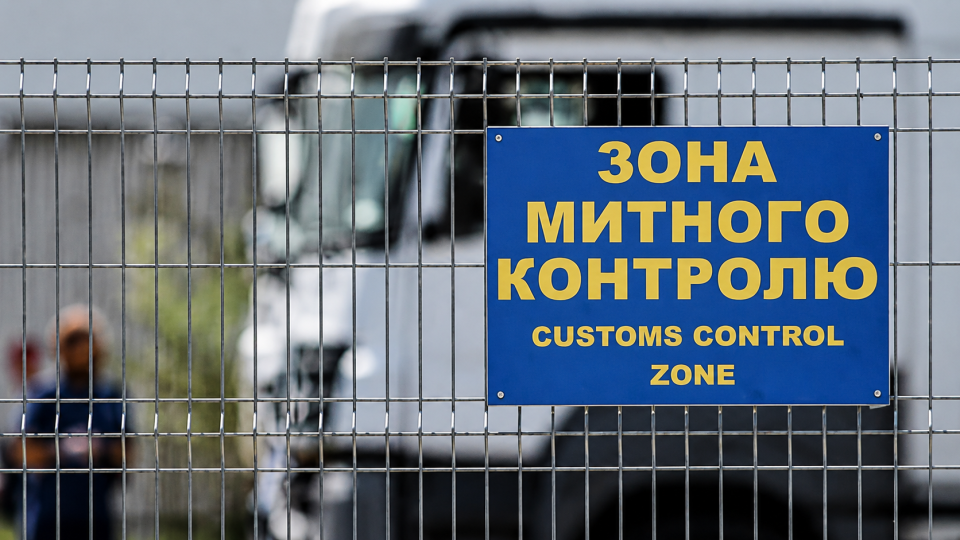










Any progressive rules for business will remain only on paper if the institution implementing them does not change itself. That is why the government draft of the new Customs Code No. 15295 focuses not only on simplifying procedures for entrepreneurs but also on restructuring the customs service from within. The main goal is to transform it from a classic fiscal body into a transparent service and law enforcement structure of the European model.
The "Judicial and Legal Newspaper" continues a detailed analysis of the government draft. In the new series of materials, we analyzed the reform regarding general rules and deadlines, when and how the transition to the European model will take place, new tools for business, and the internal reform of customs.
Customs officers' remuneration
To minimize corruption risks and professionalize the service, the draft Code revises the remuneration system and social guarantees for customs employees.
The draft establishes a direct link between the official salary and the subsistence minimum (SM) for able-bodied persons as of January 1 of the respective year. Thus, in the Customs Service apparatus, the salary cannot be less than 14 times the SM, in territorial bodies it cannot be less than 12 times the SM, and for the special detective unit: the salary cannot be less than 20 times the SM.
The payment structure also includes bonuses for length of service, special rank, qualifications, and KPI (key performance indicators) fulfillment. A separate team bonus (up to 30% of the salary fund) and annual health assistance are also provided.
Social protection measures
The new Customs Code draft provides a package of social guarantees for customs employees aimed at enhancing social protection and the attractiveness of the service.
In particular, the document envisages improvements in housing provision. Customs officials will be able to receive official housing or use preferential loans for construction or purchase of housing. In case of transfer to another location, housing must be provided without delay.
A separate block of guarantees concerns medical care. Mandatory medical insurance will be introduced for customs employees and their family members, financed from the state budget.
The draft also defines approaches to pension provision. For most customs officers, the norms of the civil service legislation will apply, while for employees of specialized units—particularly detectives—special pension rules similar to those for persons discharged from military service are envisaged.
Additionally, a life and health insurance system for customs employees is introduced. The state will compensate for damage caused during the performance of official duties, and in case of an employee's death, their family will receive a one-time financial aid equal to ten times the annual salary.
Customs detectives
The new Customs Code draft provides for the creation within the customs authorities of a specialized law enforcement unit whose detectives will have powers to combat customs crimes.
This initiative is part of the concept of transforming customs from a predominantly fiscal body into a service and law enforcement structure that not only administers customs payments but also directly counters smuggling and other violations in foreign economic activity.
According to the draft, customs detectives will have the right to conduct operational-search activities and pre-trial investigations of criminal offenses within their jurisdiction. Primarily, this concerns crimes related to smuggling and violations of customs legislation.
At the same time, the new powers will not come into effect automatically after the Customs Code is adopted. The launch of the customs law enforcement unit will be possible only after corresponding amendments to the Criminal Procedure Code of Ukraine are made, which will define the procedural status of customs detectives and the limits of their competence.
Anti-corruption filter: polygraph and rotation
To cleanse the customs ranks and ensure integrity, strict personnel control measures are being introduced.
One such tool will be psychophysiological testing using a polygraph. It will be mandatory for both candidates for positions in customs authorities and current employees at the decision of the head. At the same time, the test results will not have the status of irrefutable evidence, as they are probabilistic in nature. However, they will be taken into account when assessing the employee's business and moral qualities, as well as when forming their service record.
Another innovation will be mandatory rotation of employees holding positions with a high level of corruption risk. Such officials may be temporarily transferred to another unit or even another location for up to 12 months. The reform authors believe that regular job changes will help prevent the formation of informal connections and corruption schemes.
Moreover, the draft enshrines a mechanism for continuous monitoring of customs officers' lifestyles. The control involves verifying the correspondence of the official's standard of living, property status, and expenses to their official income. This approach aims to timely identify possible signs of illegal enrichment or other corruption risks.
It is expected that the combination of polygraph testing, staff rotation, and lifestyle monitoring will become one of the key elements of the customs service's anti-corruption reform and contribute to increasing trust in the work of customs authorities.
Subscribe to our Telegram channel t.me/sudua and to Google News SUD.UA, as well as to our VIBER and WhatsApp pages, on Facebook and Instagram to stay informed about the most important events.