The Supreme Court refused to return the land plot to the owner who missed the deadline for applying to the State Register


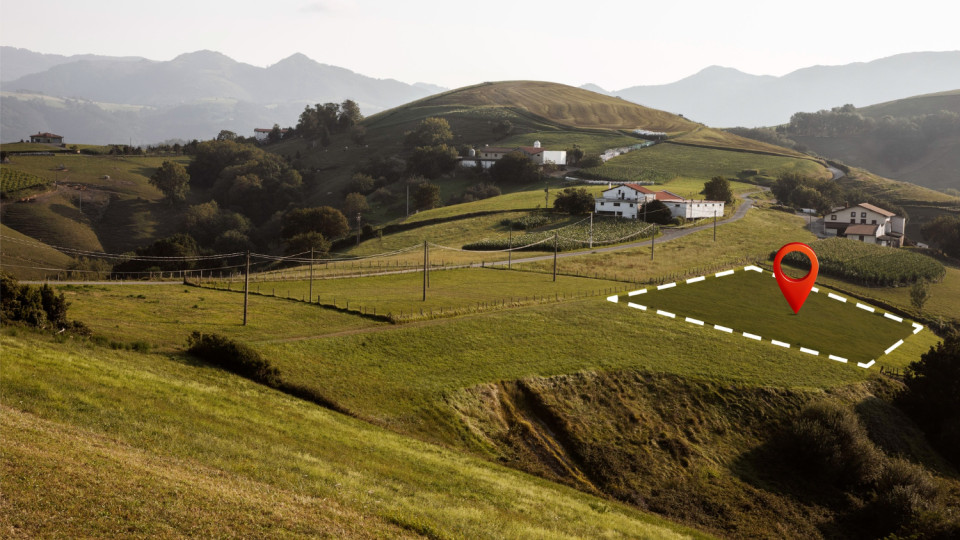










The Supreme Court, composed of a panel of judges of the First Judicial Chamber of the Cassation Civil Court, considered case No. 378/283/25 regarding the use of a land plot.
According to the case data, the dispute arose between the owner of the land plot and a Limited Liability Company that leased this land under a contract dated October 18, 2016. Under the terms of the contract, the land plot with an area of 3.1003 hectares was leased for commercial agricultural production until December 30, 2024.
At the same time, in 2023, the parties signed an additional agreement which, besides changing the lease payment terms, established provisions for the renewal of the contract. In particular, it was stipulated that in the absence of objections from either party, the lease is renewed in accordance with Article 126-1 of the Land Code of Ukraine.
Before the lease term expired — in August and November 2024 — the plaintiff contacted the LLC with statements informing that she did not intend to renew the contract and requested that after the harvest the land plot be returned to her for independent cultivation. However, after the contract term ended, the plaintiff learned that the lease right was automatically extended until March 14, 2033, by means of state registration of the contract renewal. The lessee referred to the contract terms and the provisions of Article 126-1 of the Land Code of Ukraine.
The court of first instance denied the claim, noting that the plaintiff did not submit a timely application to the State Register of Property Rights to exclude information regarding the renewal of the lease contract. The appellate court upheld this decision. The court agreed with the defendant's arguments that the lease contract was lawfully automatically extended in accordance with the contract terms and Article 126-1 of the Land Code of Ukraine.
The Supreme Court agreed with the conclusions of the lower courts
The Supreme Court, refusing to satisfy the cassation appeal, emphasized that the plaintiff did not prove the submission of an application within the established deadline to the State Register of Property Rights to exclude information about the lease contract renewal. Therefore, there are no grounds to consider that the lease right was terminated or that the defendant violated her rights to the land plot. The arguments of the cassation appeal that the plaintiff twice contacted the lessee with statements about unwillingness to renew the contract and requested the return of the land after the harvest were rejected by the Supreme Court.
The court noted that under the terms of the additional agreement and Article 126-1 of the Land Code of Ukraine, refusal to renew the contract must be formalized by submitting an application to the state registrar no later than one month before the contract expires. In the absence of such an application, the lease is automatically extended, and letters from the lessor to the lessee do not replace this.
Since the plaintiff did not exercise her right to submit an application to the State Register of Property Rights to exclude information about the lease extension within the legally established period, the state registration of the LLC's lease right was automatically extended by law, which did not require the signing of any additional agreements by the parties.
The arguments of the cassation appeal that the courts did not consider the alleged use by the defendant of the plaintiff's old age and poor health when drafting clause 6 of the additional agreement, as well as the lessee's bad faith behavior, were rejected by the Supreme Court.
The court noted that good faith is a standard of conduct that implies honesty, openness, and respect for the interests of the other party to the contract. At the same time, the doctrine of venire contra factum proprium, based on the Roman maxim "non concedit venire contra factum proprium" (no one can act contrary to their previous behavior), prohibits contradictory behavior by a party that changes its position contrary to previously committed actions or agreements on which the other party reasonably relied.
The doctrine of venire contra factum proprium is based on the principle of good faith. Behavior contrary to good faith and fair business practice includes, in particular, behavior inconsistent with previous statements or conduct of a party, provided that the other party, acting to its detriment, reasonably relied on them (see, in particular, the Supreme Court ruling dated April 10, 2019, in case No. 390/34/17).
Given the circumstances established in this case, in the disputed legal relations, it is the plaintiff's behavior that falls under the doctrine of venire contra factum proprium.
By signing the additional agreement, the plaintiff agreed to the automatic renewal of the land lease contract under Article 126-1 of the Land Code of Ukraine. The defendant, as a good faith lessee, relied on these terms. The plaintiff's subsequent actions, when she tried to dispute the renewal only by letters without submitting an application to the State Register, contradict the terms of the agreement and the requirements of the law and do not comply with the principle of legal certainty.
In particular, the Supreme Court noted that the claims about old age and health condition are refuted by the presumption of validity of the transaction (Article 204 of the Civil Code of Ukraine), since the additional agreement is valid and was not declared invalid by the court.
Thus, the courts of first and appellate instances gave a comprehensive and proper assessment of the parties' actions and correctly resolved the dispute.
The Supreme Court also rejected the applicant's arguments that the courts of first and appellate instances restricted her right to independently manage her land. The Supreme Court noted that the content of Article 319 of the Civil Code of Ukraine indicates that the owner possesses, uses, and disposes of their property at their own discretion. The owner has the right to perform any actions regarding their property that do not contradict the law. Therefore, by concluding the land lease contract and signing the additional agreement, the plaintiff exercised her right to dispose of the land plot at her own discretion, voluntarily transferring the right to use and manage it to the defendant for payment.
In view of this, the cassation appeal was dismissed, and the decisions of the lower courts remained unchanged.
Subscribe to our Telegram channel t.me/sudua and to Google News SUD.UA, as well as to our VIBER and WhatsApp, our page on Facebook and on Instagram to stay informed about the most important events.