A serviceman demanded moral damages in court for spoiled UAV pilot training after poisoning from Philadelphia rolls


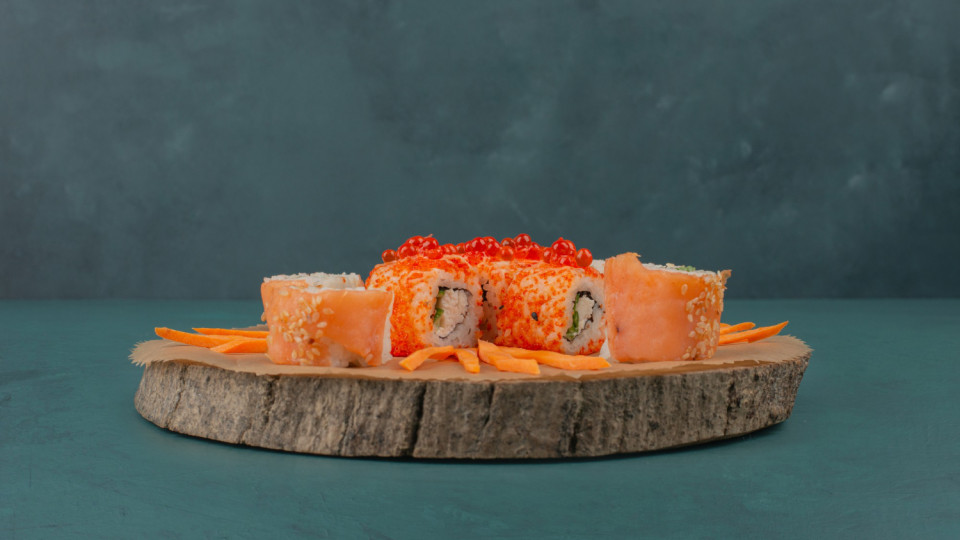










The catering and online delivery sector has remained a high-risk area in recent years. The case of a serviceman suing a Japanese cuisine restaurant is an example of how the complexity of corporate brand structures and shortcomings in identifying the seller become barriers to consumer rights protection.
The lunch that led to hospitalization
The plaintiff ordered a sushi set and drinks through a mobile app from a well-known brand's restaurant. The next day, he was hospitalized at the Military Medical Clinical Center with a diagnosis of "gastroenterocolitis caused by Enterobacter." Due to the illness, the plaintiff was unable to fully complete an important training course for strike UAV pilots "PAROG," which became the basis for the claim of 100,000 UAH in moral damages.
The plaintiff provided screenshots from the delivery service, a medical record confirming the diagnosis, a screenshot of the claim sent to the restaurant, an appeal to the State Service of Ukraine on Food Safety and Consumer Protection, a screenshot of the order from the restaurant via the delivery service, and a certificate of completion of the course "External pilot of strike multirotor UAV with FPV system." The screenshots show the fact of the order with the purchased products listed, delivery information clearly indicating the name of the establishment from which the order was made, as well as the card details from which the funds were debited.
The defendant built its defense around two key arguments. The first concerns the improper defendant: the company stated that according to registration data, its main activity is real estate rental (NACE 68.20), not food preparation or sale. Therefore, the company believes it cannot be responsible for legal relations related to food sales.
The second argument was the lack of proper evidence from the plaintiff. In particular, no fiscal receipt was provided to confirm that the purchase was made from the defendant. Instead, the submitted screenshot of the order lacks mandatory seller identification details, including the EDRPOU code, which makes it impossible to unequivocally identify the business entity that received the payment.
Therefore, the defendant insisted on the absence of a proper evidentiary base and denied involvement in the disputed transaction.
The appellate court, confirming the decision of the first instance, noted that according to Article 6 of the Law "On Consumer Rights Protection", the obligation to deliver goods of proper quality lies with the seller. The court established that the defendant does not operate at the specified address, which was also confirmed by the State Service of Ukraine on Food Safety and Consumer Protection. The use of the defendant's trademark, i.e., its brandbook, by other individual entrepreneurs or companies does not automatically make the trademark owner responsible for the quality of each dish.
According to Article 1167 of the Civil Code of Ukraine, moral damages are compensated if there is fault and a causal link. The court noted that the medical certificate of gastroenterocolitis confirms the illness but does not prove that the pathogen entered the body specifically from the Philadelphia rolls. The plaintiff did not initiate a sanitary-epidemiological investigation or product examination.
Advice for consumers
The decision of the Kharkiv Court of Appeal in case No. 953/7927/24 confirms that a screenshot is not a receipt. In disputes involving delivery aggregators, it is important to obtain a fiscal receipt or invoice indicating the specific taxpayer identification number (TIN)/EDRPOU code of the seller, not just the brand name.
The appeal was dismissed, and legal costs of 13,000 UAH were imposed on the plaintiff, making this poisoning financially burdensome as well.
If such a situation occurs, it is important to approach the court process thoughtfully to avoid losing not only days spent on sick leave but also the court fee and attorney expenses.
The mere fact of ordering through a delivery app is insufficient to prove the purchase from a specific business entity. Screenshots of orders without proper details are not recognized as sufficient evidence.
A fiscal receipt or invoice is necessary. Such a document must contain the full details of the seller — the name of the legal entity or individual entrepreneur and the EDRPOU code.
A bank statement can confirm the payment but must allow identification of the recipient as a specific business entity.
The court also noted that a medical certificate of illness alone does not prove the fault of the establishment. Medical documentation only confirms the fact of the visit and diagnosis but does not establish the source of infection.
To prove causation, results of a sanitary-epidemiological investigation or laboratory testing of products confirming the presence of the pathogen specifically in the food of the particular establishment are required.
An appeal to the State Service of Ukraine on Food Safety and Consumer Protection should be initiated immediately after the incident, but it is important to correctly identify the market operator — the legal entity actually operating at the relevant address.
It is necessary to prove that the poisoning resulted from consuming the product of a specific manufacturer, not another supplier or operator.
The court drew attention to the fact that the brand on the signboard and the legal entity conducting business may not coincide. Before filing a claim, it is necessary to establish who actually issued the fiscal receipt.
The absence of even one of these components, especially the conclusions of an official inspection by the State Service or laboratory test results of the food itself, leads to rejection of the claim.
Subscribe to our Telegram channel t.me/sudua and to Google News SUD.UA, as well as to our VIBER and WhatsApp, our page on Facebook and on Instagram to stay informed about the most important events.