The state is responsible for the actions of its servicemen even in the absence of effective control over part of the territory — ECHR


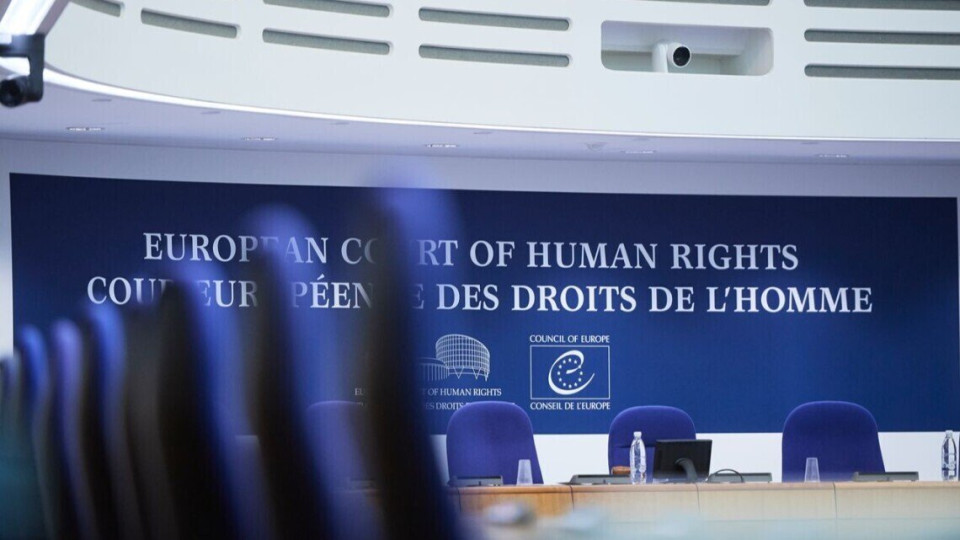










The European Court of Human Rights issued a judgment in the case of V.T. and Others v. Azerbaijan dated June 18, 2026, which addressed the issue of state jurisdiction during an international armed conflict, as well as responsibility for torture and deprivation of life of a person who came under the control of servicemen of another state.
The decision is of significant importance for the practice of applying the Convention, as it confirms that an armed conflict does not exclude state responsibility for violations of rights and freedoms guaranteed by the Convention.
Circumstances of the case
The applicants were the parents and sister of serviceman H.T., who served as a major in the army of the unrecognized "Nagorno-Karabakh Republic."
On April 2, 2016, during hostilities near the village of Talish, H.T. together with driver H.G. set out to deliver ammunition to another military position. The military truck was ambushed and fired upon. All tires of the vehicle were shot through, and numerous blood traces were found in the cabin.
After the attack, H.T. sent a message from his phone to another serviceman saying: "I have been shot."
The body of driver H.G. was found decapitated the same day. H.T.'s body was discovered the next morning near the site of the attack.
Forensic examination established that H.T. received severe gunshot wounds that deprived him of the ability to move independently. After being wounded, he remained alive for thirty minutes to two hours and could make conscious movements but could not walk independently.
Experts concluded that immediately before death, both of his hands were cut off, and the cause of death was traumatic decapitation. The head was separated from the body while the victim was still alive.
The severed body parts were never returned to the family, and the burial took place without them.
The applicants also provided evidence that a photograph of H.T.'s severed head was published on social media by a user they identified as an Azerbaijani serviceman.
Position of the ECHR
First of all, the Court examined the issue of jurisdiction under Article 1 of the Convention.
The ECHR noted that the two main criteria for extraterritorial jurisdiction are effective state control over the territory and the power and control of state agents over a specific person.
The Court stated that there is no doubt that a state may have extraterritorial jurisdiction regarding complaints related to events occurring during active hostilities. The decision in Ukraine and the Netherlands v. Russia cannot be regarded as completely excluding state jurisdiction under Article 1 of the Convention during a certain phase of an international armed conflict.
At the same time, the Court pointed out that there were no signs of effective control over the relevant territory by either of the two states involved in the armed conflict as of April 2, 2016.
Assessing the circumstances of the case, the ECHR noted that the applicants' allegations regarding the events leading to the probable torture and unlawful killing of H.T. by Azerbaijani servicemen, as well as the evidence supporting them, are plausible.
The Court emphasized that the circumstances under which H.T. died — namely, first being wounded during intense fire on the military vehicle, then his capture and killing by Azerbaijani servicemen — clearly indicate control over H.T. or direct proximity to him.
The ECHR concluded that there was power and control by state agents over H.T. regarding the events complained of by the applicants. Accordingly, these events fall under Azerbaijan's jurisdiction for the purposes of Article 1 of the Convention.
Moving to the assessment of the complaint under Article 2 of the Convention, the Court stressed that even in situations of international armed conflict, the guarantees of the Convention continue to apply, and its provisions must be interpreted in harmony with international humanitarian law.
The ECHR noted that H.T. was killed by Azerbaijani servicemen acting as agents of the respondent state after he was wounded and therefore unable to defend himself or even move independently.
The Court emphasized that such conduct was incompatible with international humanitarian law.
Since the Azerbaijani government did not provide a convincing explanation of the circumstances of H.T.'s death and failed to prove any grounds that could justify the use of lethal force, the Court found a violation of Article 2 of the Convention.
Considering the complaint under Article 3 of the Convention regarding H.T. himself, the ECHR noted that the infliction of these injuries was marked by an exceptional degree of cruelty. The forensic report describes, in particular, the severing of H.T.'s hands while alive, followed by decapitation, which caused death.
The Court emphasized that the particular nature of such injuries undoubtedly indicated the deliberate intent of the perpetrators to inflict very serious and cruel suffering.
Under these circumstances, the ECHR concluded that it was proven that H.T. was a victim of severe physical violence before his death, which constituted torture for which the respondent state is responsible.
Separately, the Court assessed the suffering of the deceased's relatives.
The ECHR noted that the father was forced to identify his son's mutilated body during the forensic examination, the family received information about the circumstances of his death, and photographs of the severed head became publicly available. In addition, the body parts were never returned to the family, making proper burial impossible.
The Court stated that the moral suffering experienced by the applicants must have caused them deep and lasting mental anguish.
The ECHR emphasized that this moral suffering was caused by the mutilation and cruel killing of H.T., as well as the inability to recover the missing parts of his body and conduct a proper burial.
According to the Court's conclusion, such circumstances constituted treatment that degrades human dignity within the meaning of Article 3 of the Convention.
Thus, the ECHR found a violation of Article 2 of the Convention in connection with the unlawful deprivation of H.T.'s life, a violation of Article 3 of the Convention due to his torture before death, as well as a separate violation of Article 3 concerning the moral suffering of his parents and sister.
Effectively, the Court formulated an important legal position according to which even in the absence of effective control over the territory, a state may bear responsibility for violations of the Convention during an armed conflict if its servicemen exercised actual power and control over a specific person.
Additionally, we invite you to familiarize yourself with another ECHR position, in which the Court recognized as disproportionate the confiscation that forces one accomplice to be responsible for the entire criminal proceeds of the group.
Subscribe to our Telegram channel t.me/sudua and to Google News SUD.UA, as well as to our VIBER and WhatsApp pages on Facebook and Instagram to stay informed about the most important events.