Defense procurement inspections now depend on risks: how the new system will work












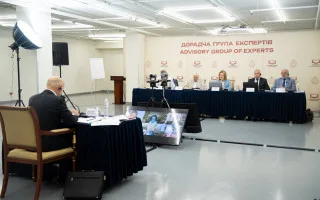
Previously, the state quality assurance system operated within the Ministry of Defense, but the issue of the independence of controllers was not fully regulated. Now the government, by a separate resolution, has defined the status of the Main Department of State Quality Assurance as an authorized body and established a direct prohibition on interference in its operational activities.
The document defines the purpose, tasks, functions, and powers of the body that will control the quality of defense-related goods, works, and services.
The key point was securing the operational independence of the body, as well as expanding its powers regarding risk assessment and decision-making on the necessity of inspections in the field of defense procurement.
What this body is
According to Cabinet of Ministers Resolution No. 788 dated June 17, 2026, the Authorized Body for State Quality Assurance is established within the system of the Ministry of Defense of Ukraine and is responsible for organizing and conducting quality control procedures for defense products. Its activities include: evaluating the compliance of quality assurance processes in defense contract executors; controlling goods, works, and services for defense purposes; participating in international mutual quality assurance mechanisms; harmonizing the Ukrainian system with the approaches of NATO member states.
In fact, this is an institution meant to ensure that products for the Armed Forces of Ukraine meet established quality standards even before delivery.
What defense procurement is
Defense procurement is the acquisition by the state customer of goods, works, and services to implement state programs in the fields of national security and defense, as well as to guarantee the provision of security and defense needs. This includes everything the army needs to carry out combat missions: weapons, ammunition, unmanned aerial complexes (UAC), ground robotic complexes (GRC), transport, fuel, food, and clothing supplies.
The legal basis of the system is the Law of Ukraine "On Defense Procurement" No. 808-IX dated July 17, 2020. The law also harmonizes Ukrainian legislation with the provisions of Directive 2009/81/EC according to the Association Agreement between Ukraine and the European Union.
Who and how organizes defense procurement
According to the Ministry of Defense of Ukraine, the defense procurement system is built on a clear division of roles among several participants.
The General Staff of the Armed Forces of Ukraine forms and submits the demand: it determines exactly which means, in what quantity, and within what time frame are needed by the Defense Forces. The General Staff's request is the starting point of the procurement process.
The Ministry of Defense of Ukraine acts as the main body in planning and implementing defense procurement — it sets requirements, defines priorities, exercises control and approval. The Ministry has relinquished the function of direct procurement, retaining only rule-setting and oversight.
The Defense Procurement Agency DOT (a state enterprise of the Ministry of Defense of Ukraine, hereinafter - DPA, agency) directly concludes contracts with suppliers, finances deliveries, and monitors their execution.
Depending on the nomenclature, the Agency applies the following procurement procedures:
- open tender (Prozorro);
- direct contract by specification;
- closed competitive bidding;
- DOT-Chain Defence.
The Logistics Forces Command (LFC) also participates in the procurement process, responsible for monitoring contract execution, timely delivery of goods and services, as well as accounting, distribution, and management of reserves to meet the needs of the Armed Forces of Ukraine.
How the defense quality control system works now
Currently, quality control of defense products is carried out within the state quality assurance system, which is gradually being reformed in Ukraine. Defense industry enterprises undergo inspections during which the following are evaluated: quality management system; compliance of products with technical contract requirements; adherence to production standards; the enterprise's ability to consistently ensure declared quality.
At the same time, before the adoption of this Regulation, the status and powers of the body were not detailed so clearly, which created some legal and organizational uncertainty in the interaction processes between customers, contractors, and controlling structures.
The main innovation is operational independence. One of the key provisions of the document is the establishment that the authorized body is independent in its operational activities. This means that:
- inspection results cannot be changed or adjusted by administrative influence;
- officials of the Ministry of Defense cannot interfere in the audit process;
- decisions on quality assessment must be made solely based on technical and factual data;
- documentation of inspection results is carried out without external influence.
Previously, the state quality assurance system operated within the Ministry of Defense, but the issue of controller independence was not fully regulated. Now the government, by a separate resolution, has defined the status of the Main Department of State Quality Assurance as an authorized body and established a direct prohibition on interference in its operational activities.
The resolution also stipulates that the Minister of Defense, as the head of the authorized body, must ensure conditions for impartial work and exclude any interference in the activities of the military management body.
Thus, the government has effectively established an institutional guarantee of the independence of the defense product quality control system.
Expanded powers of the body: risk-oriented approach
Another important change is the introduction of a risk-oriented approach. The authorized body gains the right to: analyze risks during defense procurements; determine whether inspections are necessary for a specific contract; reject state customers' requests for quality assurance work if risks are not confirmed.
This means that inspections will no longer be automatic or formal — decisions about them will be made based on an analysis of feasibility and risks.
In fact, this brings the Ukrainian model closer to NATO standards, where the key is not continuous control but risk management. According to the government's plan, this approach should align the Ukrainian system with practices used in NATO member states.
How the system worked before
Before the Regulation was approved, quality control in defense procurement was carried out based on general regulatory acts and internal procedures of the Ministry of Defense. Practically, this meant: less clear division of powers between structural units; varied practices in applying inspections; possibility of administrative influence on the evaluation process; lack of a unified formalized approach to risk analysis.
The new document aims to eliminate these gaps and unify control procedures.
What will change for defense enterprises
For defense industry enterprises, the new Regulation means strengthening the importance of quality management systems. From now on, the key will be not only the final product but also how production processes are organized. In particular: enterprises must comply with quality management system standards; auditors will evaluate not only the product but also the processes of its creation; NATO quality standards will have greater significance; inspection results will be recorded in a unified information system.
Additionally, the authorized body gains the right to form an electronic database of enterprise evaluation results, which will affect their further participation in state contracts.
What will change for state customers
For state customers in the defense sector, the new rules mean a change in the logic of planning inspections. Whereas inspections could previously be initiated more formally, now: each inspection must be justified by risks; the body can refuse to conduct an inspection if the grounds are insufficient; the role of analytics in contract preparation is strengthened. This should reduce administrative burden and increase resource use efficiency.
What this means for military personnel and citizens
Directly for military personnel and civilians, the resolution does not establish new rights or obligations. However, its practical impact is indirect.
It concerns: improving the quality of weapons and military equipment; reducing the risk of supplying substandard products; strengthening control over manufacturers; increasing transparency of defense procurement. In the long term, this may affect the safety of military personnel and the efficiency of state funds usage.
Anti-corruption safeguards
The Regulation also contains a number of restrictions for representatives of the military management body. They are prohibited from: receiving any benefits or rewards from defense contract executors; lobbying the interests of enterprises; concluding related contracts with participants in defense procurement; being employed by such enterprises within one year after the end of their powers. These norms aim to reduce conflicts of interest in defense control.
The approval of the Regulation on the authorized body for state quality assurance is another stage in the reform of defense procurement in Ukraine. The key changes are: securing the operational independence of the body; introducing a risk-oriented approach to inspections; expanding powers regarding the assessment and rejection of customer requirements; harmonizing the system with NATO approaches.
In fact, the government is forming a new model of defense product quality control that should combine inspection independence, process digitalization, and international practice standards.
Subscribe to our Telegram channel t.me/sudua and to Google News SUD.UA, as well as to our VIBER and WhatsApp, our page on Facebook and on Instagram to stay updated on the most important events.