10-Month Contract: Why a Guaranteed Deferral Can "Burn Out" After 2 Years


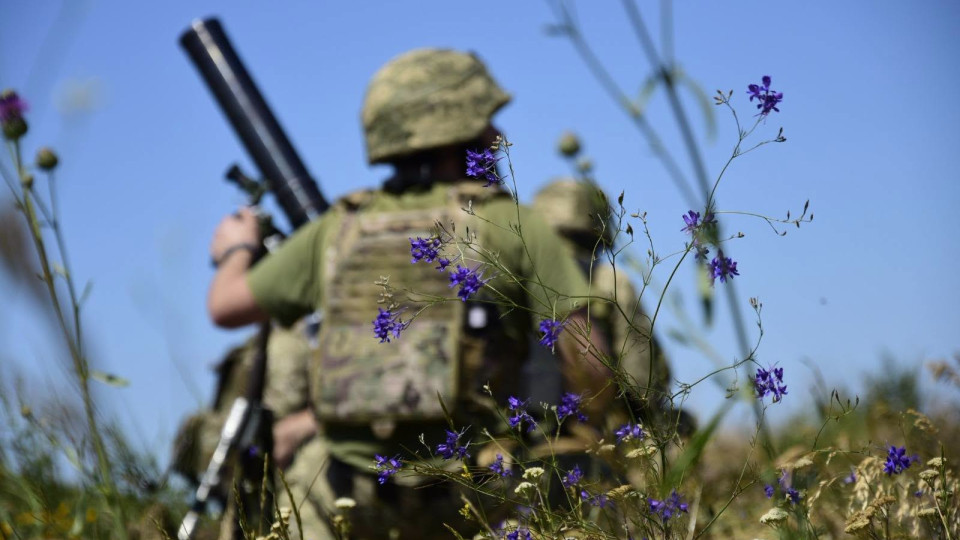










In June, a two-year experimental project started, promising completely new conditions of military service: from assault contracts for 10 months to payments of almost half a million hryvnias. However, behind the bright name of the mobilization reform lie important legal questions for the military: whether the deferral established by a resolution rather than by law is legal, and what will happen to the guarantees after the two-year experiment ends.
Changing the Rules on the Fly
In a rule-of-law state, any contract is an agreement between two equal parties who assume mutual obligations. However, when it comes to a military contract under martial law, the balance of power shifts dramatically. On one side is the state with its monopoly on coercion and constantly changing legislation, and on the other is a citizen of Ukraine or a foreign volunteer, who often makes decisions under stress and in an information vacuum.
Currently, we see a situation where motivational factors outlined in the experiment border on legal uncertainty, and a number of critical questions remain without clear answers. We will analyze the questions the state has clearly answered and highlight gray areas where answers are still lacking. After all, military personnel who give the state their most valuable asset—their life and health—have an undeniable right to know exactly what they are signing.
Questions That Already Have Answers
The contract conditions clearly define financial and organizational guarantees for project participants.
Additional Payments
Specifically, servicemen can expect additional payments depending on the nature of the tasks performed:
- 10,000 hryvnias for being on combat positions,
- 20,000 hryvnias for restoring positions, and
- 40,000 hryvnias for capturing enemy objects.
- The maximum amount of payments can reach 460,000 hryvnias per month for servicemen who, according to the Ministry of Defense, perform corresponding combat tasks.
Service Terms for Different Participant Categories
For active servicemen, the contract provides for 10 months of service; for civilians—14 months, of which 12 must be spent directly in the unit. For veterans, the minimum term is 6 months.
Deferrals
A system of deferrals from mobilization after contract completion is separately stipulated. The basic protection period from re-call is six months but can be extended depending on combat experience gained. Specifically, each month of participation in assault actions adds three months of deferral. All deferrals are cumulative; even if a serviceman immediately signs a new contract after the previous one expires, the deferral does not expire.
Removal from Wanted List
Additionally, signing the contract automatically changes the status of a person on the wanted list to that of an active serviceman, which entails lifting corresponding restrictions. However, if a conscript was fined for an administrative offense according to the resolution, they will have to pay it.
Does a Non-Combat Contract Guarantee Protection from the Frontline?
A non-combat contract does not provide the serviceman with an absolute guarantee of protection from involvement in frontline combat. Regardless of the type of contract concluded (Basic or Combat for 24 months), every serviceman is part of the Defense Forces of Ukraine. A non-combat position or contract does not grant the right to refuse to perform combat tasks if such a need arises during wartime.
The typical contract text confirms the serviceman's awareness that they may be involved at any time in performing official (combat) tasks in areas of active military (combat) operations. The signer also agrees to obey commanders' orders defining the scope of duties by position.
If a serviceman under a "rear" contract is nevertheless involved in combat tasks, their payments are recalculated according to the norms provided for assault or combat contracts. In particular, 10,000 UAH per day is paid for being on combat positions, and from 20,000 to 40,000 UAH per day for assault actions.
Term and Effective Date
The contract takes effect from the moment it is signed by the parties (the serviceman and the unit commander) and remains valid until the specified date or occurrence of specified circumstances.
Basic Duties of the Serviceman
The document leaves no room for evading orders. Conditions regarding conscientious fulfillment of military duty, compliance with statutes, and preservation of state secrets are imperative. Any violation of these points automatically threatens the serviceman with disciplinary or criminal liability.
Difference Between Discharge and Demobilization
As explained by the Ministry of Defense, demobilization is a nationwide process of transitioning the Defense Forces to peacetime staffing and releasing mobilized servicemen. The decision is made by the President of Ukraine. In contrast, discharge from military service is an individual procedure concerning a specific serviceman and is carried out on grounds provided by law.
Impact of Combat Experience on New Contract Conditions
Previous combat experience does not shorten the contract service term nor affect the length of leaves. Types and duration of leaves during martial law are determined by current legislation and do not depend on the number of combat sorties.
At the same time, combat experience directly affects the length of deferral from mobilization after contract completion. The basic deferral period is six months but can be significantly extended depending on the serviceman's participation in combat tasks.
For participants in infantry-assault contracts, each month of combat tasks adds three months of deferral. For servicemen under combat contracts, one month of combat participation equals one additional month of deferral.
For example, if a civilian signs an infantry-assault contract for 14 months and participates in combat tasks for six months during service, after discharge they will receive not only the basic six months of deferral but also an additional 18 months. In total, this amounts to 24 months, or two years, during which the person will not be subject to mobilization.
Questions That Remain Unanswered
Despite announced transparency, a number of inquiries, including parliamentary ones, remain without clear response from the Ministry of Defense as of today.
Service Term Calculator
It is expected that this tool will automatically take into account the serviceman's combat experience and calculate the appropriate benefits and deferrals. However, it remains unclear what algorithm it will use and whether servicemen will have to independently confirm years of service and combat participation with numerous certificates.
Social Protection of Servicemen in Case of Severe Injuries
There is also a discrepancy between the declared level of monetary provision and the basis for calculating certain pension payments in cases of disability or injury. Why, with a salary of 30,000 UAH, are pension payments in case of injury tied to 20,000 UAH? This mechanism requires additional clarification and legislative regulation.
Contract Termination Mechanism
The document text includes a separate field with the wording: "This contract is terminated from ___ due to ___," which may create the impression of the possibility of early termination of the agreement similar to civil law contracts.
The grounds for discharge during martial law are clearly defined by Article 26 of the Law of Ukraine "On Military Duty and Military Service" and are exhaustive. Thus, the mere fact of concluding a contract does not mean it can be terminated by mutual consent or due to dissatisfaction with service conditions.
Uncertainty of Conditions for Assault Troops
The 10-month contract (for active servicemen) or 14-month contract (for civilians) is designed for "infantry-assault" positions. However, there are "gray areas" in interpreting terms:
Does a soldier who signed an assault contract but was not involved in combat tasks on the frontline during the 10 months have the right to discharge? There is no clear answer to this question in regulatory acts.
The deferral system is based on a complex formula (e.g., 1 month of assault actions adds 3 months of deferral). However, it is currently undefined who and on what basis should perform these calculations, creating a risk of bureaucratic delays upon discharge.
Travel Abroad During Deferral
Resolution No. 768 guarantees the right to travel during leave but is silent about the deferral period after discharge. Will a veteran be able to visit family abroad while having 2 years of guaranteed protection from mobilization?
Fate of Officer Corps
Conditions for mobilized officers whose contracts were automatically extended have not yet been fully disclosed.
Legal Collisions
Phantom of Increased Motivational Factors
This is the weakest link of the entire document. The contract title mentions "increased motivational factors," but the text contains no specifics: their amount, conditions for receiving them—participation in combat, performing specific tasks, or whether they can be canceled by a commander's order due to disciplinary sanctions. The term refers to "current legislation," which may create risks for the serviceman if the regulatory framework changes during the contract term.
Moreover, since the project is experimental and designed for 2 years (until June 2028), questions remain about which norms will guarantee deferral to fighters discharged after this period.
The most alarming fact is that the experiment is set for 2 years and ends on June 16, 2028. If a fighter signs a 24-month contract today, they will be discharged on the day the Resolution expires. No legal norm currently supports the promised deferral after this date, since the grounds for deferral must be defined exclusively by law, not by a Cabinet of Ministers resolution.
The problem requires resolution both at the individual fighter level and at the level of state policy.
Future contractees should be extremely careful when processing documents even before signing the contract. In particular, if a serviceman is promised a specific position or functional duties, such agreements should be documented in writing through appropriate documents or orders from the military unit.
Equally important is documenting possible violations of service conditions. Official reports about the lack of necessary equipment, medical support, or other resources stipulated by norms can become important evidence in case of disputes.
At the same time, solving the problem requires systemic changes, such as creating a separate annex to the contract with clearly defined financial guarantees, payment amounts, and benefits that cannot be changed after signing the document.
Parliament should amend the Laws on Mobilization and Military Service, specifying in them the grounds for deferral and discharge defined in Resolution No. 768. Additionally, it is necessary to specify in Resolution No. 768 that the deferral norms apply to experiment participants even after its 2-year term ends.
Subscribe to our Telegram channel t.me/sudua and to Google News SUD.UA, as well as to our VIBER and WhatsApp, Facebook page and Instagram to stay informed about the most important events.