The Supreme Court explained when a mother cannot be deprived of parental rights even after her prolonged stay abroad













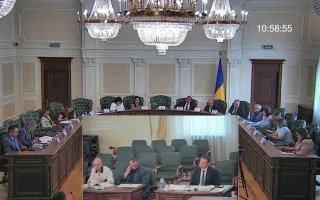
The Supreme Court upheld the decisions of the lower courts that denied the claim to deprive the mother of parental rights. The Court noted that such a measure is exceptional and applies only when there is proven conscious and intentional evasion of parental duties. This decision was made by the panel of judges of the Second Judicial Chamber of the Cassation Civil Court in case No. 331/1705/25.
Case circumstances
The father filed a lawsuit to deprive the mother of parental rights regarding their daughter. He stated that after the divorce, the child lives with him, the mother does not participate in upbringing, does not visit the child, and is not interested in her education and development. He also referred to the fact that the woman was previously held administratively liable under Article 184 of the Code of Ukraine on Administrative Offenses, and the guardianship authority supported the claim.
During the case review, it was established that the daughter lives with the father, who provides for her maintenance, treatment, education, and actively participates in her life.
It was also found that the mother moved to Germany due to difficult financial circumstances. The child informed the court that she communicates daily with her mother via video calls, the mother is interested in her education and affairs, sent food supplies, and the girl misses her mother and wants to meet her.
Witnesses also confirmed that the mother is abroad but maintains telephone contact with the daughter. However, the authority considered it appropriate to deprive the mother of parental rights but noted that it could not inspect her living conditions because the registered residence is in a temporarily occupied territory, and the actual place of residence could not be established.
The courts of first and appellate instances denied the claim. The father filed a cassation appeal to the Supreme Court.
The Supreme Court explained when parental rights cannot be deprived
The Supreme Court reminded that according to the Constitution of Ukraine, the Family Code of Ukraine, and the Convention on the Rights of the Child, the primary focus in family disputes must be the best interests of the child.
The Court noted that the list of grounds for deprivation of parental rights defined in Article 164 of the Family Code of Ukraine is exhaustive. Evasion of parental duties can be grounds for deprivation of parental rights only if the parent's guilty behavior is proven, i.e., conscious neglect of their duties.
The panel of judges emphasized that deprivation of parental rights is an extreme measure applied only after a full, comprehensive, and objective examination of all circumstances of the case, including the attitude of the mother or father toward the child. Such a measure is allowed only when it is impossible to change the parents' behavior for the better, and the burden of proving conscious and intentional evasion of parental duties lies with the claimant.
The Supreme Court drew attention to the child's right to be heard. According to Article 6 of the European Convention on the Exercise of Children's Rights and Article 171 of the Family Code of Ukraine, the child must be given the opportunity to express their opinion during the case review. At the same time, the court must evaluate the child's expressed position together with all evidence, since the child's opinion alone does not always correspond to their best interests and may be influenced by external factors.
In this case, the court of first instance heard the child in the presence of a psychologist. The daughter stated that she does not object to depriving the mother of parental rights but also said she continues to communicate with her mother, misses her, and wants to meet. The Supreme Court agreed with the conclusions of the lower courts that the claimant did not prove the existence of exceptional grounds for depriving the mother of parental rights, in particular conscious and intentional evasion of parental duties. The Court took into account that the respondent has not lost interest in participating in the daughter's upbringing, intends to maintain and restore relations with her, and her residence abroad objectively complicates direct participation in upbringing.
Moreover, the Supreme Court noted that the guardianship authority's conclusion was insufficiently substantiated, as it was mainly based on information provided by the claimant.
The panel of judges also emphasized that the mere fact of the mother being held administratively liable under Article 184 of the Code of Ukraine on Administrative Offenses is not an unconditional ground for depriving her of parental rights.
In view of this, the Supreme Court dismissed the cassation appeal and left the decisions of the courts of first and appellate instances unchanged.
This decision is illustrative for similar disputes, as it confirms that deprivation of parental rights cannot be based on assumptions or isolated negative circumstances without proper proof of conscious evasion of parental duties.
Subscribe to our Telegram channel t.me/sudua and to Google News SUD.UA, as well as to our VIBER and WhatsApp, Facebook page and Instagram to stay informed about the most important events.