Military personnel should be paid up to 100 thousand additional rewards during PTSD treatment: how to prove the connection with the defense of the Fatherland


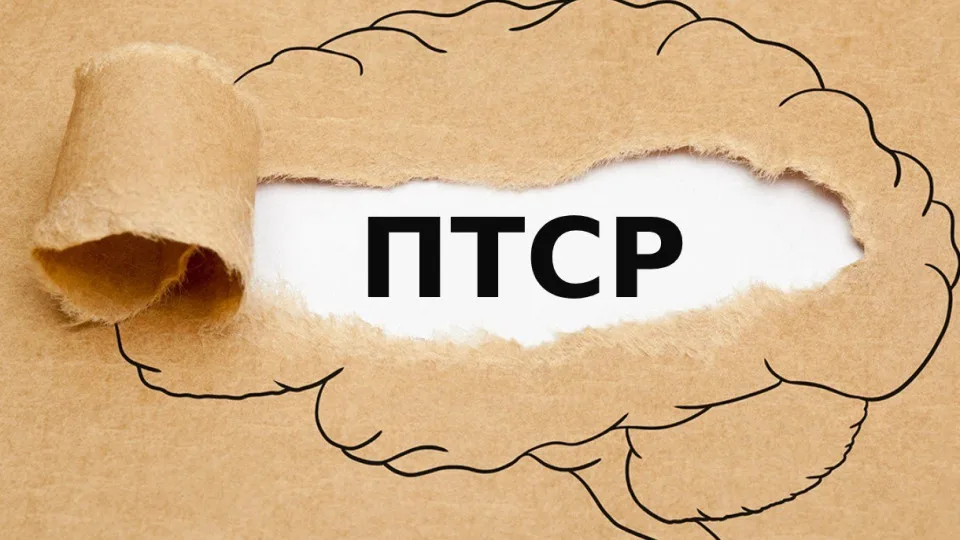










Post-Traumatic Stress Disorder (PTSD) is one of the most common consequences of participation in combat operations, as severe concussions and injuries do not pass without a trace for the mental health of Ukrainian defenders. However, when warriors go for treatment after battles, they often face bureaucracy and refusals of payments. In practice, servicemen have faced refusals to pay additional rewards for the time of PTSD treatment for years. Financial authorities of some military units proceeded from the fact that post-traumatic stress disorder is a mental illness, not an injury or trauma, and therefore the effect of Cabinet of Ministers Resolution No. 168 does not apply to such cases.
Judicial practice, in turn, is changing in favor of the military. The Eighth Administrative Court of Appeal, by decision dated July 17, 2026, in case No. 460/822/26, recognized PTSD as a direct consequence of a combat injury.
Case circumstances
The plaintiff, a serviceman who has been in the ranks of the Armed Forces of Ukraine since March 2022, received an explosive injury and acoustic barotrauma during the performance of a combat mission. The fact of the injury was recorded immediately after the event by the primary medical card form 100, and later confirmed by a certificate of the circumstances of the injury.
As a result of the injury, the serviceman developed a persistent, sharply expressed post-traumatic stress disorder (code F43.1), accompanied by emotional-volitional instability, anxiety-depressive syndrome, insomnia, and logoneurosis. From September to December 2025, the serviceman underwent inpatient treatment in a hospital.
The main diagnosis upon hospitalization was PTSD, and the accompanying diagnoses were ear barotrauma and consequences of acoustic barotrauma in the form of bilateral sensorineural hearing loss of the IV degree.
According to the medical certificate, the military medical commission established a persistent, sharply expressed post-traumatic stress disorder in the serviceman, which was recognized as a disease related to the defense of the Fatherland. In addition, the Military Medical Commission diagnosed a condition after explosive trauma, which was also recognized as related to the defense of the Fatherland and, according to the order of the Ministry of Health of Ukraine dated July 4, 2007, No. 370, classified as severe.
However, the military unit refused to pay UAH 100,000 for the period of inpatient treatment of post-traumatic stress disorder, which was a consequence of the injury received at the front, arguing that PTSD is a mental illness, not an injury, trauma, or concussion. According to the military unit, Cabinet Resolution No. 168 provides for payment of up to 100 thousand hryvnias only for the time of treatment of physical injuries, while treatment of pathological conditions, including PTSD, does not entitle to such payment.
Plaintiff’s position and appellate court conclusions
The plaintiff emphasized that PTSD did not arise as an independent disease but as a direct consequence of the acoustic barotrauma received during the performance of combat missions, which the Military Medical Commission recognized as severe and related to the defense of the Fatherland.
The Eighth Administrative Court of Appeal agreed with this position and noted that the decisive factor is not the formal name of the diagnosis but its causal connection with the combat injury.
The court emphasized that if PTSD is a consequence of a concussion or other combat injury, the treatment of such a mental disorder is effectively a continuation of the treatment of the consequences of the injury. Therefore, refusal to pay solely because PTSD is defined as a disease in medical documents is an excessive formalism and contradicts the purpose of social guarantees established for servicemen.
Moreover, the appellate court noted that Resolution No. 168 does not limit the right to additional remuneration only to the period of treatment of the primary injury. It also applies to subsequent inpatient treatment if it is caused by the consequences of injury, concussion, or trauma received during the defense of the Fatherland.
As a result, the court overturned the decision of the court of first instance and obliged the military unit to calculate and pay the serviceman additional remuneration of up to UAH 100,000 for the entire period of his three-month inpatient treatment of PTSD.
Legal positions of the Supreme Court
The practice of the Supreme Court has become decisive in forming a unified approach to the application of the provisions of the Cabinet of Ministers of Ukraine Resolution No. 168 regarding the payment of additional remuneration to servicemen undergoing treatment after injury, concussion, trauma, or mutilation received during the defense of the Fatherland.
In case No. 600/367/24, the Supreme Court formulated a legal position according to which the decisive criterion for determining a serviceman’s right to receive additional remuneration is not the wording of the medical diagnosis but the causal connection established by the Military Medical Commission between the combat injury received and the subsequent treatment.
The Supreme Court emphasized that the mere use of the term "disease" by doctors does not indicate the loss of the serviceman’s right to additional remuneration. If the Military Medical Commission establishes that the mental disorder, including PTSD, is a direct consequence of injury, concussion, trauma, or other combat damage received during the defense of the Fatherland, then such treatment is legally a continuation of the treatment of the primary combat injury.
The Supreme Court stressed that the causal connection established by the Military Medical Commission has a long-term nature and does not cease simply because during treatment the primary traumatic injury transformed into its medical consequences.
The decisive role of the Military Medical Commission’s conclusions and documentary confirmation
In the Supreme Court rulings in cases No. 340/5387/22 and No. 240/4897/24, an approach was also formulated to determine the serviceman’s right to additional remuneration according to Cabinet Resolution No. 168. The court proceeds from the necessity to confirm three mandatory circumstances: the performance of combat missions, the receipt of injury (concussion, trauma) related to the defense of the Fatherland, and inpatient treatment precisely because of this injury or its consequences.
The Supreme Court gives decisive importance to the conclusion of the Military Medical Commission. If the commission’s resolution establishes that the disease, including PTSD, is related to the defense of the Fatherland, such a conclusion is sufficient legal grounds for the payment of additional remuneration. At the same time, the wording "related to military service" is not identical and does not always give rise to the right to special guarantees provided by Resolution No. 168.
Temporal and procedural aspects
The Supreme Court also emphasized that the date of the Military Medical Commission’s resolution does not determine the moment of the right to additional remuneration. The commission’s conclusion only confirms the causal connection between the combat injury and treatment, which existed from the moment of injury. Therefore, issuing the commission’s resolution after the end of treatment does not deprive the serviceman of the right to payment for previous periods.
Moreover, Cabinet Resolution No. 168 does not require continuous inpatient treatment directly from the moment of injury. In the case of repeated and each subsequent inpatient treatment of the serviceman in healthcare institutions for medical indications related to a previously received injury (concussion, trauma) related to the defense of the Fatherland, additional remuneration is paid in the amount of up to UAH 100,000.
Subscribe to our Telegram channel t.me/sudua and to Google News SUD.UA, as well as to our VIBER and WhatsApp, page on Facebook and on Instagram to stay informed about the most important events.