Electronic Voting and Guarantees of the Electoral Process: The Constitutional Court of Ukraine Discussed Brazil's Experience — Online Lecture


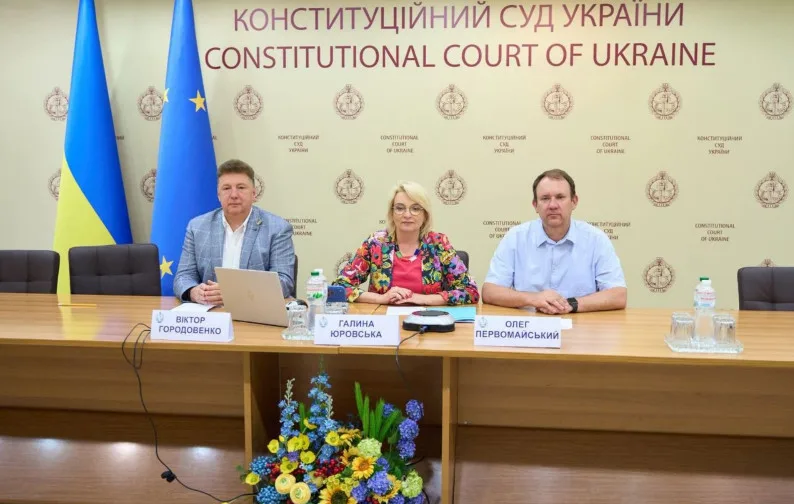










An online thematic lecture "How Democracy Works in Brazil: A Successful Example of Electronic Voting" was held at the Constitutional Court of Ukraine.
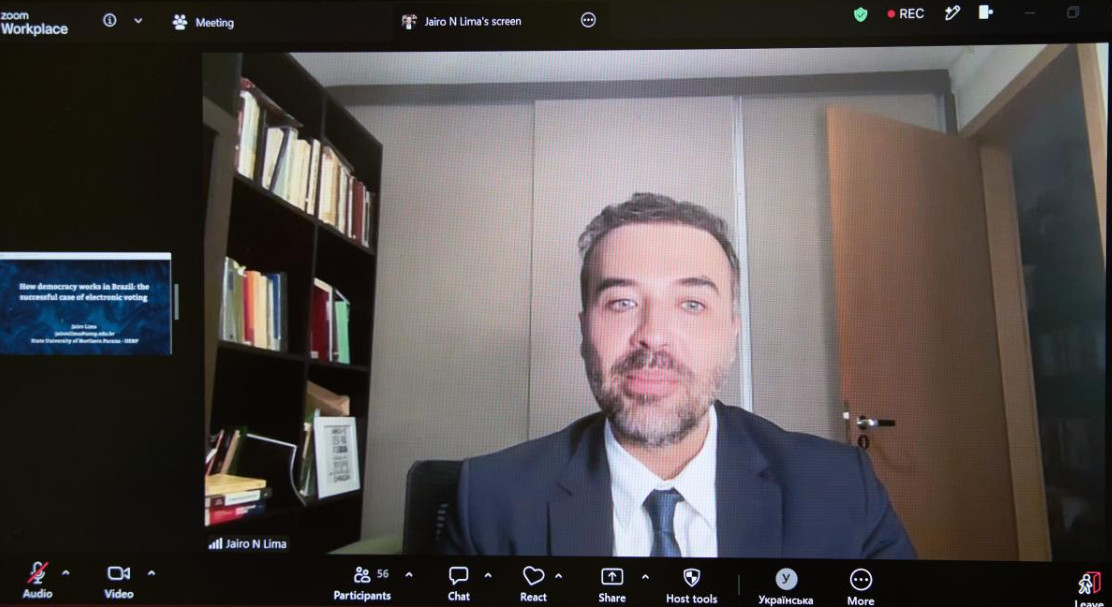
The main speaker was Professor Jairo Neia Lima from the State University of Northern Paraná, PhD in Constitutional Law from the University of São Paulo, head of the Research Laboratory of Constitutional and Political Theories.
The event was moderated by Constitutional Court judge Halyna Yurovska. Judges of the Constitutional Court of Ukraine Viktor Horodovenko and Oleh Pervomaiskyi, judges of the Ukrainian judicial system, lawyers, prosecutors, scholars, lecturers, legal professionals, postgraduate students of law faculties, students of the Minor Academy of Sciences, and university students joined the lecture.
Opening the event, Constitutional Court judge Halyna Yurovska noted that this is the first lecture within the project dedicated to the experience of a Latin American country. She reminded that the project was launched in April 2022 to disseminate knowledge about constitutional justice, the activities of the Constitutional Court of Ukraine, foreign legal experience, and current challenges in the field of law.
During his speech, Professor Jairo Neia Lima informed about the constitutional foundations of democracy and the organization of the electoral process in the Federative Republic of Brazil, where about 158 million voters are registered. He focused on the features of the federal structure of the state, the election system at the federal, regional, and municipal levels, candidate requirements, terms of office for elected officials, as well as the periodicity of general and municipal elections.
The speaker paid special attention to the constitutional regulation of electoral rights. He noted that in Brazil voting is not only a right but also a constitutional duty for citizens aged 18 to 70. For citizens aged 16–17, persons over 70, and illiterate persons, participation in voting is voluntary.
Professor Jairo Neia Lima described the activities of electoral justice — a specialized component of the judiciary that ensures the organization, administration, and control of the electoral process. According to him, the powers of electoral justice bodies include maintaining the voter registry, registering candidates and political parties, verifying compliance with electoral legislation, controlling financial reporting of election campaigns, organizing voting, resolving electoral disputes, counting, and officially publishing election results. Its main body is the Superior Electoral Court.
The central topic of the lecture was the functioning of the electronic voting system. The speaker noted that electronic voting machines began to be introduced in Brazil in the late 1990s. During voting, the voter enters the candidate’s number, checks the name, photo, party affiliation, and number on the screen, and then confirms their choice.
Biometric data are widely used for voter identification in the country. At the same time, as the scholar pointed out, the voter identification system and the electronic voting machine are functionally separated. Personal data are not linked to the information about the vote cast, which is one of the main guarantees of voting secrecy.
The speaker emphasized that during voting, electronic machines are not connected to the open Internet network. Before each election, software and equipment undergo public testing, technical inspections, and audits involving information security specialists, representatives of political parties, scholars, and other interested parties. Final data are transmitted through secure channels using cryptographic mechanisms.
According to Professor Jairo Neia Lima, advantages of electronic voting include rapid vote counting, reduced risks of errors and manipulations associated with manual processing of paper ballots, as well as the ability to monitor key stages of the electoral process. He noted that election results usually become known within a few hours after voting ends.
During the discussion, participants raised issues of protecting the system from hacker attacks and other forms of external interference, ensuring voting secrecy, using biometric identification, and features of exercising electoral rights by illiterate persons.
Answering questions, Professor Jairo Neia Lima noted that one of the greatest modern challenges for the electoral process is not only protecting technical infrastructure but also countering misinformation and manipulation in the digital environment. According to him, social networks, automated accounts, artificial intelligence, and content creation technologies can be used to unlawfully influence voters' will formation.
The speaker emphasized that before each election, the Superior Electoral Court of Brazil updates the rules for digital campaigning. According to him, in certain cases the use of artificial intelligence is prohibited, and in others, there is a requirement to clearly indicate that the respective material was created or modified using such technologies.
Summarizing the discussion, Constitutional Court judge Halyna Yurovska noted the practical value of Brazil’s experience for further scientific understanding of the development of electoral legislation and the use of digital democracy tools. She thanked Professor Jairo Neia Lima for the informative lecture, participants for the active professional discussion, and project partners for facilitating the event organization.
Subscribe to our Telegram channel t.me/sudua and to Google News SUD.UA, as well as to our VIBER and WhatsApp, Facebook page and Instagram to stay informed about the most important events.