Chairman of the Administrative Court of Cassation of the Supreme Court Ihor Dashutin Named Key Challenges of Administrative Justice


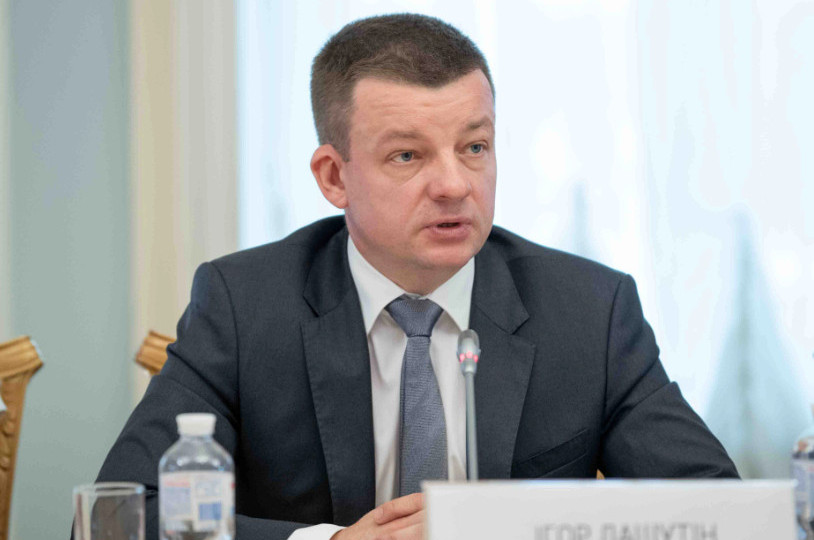










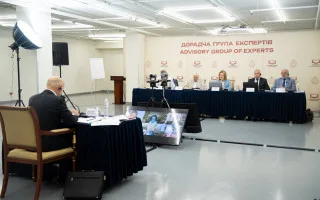
The Chairman of the Administrative Court of Cassation within the Supreme Court, Ihor Dashutin, stated that the Law of Ukraine "On Administrative Procedure" became an important event for the Ukrainian legal system, as it for the first time at a general level enshrined the fundamental principles of interaction between public authorities and private individuals, which are an integral part of the European legal tradition and democratic governance. He said this during the presentation of the report "Application of the Law of Ukraine 'On Administrative Procedure'", which contains an analysis of regulatory legal regulation, judicial practice, as well as the results of sociological research.
The Chairman of the Administrative Court of Cassation of the Supreme Court noted that today there is a gradual departure from the model in which administrative procedure was perceived mainly as an internal technical mechanism of the authority's activity. Instead, an approach is being formed according to which the procedure becomes a guarantee of human rights protection, since procedural violations are often the first sign of injustice. According to Ihor Dashutin, a person has the right to be heard, to understand the reasons for decisions affecting their rights and interests, and to expect consistency, good faith, and legal certainty from the state.
Ihor Dashutin paid special attention to the role of administrative courts in shaping the practice of applying the new Law. He noted that it is judicial practice that gives the law real content, forming standards of behavior both for authorities and citizens. Among the key challenges of administrative justice, the Chairman of the Administrative Court of Cassation of the Supreme Court named defining the limits of discretionary powers of administrative bodies, assessing the materiality of procedural violations, requirements for the reasoning of administrative acts, and finding a balance between the efficiency of public administration and guarantees of human rights protection.
He also emphasized the role of judicial practice in forming a new legal culture of public administration. According to him, procedure should not turn into a bureaucratic barrier or an end in itself but should serve as a tool to ensure the fairness of administrative decisions and effective protection of human rights.
The head of the Administrative Court of Cassation of the Supreme Court stressed that the Law of Ukraine "On Administrative Procedure" is one of the most illustrative examples of Ukraine's movement towards European integration and the implementation of European legal standards. He noted that the principles of good governance, legal certainty, proportionality, the right to be heard, and the principle of protecting legitimate expectations are not only elements of legal technique but fundamental principles of a modern democratic state.
Summarizing the presentation of the report on the application of the Law of Ukraine "On Administrative Procedure", the Chairman of the Administrative Court of Cassation of the Supreme Court, Ihor Dashutin, emphasized the importance of professional dialogue between representatives of administrative, commercial, and civil jurisdictions. According to him, such discussion allows for a comprehensive assessment of law enforcement challenges and contributes to the formation of unified approaches in judicial practice.
Ihor Dashutin noted that the effectiveness of administrative procedure depends not only on the quality of legislative norms but also on how consistently they are implemented in the activities of authorities and judicial practice. In this process, administrative justice must form clear and predictable standards for applying new procedural mechanisms and ensure a balance between public administration and the protection of human rights.
The Chairman of the Administrative Court of Cassation of the Supreme Court also drew attention to the need for further development of stable and coordinated practice in applying the Law of Ukraine "On Administrative Procedure", particularly in matters of jurisdictional disputes. He said that professional discussions, generalization of judicial practice, and development of possible legislative changes play an important role in this process.
Subscribe to our Telegram channel t.me/sudua and to Google News SUD.UA, as well as to our VIBER and WhatsApp, our pages on Facebook and Instagram to stay informed about the most important events.